
Picture this. Every four years, cricket fans across the globe come together for one spectacle, the ICC ODI World Cup. The best teams, the biggest players, and the highest stakes. At the top of that mountain sits Australia, six time champions and the most successful team in World Cup history. India follows with two titles, the latest in 2011, along with a heartbreak in 2023 that slipped through their fingers against Australia.
Then there are the others. The legacy giants like the West Indies, who have had their golden era. The ever dangerous sides like Sri Lanka, New Zealand, and England. And the rising disruptors, Afghanistan, proving they belong on the biggest stage.
And then there is South Africa.
A team that has always had the talent, the firepower, and the respect. A side that has produced some of the most iconic players the game has ever seen, from AB de Villiers lighting up the IPL with RCB, to Faf du Plessis leading with iconic stints at CSK and RCB. A team that shows up, delivers, dominates even, but somehow, the World Cup trophy has always remained just out of reach.
Now you might be wondering, why are we talking about cricket in a car review? Because in a strange way, South Africa reminds me of a certain brand in India and that brand being Volkswagen.
For over a decade and a half, Volkswagen has given India some truly memorable cars. Cars that enthusiasts swear by. Cars that feel solid, engineered, and built with intent. The Volkswagen Polo, for instance, is not just a car, it is a nameplate that needs no introduction.
And yet, much like South Africa in the World Cup, Volkswagen has always been close, but never quite at the top when it comes to outright sales success. While their Korean and Japanese rivals raced ahead with numbers, Volkswagen stayed the enthusiat’s choice, respected, admired, but not always the bestseller.
Until things began to change. With its India 2.0 strategy, Volkswagen hit reset. A new approach, a new platform, the MQB A0 IN, built specifically for Indian conditions and from that came a car that would go on to shift the narrative. Enter the Volkswagen Taigun.
Over 1.4 lakh units in five years. A proper success story. Not just in terms of sales, but in how it reintroduced Volkswagen to a new generation of buyers. And now, the story moves forward. Because the Taigun is back, with its first ever facelift. So the question is simple. Has Volkswagen just made a good car better, or is this finally the moment where, like South Africa chasing that elusive trophy, they go all the way?
Volkswagen Taigun – Exterior Design
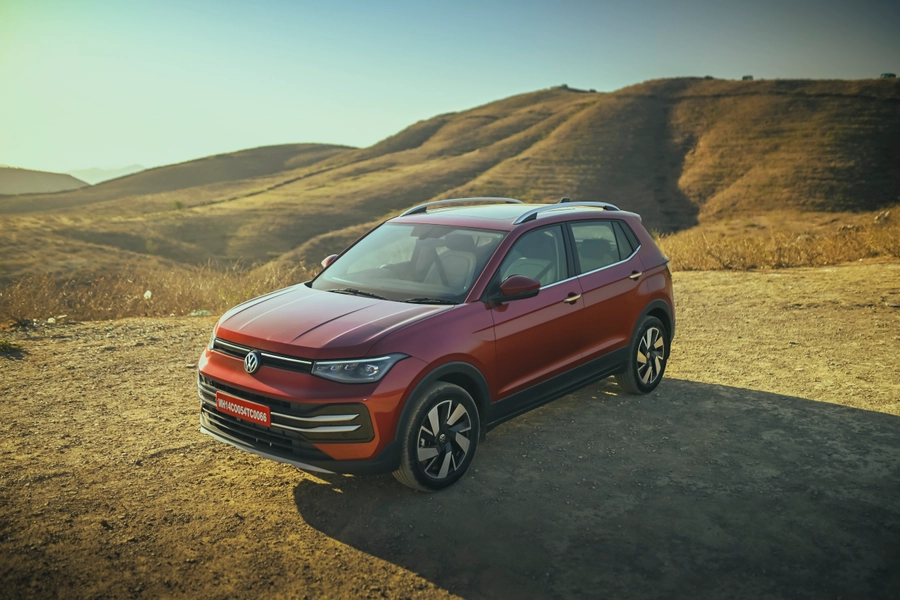
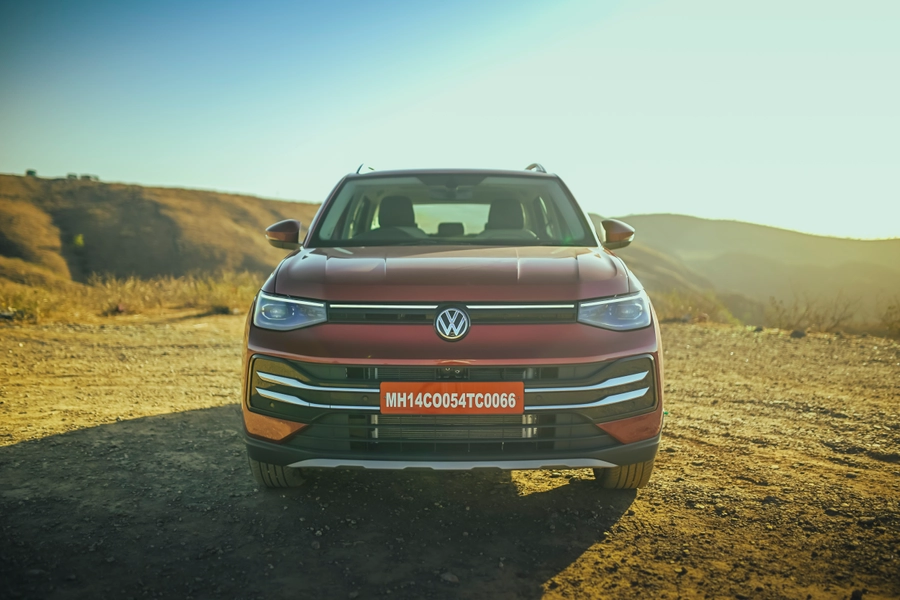
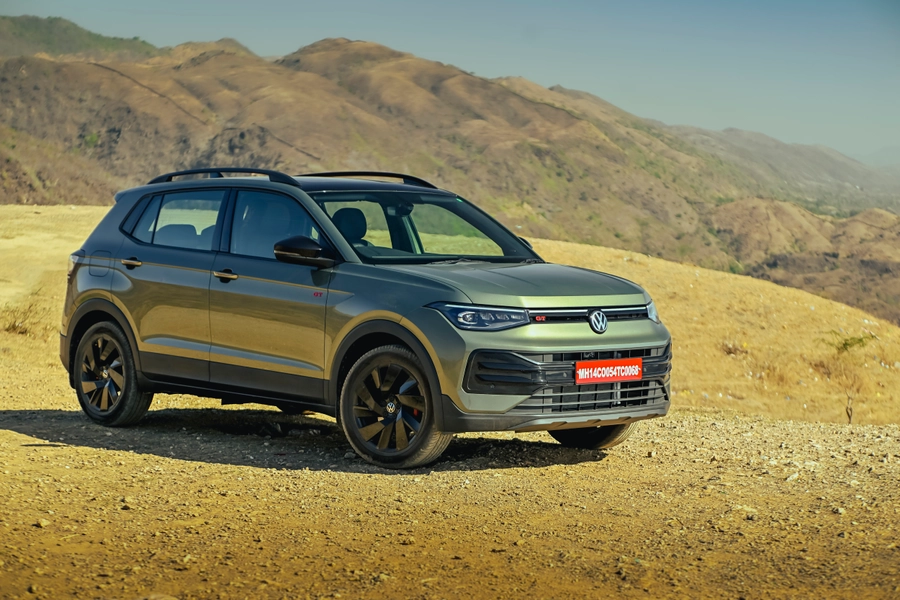
At first glance, the Volkswagen Taigun does look fresh. Up front is where most of the changes are. You get a completely reworked face with a new bumper, new grille, and redesigned headlamps. The inspiration is obvious. Volkswagen has clearly leaned into its global SUV design language, borrowing cues from cars like the Volkswagen Tiguan and the Volkswagen Tayron. The headlamps now feel sleeker, slightly more curved, and are paired with a thin eyebrow style DRL. Then there is the light bar. It runs across the grille, neatly tying the front together, and yes, you now get an illuminated Volkswagen logo as well.
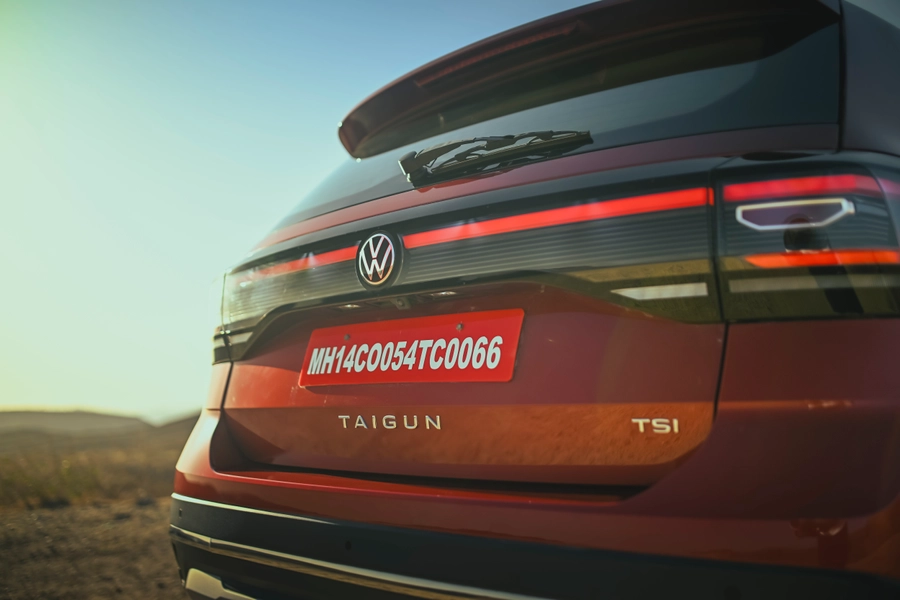
Move to the rear, and things calm down quite a bit. In fact, if you are not paying attention, you might miss the updates altogether. The connected LED tail lamps continue, and the biggest addition here is, again, the illuminated logo.
From the side, nothing really changes, and that is not a bad thing. The silhouette remains clean, well proportioned, and very European in its stance. The wheelbase stays the same at 2651 mm, which means the overall proportions that worked earlier continue to do their job here as well.
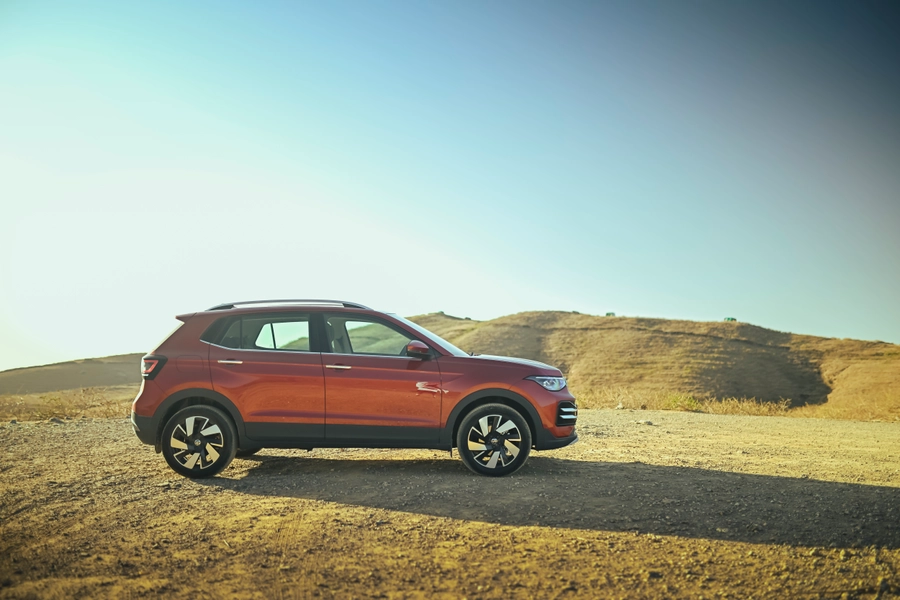
To keep things fresh, there are new alloy wheel designs depending on the variant, ranging from 16 inch to 17 inch. Some of them look quite smart, but the blacked-out alloys on the GT Line are not quite it. For something wearing a GT badge, you expect a bit more flair, maybe something that actually looks sporty instead of feeling like an easy blackout job done five minutes before a presentation.
And then there is one thing that genuinely does not make sense. The fog lamps are gone.
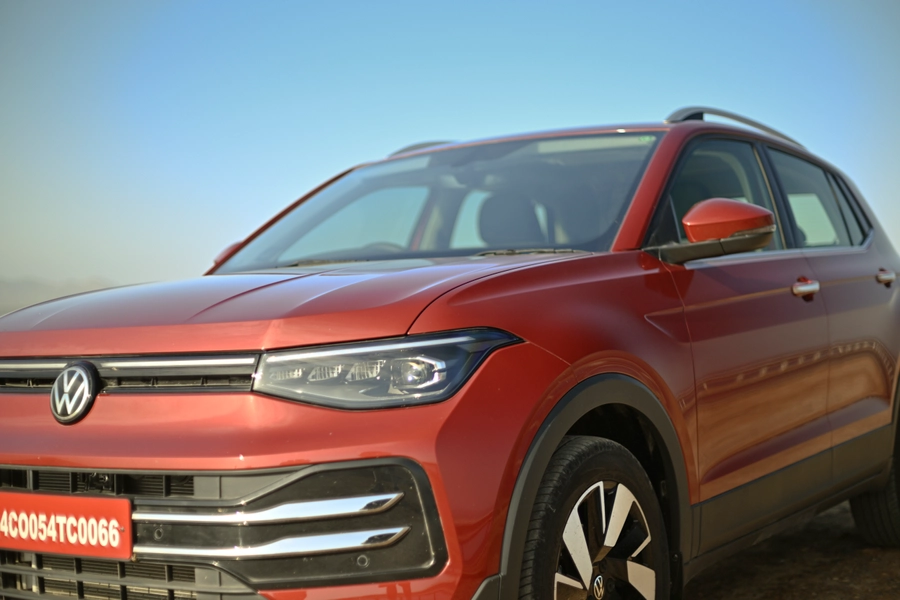
In a country like India, where visibility can go from perfect to zero in seconds, fog lamps are not a luxury, they are a necessity. The pre facelift car had them but this one does not. And it is not like the headlamps have taken a massive leap forward to compensate for that loss. This feels less like a design decision and more like a cost cutting one, and it shows. Overall, the design stays true to what the Taigun has always been about. It is subtle, understated, and quietly premium. And that is the whole point.
Volkswagen Taigun – Interior Design and Features
Step inside the Volkswagen Taigun, and you will realise this is not where Volkswagen has gone all out with changes. The layout, the overall design, and the sense of familiarity are all carried over from before. There are a few tweaks here and there, mostly in terms of colours and materials, but if you have spent time in the pre facelift car, this will feel instantly familiar.
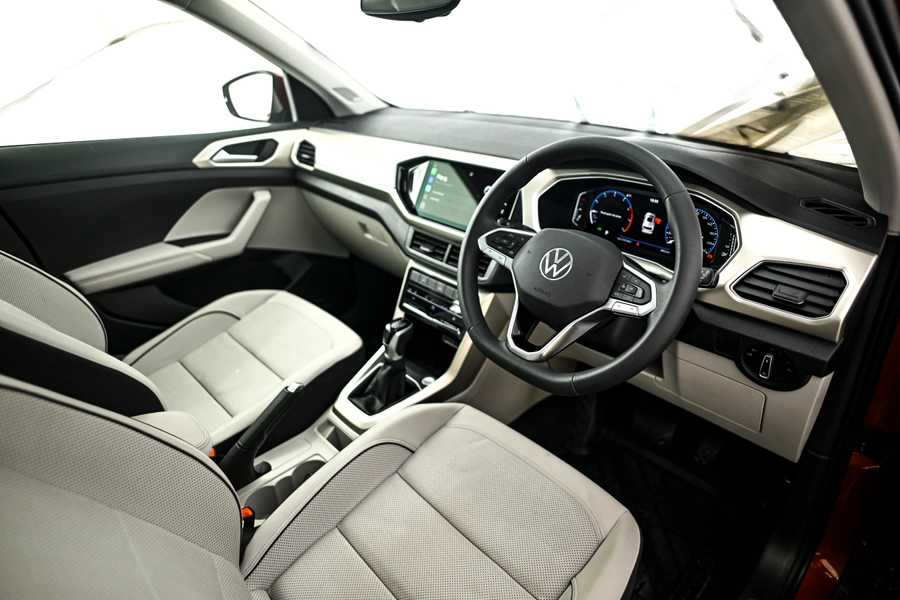
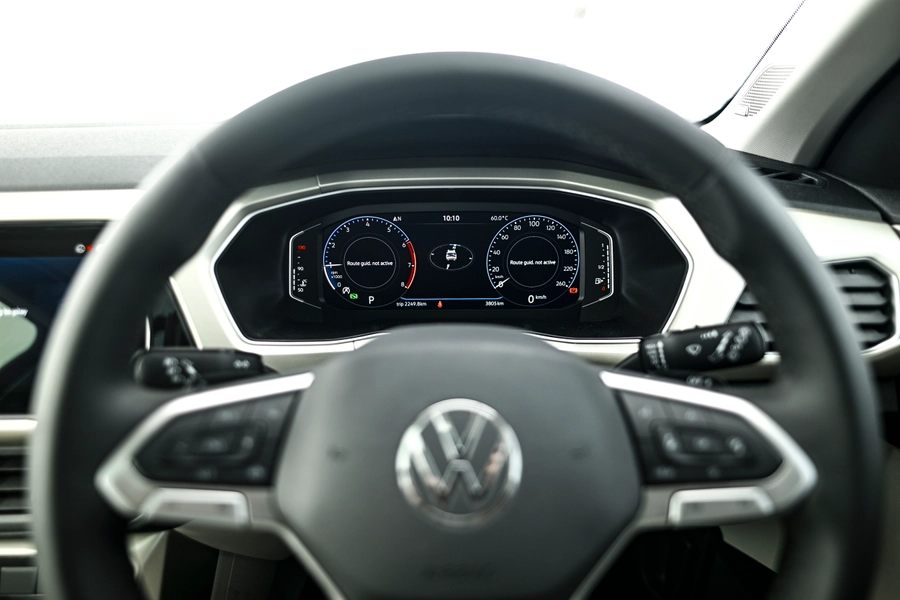
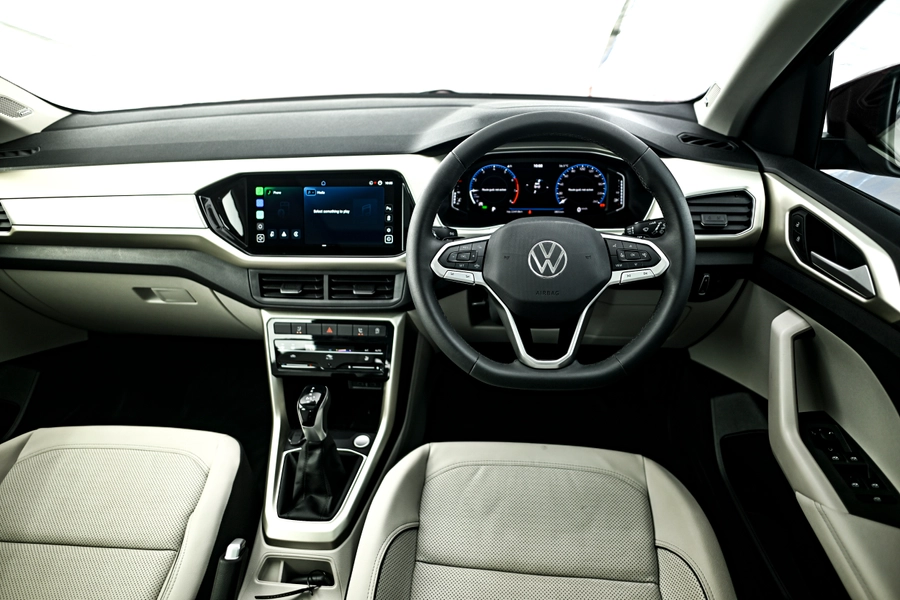
Front and centre is the 10.1 inch touchscreen, now running an updated interface. It is cleaner, a bit more responsive, and comes with some level of AI integration to make things feel more modern. Right behind the steering wheel, you get the digital instrument cluster. Again, updated UI and UX, along with four configurable display modes. It looks sharp, it is easy to read, and more importantly, it does not try to be overly complicated, very “Volkswagen” in that sense.
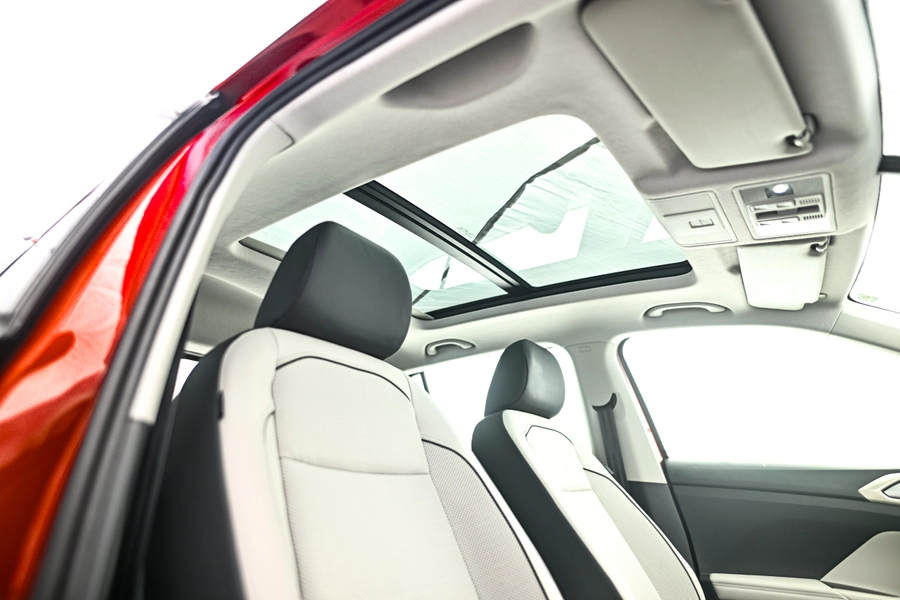
Now, the biggest change inside the cabin is hard to miss. The introduction of a panoramic sunroof. The earlier single pane unit is still around in lower variants, but the top variants finally get the full glass treatment. And yes, it makes a difference. The cabin feels airier, more open, and more in sync with what buyers in this segment expect today.
You also get a voice assistant that wakes up with a simple “Hello Volkswagen” or “Hello VW” and can control functions like the AC or infotainment. Some people will call it gimmicky but I do not entirely disagree. But here is the thing, it works and if it works without being annoying, I am not complaining.
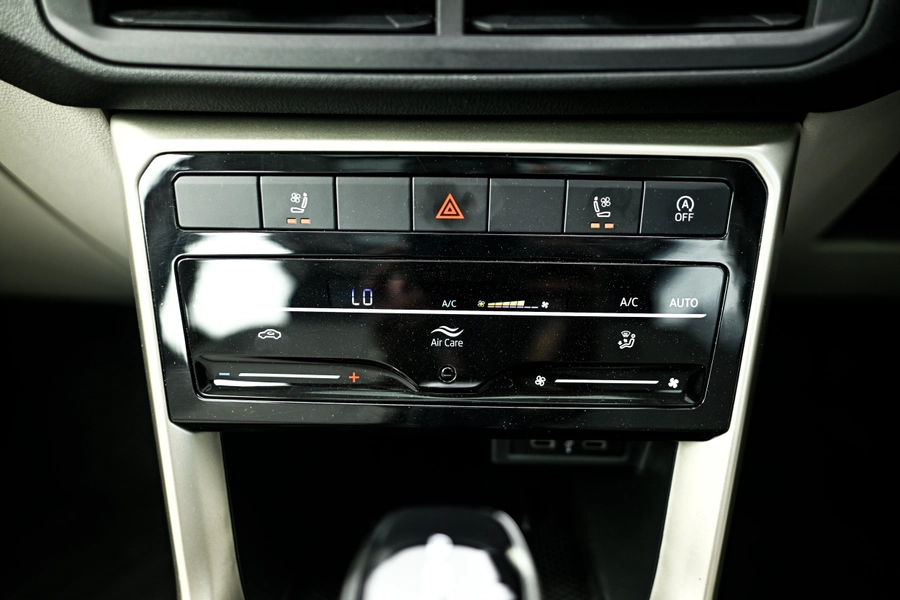
Then there are the features that actually matter in India. Ventilated front seats with electric adjustment, which is a blessing in our climate. A heated rear windscreen, rear wiper with intermittent function, and Volkswagen’s touch based Climatronic AC system. What is even better is that a lot of the essentials, like the rear wiper and automatic climate control, are available right from the base variants.
This is something the Volkswagen Group has been doing well in India lately, and it deserves credit. We saw it with the Skoda Kushaq too, where important features were not locked behind the top variants. It is a simple idea, but one that more manufacturers really need to take seriously.
Now, for the misses. And there are a few that stand out.
First, the lack of a 360 degree camera. In a car of this size and to a segment where this feature is quickly becoming standard, it feels like an obvious omission.
Second, the absence of an electronic parking brake with auto hold. Yes, you still get a good old physical handbrake. And personally, I do not mind it and there is a certain charm to it. But in bumper to bumper traffic, an electronic parking brake with auto hold is not just a convenience, it is a genuine life saver and its absence here is noticeable.
The second row is where things get a bit puzzling. The Taigun’s sibling, the Skoda Kushaq, tried to stand out with rear seat features like massaging seats. The Taigun, on the other hand, still plays it safe. No standout feature to really set it apart. Something like rear ventilated seats or maybe front memory seats could have been a game changer here.
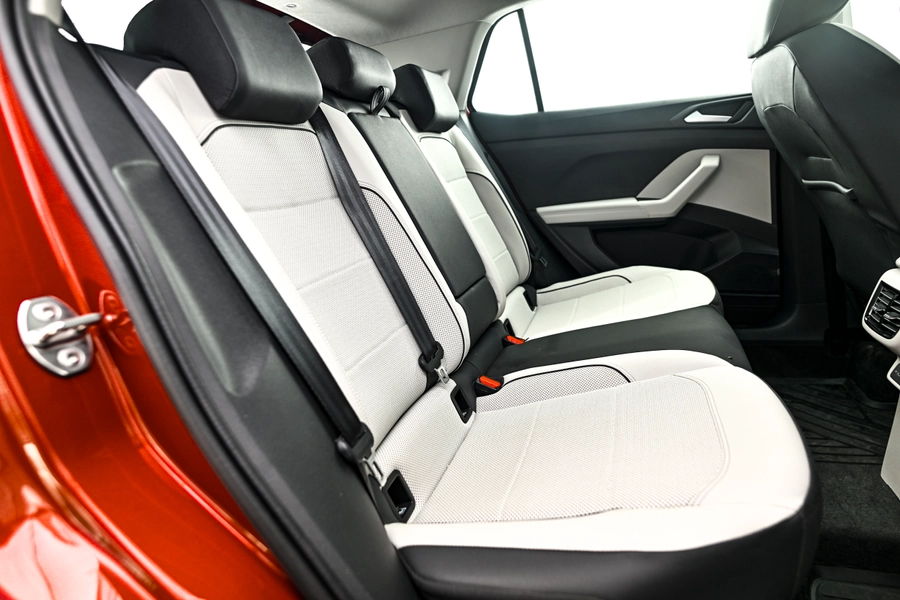
And then there is one trend that is quietly picking up pace in India, rear sunshades. We all saw the sunroof craze take over in the early 2020s. Now, in the mid 2020s, rear sunshades are slowly becoming the next big thing. And honestly, I am all for it. Unlike sunroofs, which often end up being misused, sunshades actually make a lot of sense in our conditions. This feels like a missed opportunity for Volkswagen here.
Volkswagen Taigun – Interior Comfort
On paper, the Volkswagen Taigun measures in at around 4.2 metres in length. And in this segment, that is on the shorter side. Put it next to something like the Hyundai Creta or the Kia Seltos, especially the newer Seltos which is now pushing close to the 4.4 metre mark, and you can see where this is going. And yes, you do feel that difference once you step inside.
Now, to Volkswagen’s credit, the 2651 mm wheelbase does help. It is not too far off from the Seltos, which sits at around 2690 mm. So on paper, it looks competitive. But the thing is, when you package all of that into a shorter overall length, there are compromises, and they show up in the cabin.
Up front, things are absolutely fine. You get into the driver’s seat, take a few seconds to adjust everything, and you are set. The driving position is spot on. There is a slight sporty undertone to how you sit in the car, almost like it is gently cocooning you, and that adds to the overall experience.
Moving to the second row, and you will notice the legroom is tight. Not unusable, but definitely not generous. This is not a car where three adults will sit happily in the second row for a long journey. It is more of a four seater in the real world, rather than a proper five seater.
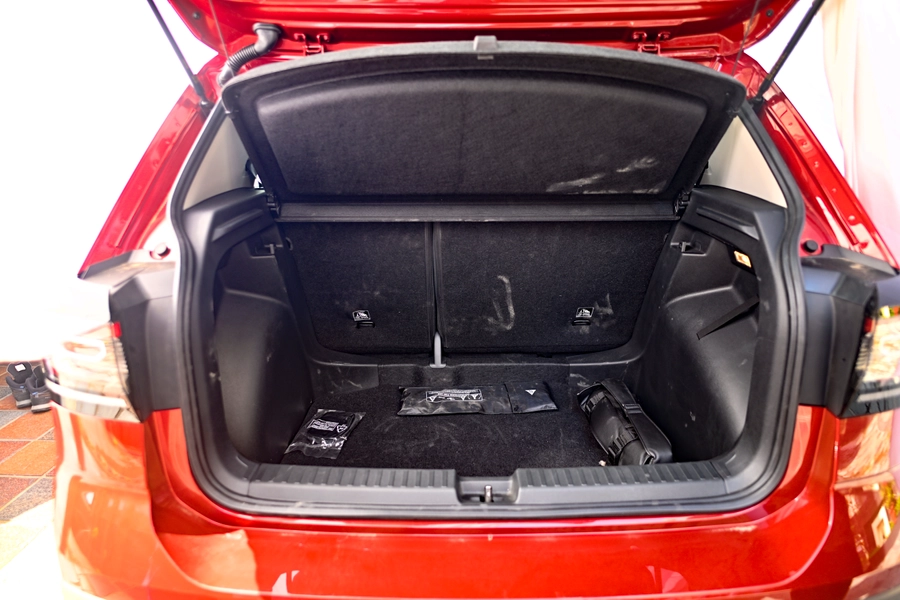
Then comes the boot. You get 385 litres of space, which is expandable up to around 1400 litres with the rear seats folded in a 60:40 split. It is usable, no complaints in terms of practicality for daily needs or a weekend trip. But again, in comparison to rivals that are comfortably offering 400 plus litres, this does sit on the lower end of the spectrum.
Volkswagen Taigun – Driving Dynamics
With the facelift, there are no major changes to the powertrains. The big update is the 1.0 litre TSI now paired with a new 8 speed torque converter, replacing the older 6 speed unit. And this, genuinely, is a solid upgrade. The extra gears make a noticeable difference. Shifts feel smoother, quicker, and at times, it almost mimics the responsiveness of a dual clutch. It is not perfect, you do get the occasional jerk or a slightly noticeable downshift, but for what this car is, it works really well.
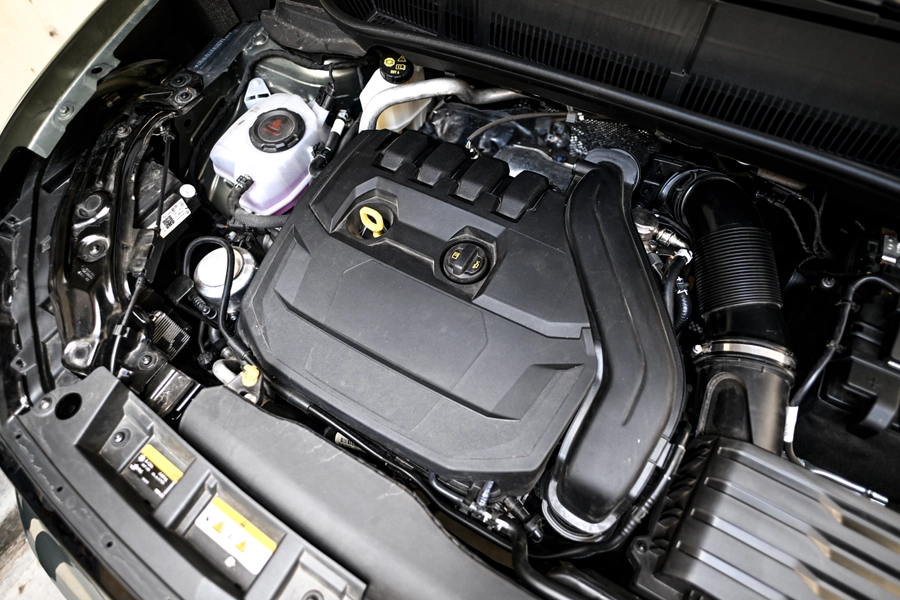
The 1.0 litre three-cylinder itself continues to push out 115 hp and 178 Nm of torque, it feels refined, surprisingly so, and easily holds its own against some four-cylinder turbo petrols. It is punchy enough for the city and does not feel out of breath on the highway either.
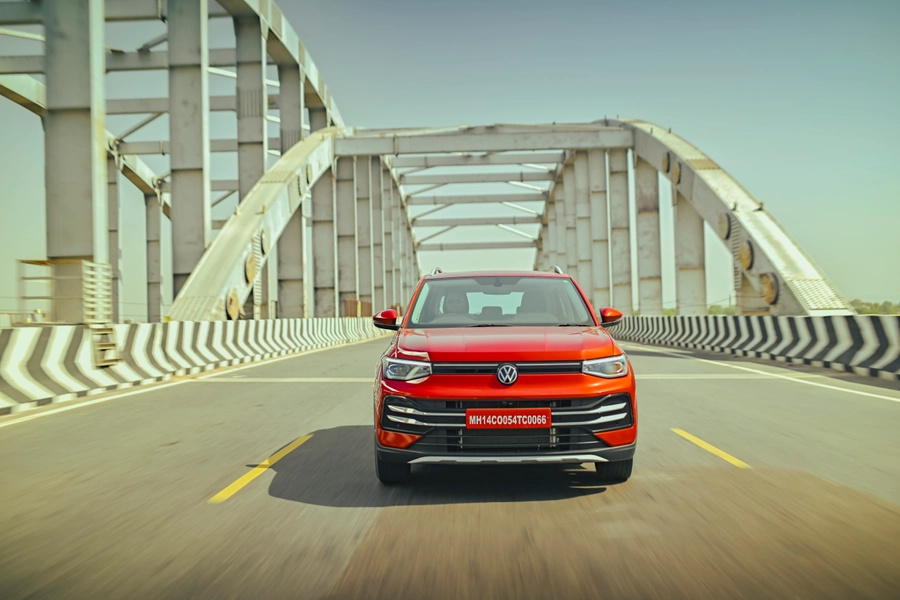
Then there is the 1.5 TSI, which now gets rear disc brakes, but still misses out on a manual gearbox. That is something enthusiasts will definitely not be happy about. You only get it with the 7 speed DSG, which is great, but having the option of a manual would have added a whole different layer of engagement.
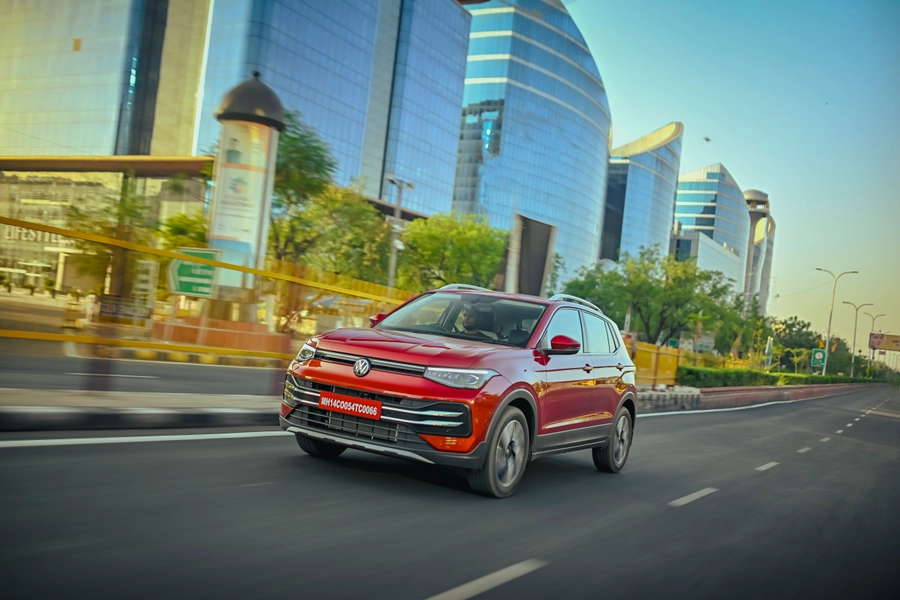
Now, coming to the steering, this is where things are slightly different from what you might expect. At low speeds, it is light, very easy to use, and perfect for city driving. But as speeds build up, it does not quite weigh up the way older Volkswagens used to.
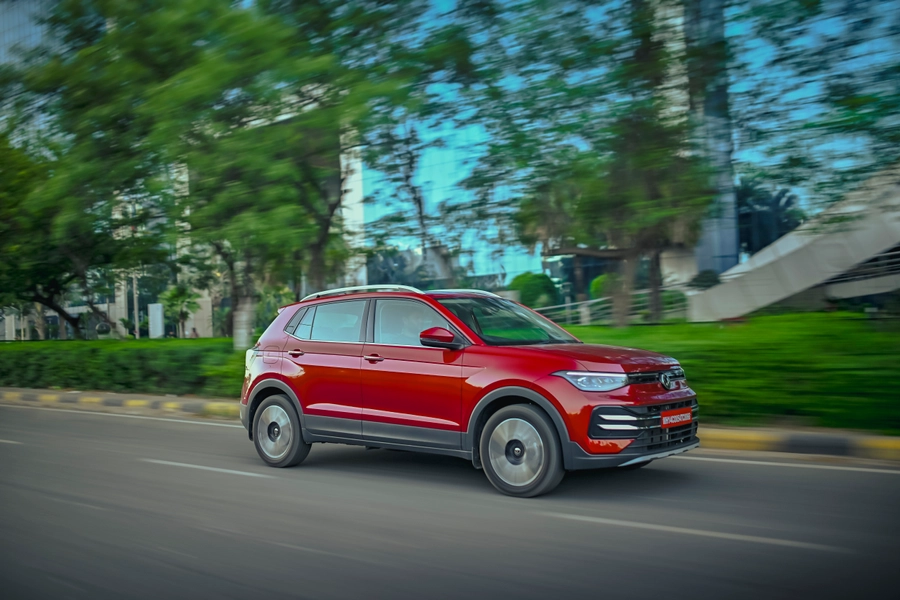
The ride quality is on the firmer side, and that is classic Volkswagen. It is not plush, it does not try to isolate you completely, but it pays you back in handling. The Taigun feels agile, eager, and much more fun than most cars in this segment. That shorter 4.2 metre length that feels like a compromise inside actually becomes a huge advantage here. You can throw it into corners, change directions quickly, and it genuinely feels enjoyable to drive. In fact, in terms of handling and overall dynamics, this is easily one of the better cars in its class.
Volkswagen Taigun – Verdict
So, coming back to the big question, does the Volkswagen Taigun finally have what it takes to go all the way? Honestly, no. It does a lot right, it feels punchy, it is fun to drive, and the cabin still carries a sporty, premium vibe. But somewhere, it misses that unmistakable Volkswagen essence. The cost cutting, whether it is the missing fog lamps or the lower quality plastics, takes away from that solid, built to last feel you expect from Volkswagen. And in a market like India, where size and features matter, it does fall short against rivals offering more for a similar price.
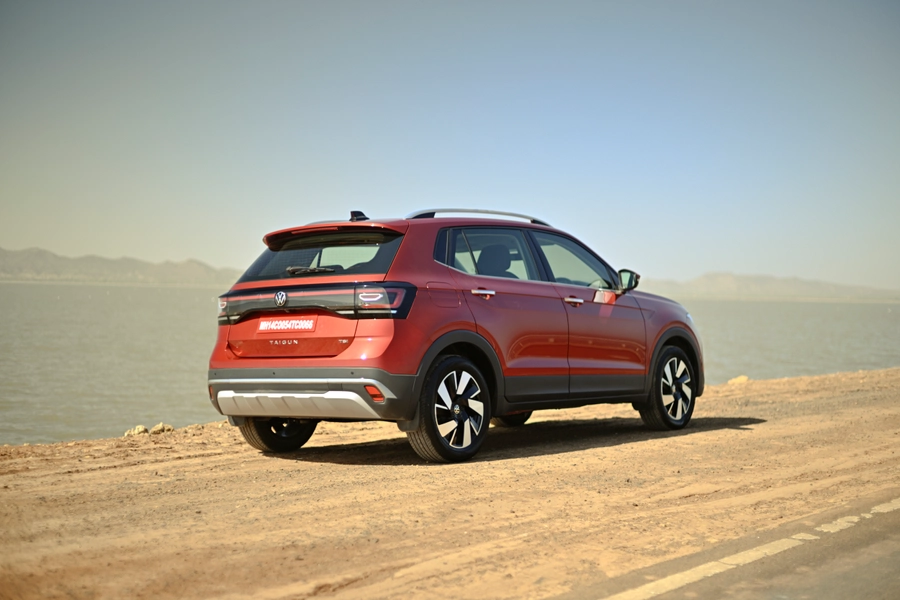
That said, the Taigun has always been for a slightly different buyer. For some, it will be a first car, for others, a second or third Volkswagen, and for a few, a city runabout sharing garage space with something like a BMW 7 Series or a Mercedes-Benz S-Class. And that is where it still works. It looks good, drives well, and carries that VW badge with its understated charm.
Pingback: Fuel Price Hiked in India by Rs 3: How it Could Impact You - Shutterdrives