
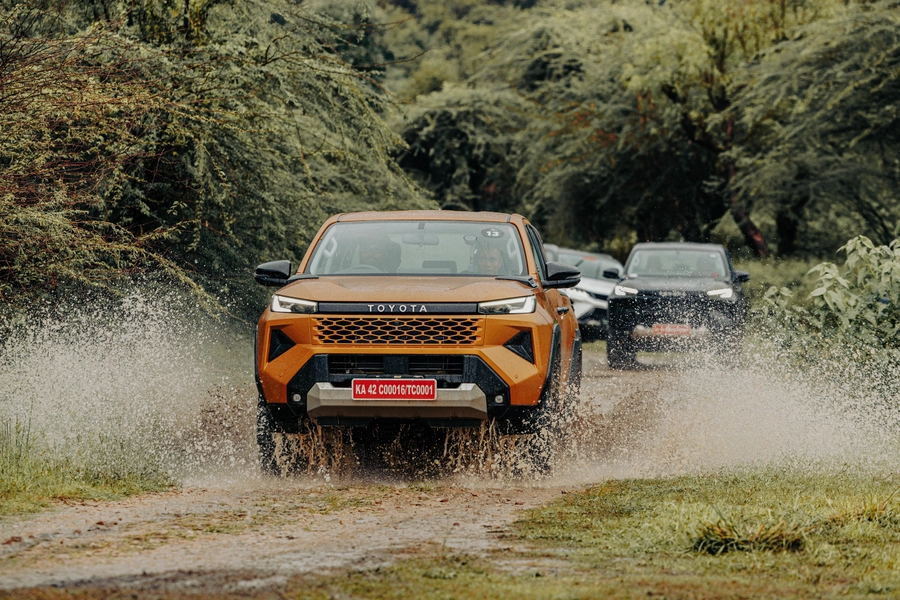
The Toyota Hilux is a name synonymous with one word, indestructible. But for an entire generation of enthusiasts, including myself, that reputation became legendary after a Top Gear episode in 2003. They left a Hilux on a beach to be battered by the sea, set it on fire and even placed it on top of a building before demolishing it. Yet somehow, the Hilux refused to die. For many of us in India who grew up watching Top Gear, that was our introduction to the Hilux, long before Toyota officially brought it here.
India finally received the Toyota Hilux in 2022 with the eighth generation model. Now, Toyota has introduced the ninth generation Hilux, still underpinned by the proven IMV platform and also giving us a glimpse at what could underpin the next generation Fortuner. After decades of building a reputation for toughness, the question with the new Hilux is not whether it is tough. It is whether Toyota has managed to make an indestructible truck better.
I’d keep this conversational and opinionated, rather than making the exterior section read like a spec sheet.
Toyota Hilux – Exterior Design
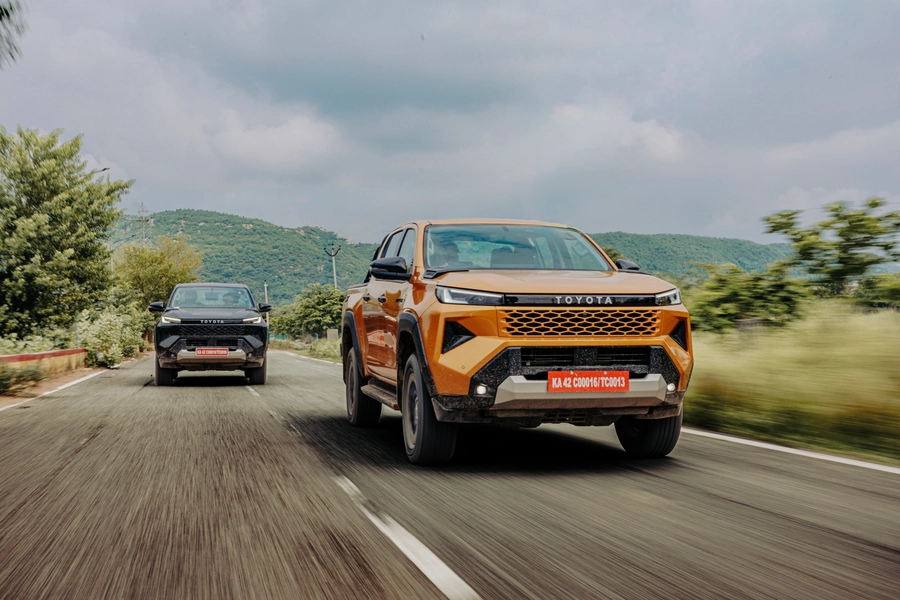
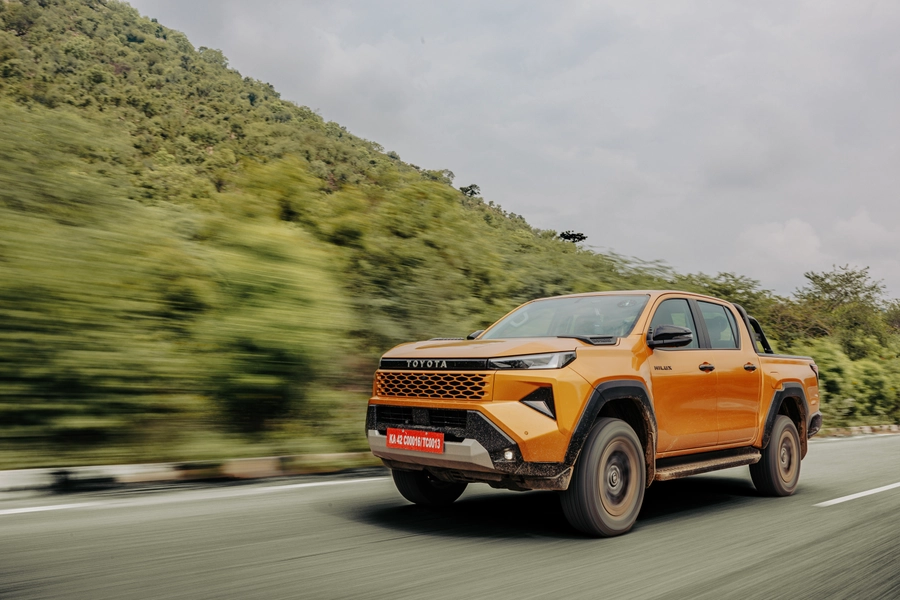
Toyota has completely redesigned the Hilux at the front and rear, and the new face follows what the brand calls its Cyber Sumo design philosophy. The Toyota logo is gone, replaced by bold TOYOTA lettering, which actually looks quite cool. You also get sharp, angular headlights with integrated DRLs, a body coloured honeycomb style grille and a bonnet that sits pretty high, giving the Hilux plenty of road presence. It is still a massive truck at around 5.3 metres long, while the 3,085 mm wheelbase remains unchanged.
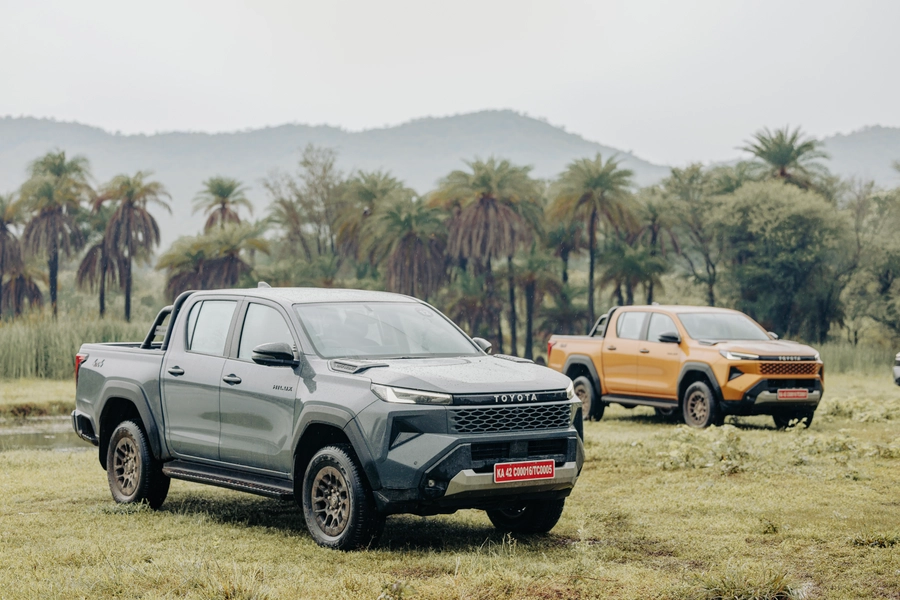
Move to the side and things look a lot more familiar, with the doors appearing very similar to the outgoing Toyota Hilux. There is chunky plastic cladding around the wheel arches, while the wheel size has actually dropped to 17 inches. And honestly, that is a plus on something like the Hilux because you get thicker sidewalls that make much more sense when you head off road. The new design has received its fair share of heat online, but in person, I really would not go that far.
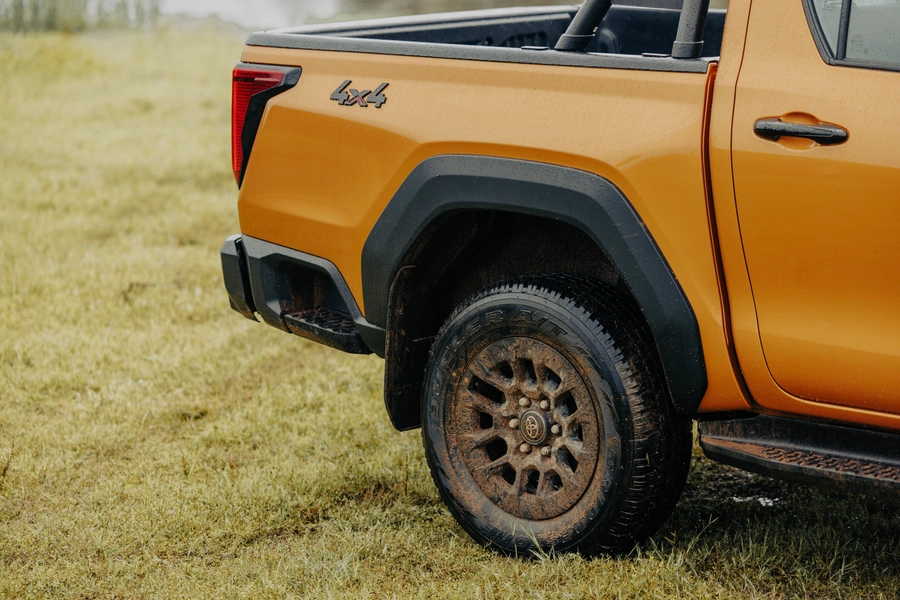
At the rear, you get new angular LED tail lamps, although the indicators still use halogen bulbs. The bumper itself is properly chunky and now gets a useful integrated side step to make accessing the load bed easier. You also get TOYOTA lettering across the tailgate, and the tailgate itself can take around 100 kg of load. Overall, it is still unmistakably a Hilux, just with a much sharper and more modern interpretation of Toyota’s pickup truck design.
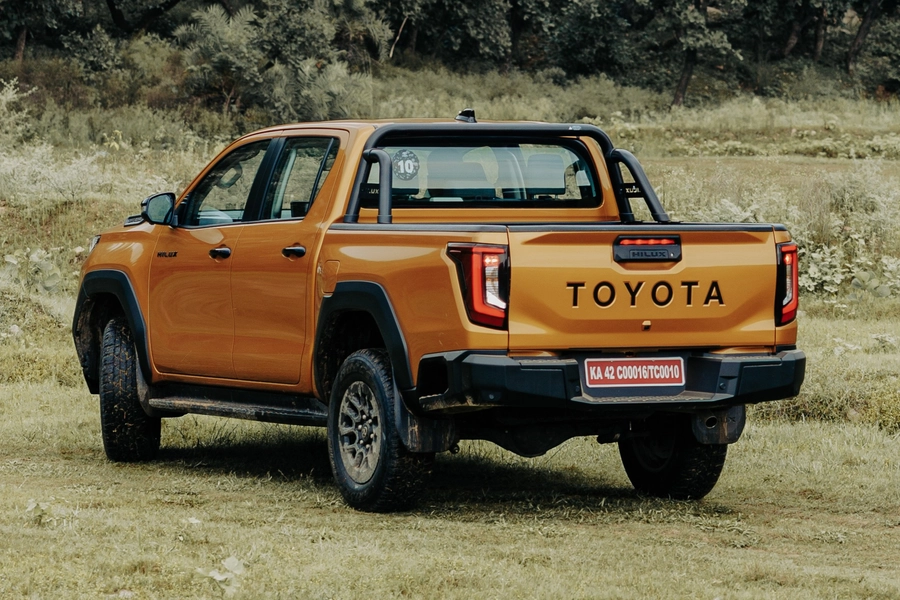
The new Hilux is also available in six colours: Sulphur Metallic, Platinum Pearl White, Metallic Attitude Black, Ash, Emotional Red and Super White. Of these, Ash and Sulphur Metallic are new additions.
Toyota Hilux – Interior Design and Features
The interior is where some of the biggest changes have happened. The dashboard has been completely redesigned with a much chunkier, more utilitarian look, dominated by a new freestanding 12.3 inch touchscreen. The steering wheel is new too and looks similar to the unit seen on the Land Cruiser Prado, while the chunky leather wrapped gear lever fits the Hilux’s rugged character rather well.
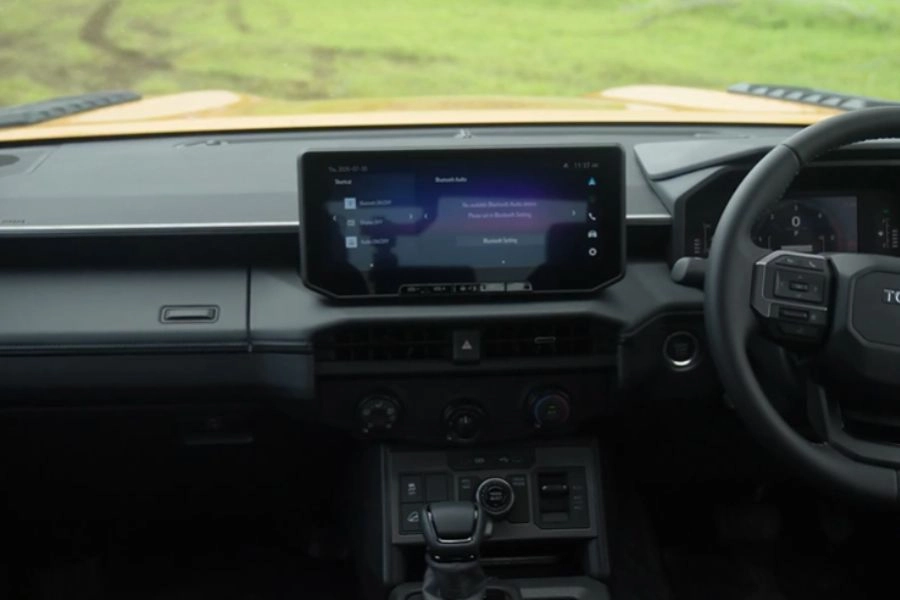
Just ahead of it sit the drive mode selector and four wheel drive controls, with physical HVAC controls positioned above them. You also get a push button start, a proper physical handbrake and two gloveboxes, one of which is lockable. The driver also gets a 7 inch digital instrument cluster. You also get a 360 degree camera on offer.
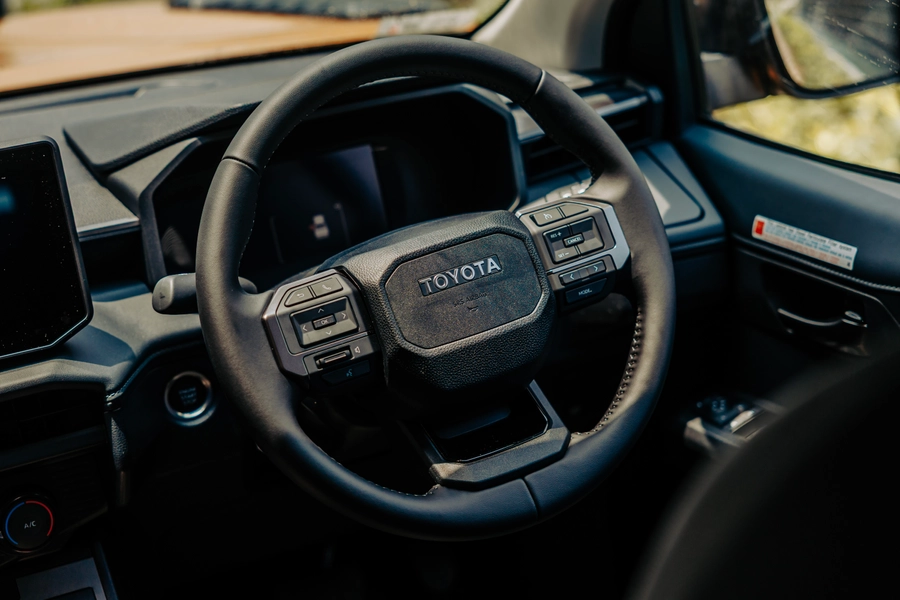
But while the design has taken a big step forward, the India spec Hilux does miss out on quite a few features. The previous Hilux sold here offered automatic climate control, leather upholstery and electrically adjustable seats, while the new one gets manual AC, fabric upholstery and manual seat adjustment. Interestingly, several of these features are available on the new Hilux in international markets depending on the variant.
Even the new electric power steering offered globally has been replaced by a hydraulic power steering setup for India. Rear passengers also miss out on AC vents, although you still get three adjustable headrests, grab handles and a centre armrest with cupholders. So while the cabin itself has become considerably more modern, the India spec equipment list feels like a step backwards.
Toyota Hilux – Comfort
The Hilux’s high floor means getting into the cabin requires a proper step up. The side step and grab handle on the A-pillar make the process easier, although the high entry point may be inconvenient for elderly passengers or those with limited mobility.
Once inside, the driving position provides a clear view over the road. The high seating position, large glass area and visible bonnet make it easier to judge the vehicle’s position. Rearward visibility is also adequate, helped by large exterior mirrors and a sufficiently sized interior mirror.
The cabin offers enough width for occupants to sit comfortably without feeling cramped. The front seats are broad, firm and supportive, while taller drivers should have sufficient legroom. The driver’s seat gets six-way manual adjustment and the passenger seat gets four-way adjustment. Fabric upholstery replaces leather on the previous model. The steering wheel adjusts for both reach and height, while the pedals are well spaced. The driver also gets a useful dead pedal, and the large mirrors help when positioning the Hilux in tighter spaces.
Toyota Hilux – Driving and Dynamics
Under the bonnet, not much has changed. The Hilux continues with the familiar 2.8 litre turbo diesel engine, producing 204 hp and 500 Nm of torque, paired with a six speed automatic gearbox. Unlike the outgoing model, there is no manual transmission option this time around. Interestingly, Toyota is also offering the Hilux in a 4×2 configuration in India this time, alongside the more familiar 4×4.
The six speed automatic prioritises smoothness over quick shifts. It works well in normal driving, although there can be a short delay when a sudden throttle input demands a downshift. Three drive modes are available: Eco, Normal and Power. Eco softens throttle response for city driving, Normal offers a balance and Power provides sharper responses.
The S setting limits the highest gear rather than changing the shift behaviour. It is useful for descents and off road driving, while Power mode works better for quicker road driving.
The Hilux uses double wishbone suspension at the front and a rigid axle with leaf springs at the rear. The setup prioritises durability and load carrying. Toyota has retuned the suspension, while 17 inch wheels with 265/65 tyres provide some additional cushioning. However, the rear remains firm when the load bed is empty. Large potholes and rough surfaces are handled confidently, but repeated smaller bumps can cause the rear axle to hop. Rear passengers feel this more than those in the front.
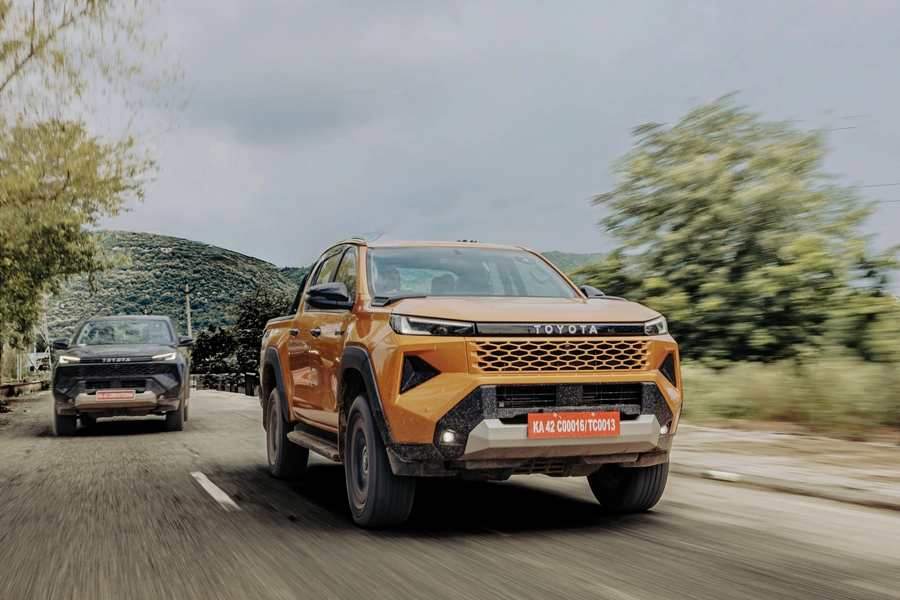
The 4X4 Hilux gets four wheel drive, low range and a locking rear differential. These features, combined with strong low end torque, allow controlled progress over rocks, mud and uneven terrain. The Hilux feels more capable on rough terrain than on poor urban roads, where its firm suspension is more noticeable.
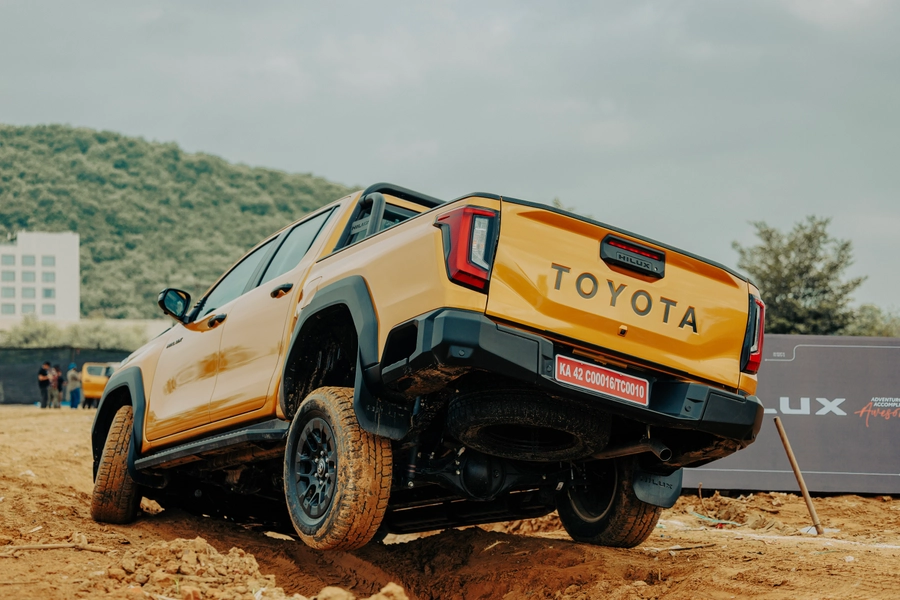
The Hilux feels stable and secure at highway speeds. However, its size and weight are noticeable through corners, with some body movement during faster direction changes. An empty load bed can also make the rear feel unsettled when driven hard. The Hilux therefore responds best to smooth and measured driving.
Toyota Hilux – Verdict
Priced between ₹31.99 lakh and ₹36.69 lakh, the new Hilux remains fairly well positioned for what it offers. The new design, proven 2.8 litre diesel and rugged character continue to make a strong case for it. However, the India spec car misses out on several features offered internationally, and even some that were available on the outgoing model. So while the Hilux is priced well, the feature list does leave a little to be desired.
Pingback: Lifestyle Pickup Trucks in India: Is the Scorpio Lifestyler the Turning Point? - Shutterdrives