
There was something magical about growing up as a car enthusiast in the 2000s and 2010s. New car launches did not instantly appear on your phone through reels, YouTube videos or endless social media posts. Instead, you waited for the latest issue of your favourite automotive magazine to arrive.
You would carefully flip through its pages, admire the glossy photographs, read every word of the road tests, and almost instinctively turn to the final pages where the price list for every city was printed. That was where dreams met reality. As a child, you would calculate just how expensive your dream car was and quietly tell yourself that one day, after years of studying and working hard, you would own one.
For me, one of those dream cars was the Honda CR-V. It was the SUV that often appeared in movies, usually driven by the successful businessman, the accomplished professional or the protagonist who had finally made it in life. Back then, Honda carried an aura that very few brands could match. The Civic, Accord and CR-V were not just cars. They were symbols of success and aspiration. They were the kind of vehicles you saw parked outside luxury hotels, driven by successful NRIs visiting India, well known actors or influential politicians.
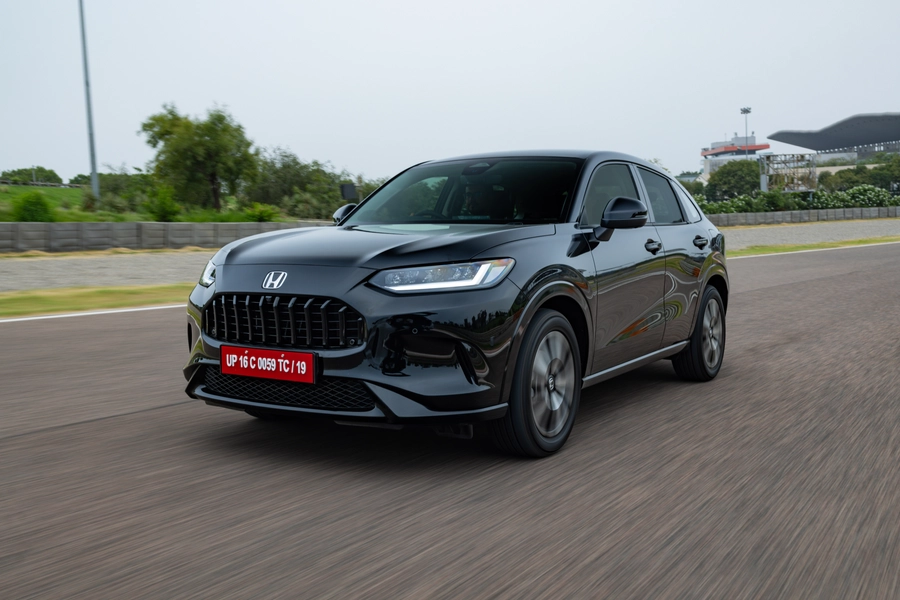
Over the years, that image gradually faded as the market shifted towards feature loaded SUVs and newer competitors. Yet, for an entire generation of enthusiasts, those three letters, CR-V, still evoke a sense of nostalgia. Now, Honda is attempting to rekindle some of that magic with the ZR-V. While it may wear a different badge and belong to a different era, it carries the responsibility of reminding enthusiasts why Honda once occupied such a special place in the hearts of Indian buyers. We got behind the wheel of the new Honda ZR-V at the Buddh International Circuit to find out if it still has what it takes to wear that legacy.
Honda ZR-V – Exterior Design
Like most global Honda models, the Honda ZR-V follows an understated design philosophy. It is a car built for markets across the world, and that reflects in the way it looks. I would not call it distinctly European or American. In fact, it reminds me of something Sheldon Cooper once said in The Big Bang Theory about having a “Mid Atlantic accent”. The Honda ZR-V has a similar personality. It does not lean heavily towards any one design language, instead striking a balance that feels globally appealing.
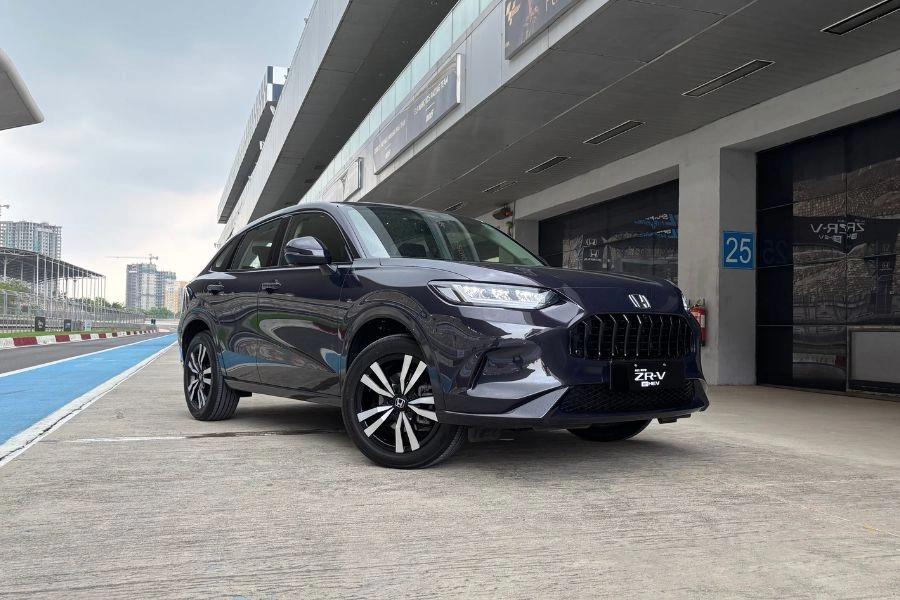
At the front, the ZR-V features a vertically slatted gloss black grille flanked by sleek LED headlamps with integrated LED DRLs and sequential turn indicators. The bumper incorporates functional air curtains that help improve aerodynamic efficiency, adding a touch of engineering beneath the styling. One omission, however, is the absence of front fog lamps, something buyers in this segment may expect. Measuring 4,567 mm in length, 1,840 mm in width and 1,621 mm in height, along with a wheelbase of 2,655 mm, the Honda ZR-V has proportions that give it a planted and substantial road presence without looking oversized.
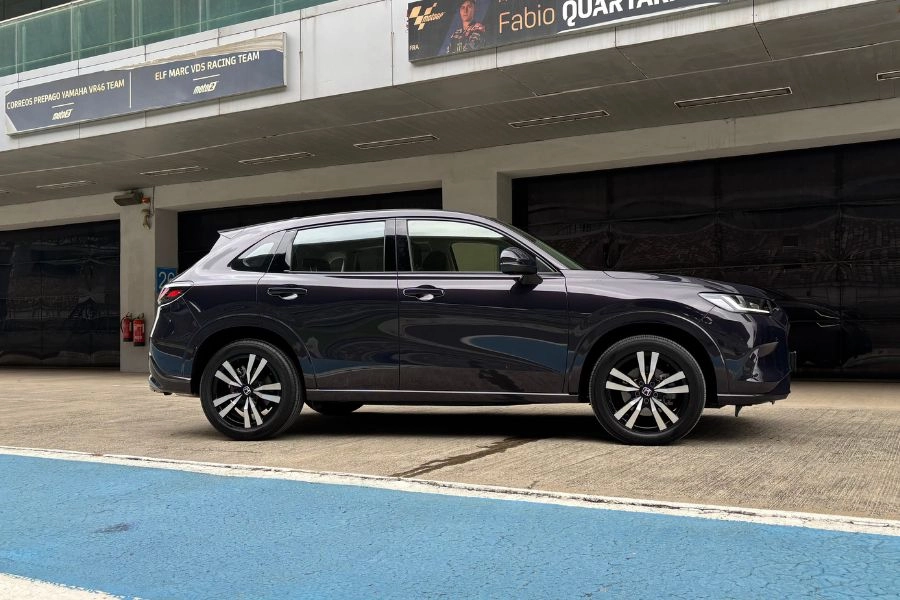
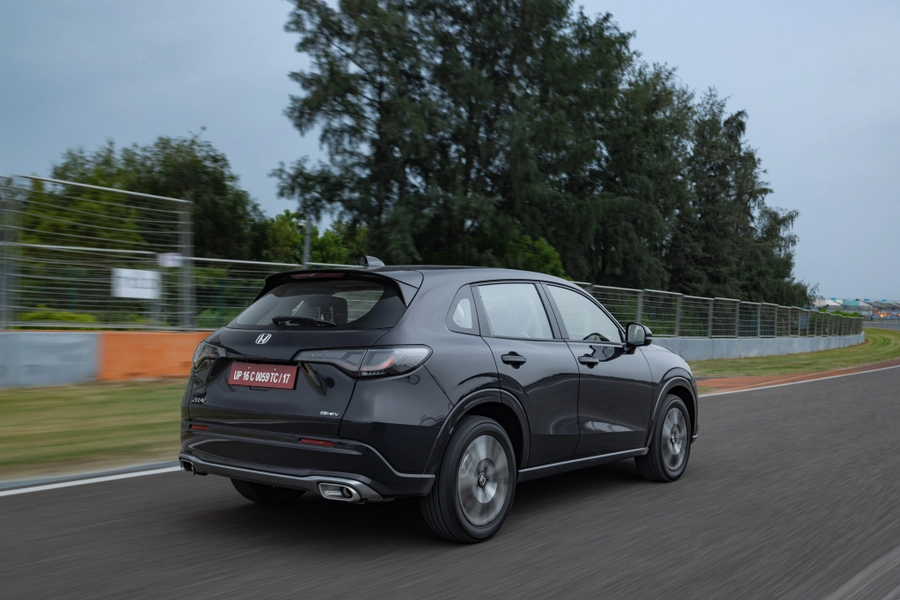
Viewed from the side, the design becomes more interesting. The gently sloping roofline gives the SUV a sportier profile without compromising its overall proportions. Around the back, the slim clear lens LED tail lamps stretch across the width and, from certain angles, the rear has a resemblance to the Mercedes Benz GLC.
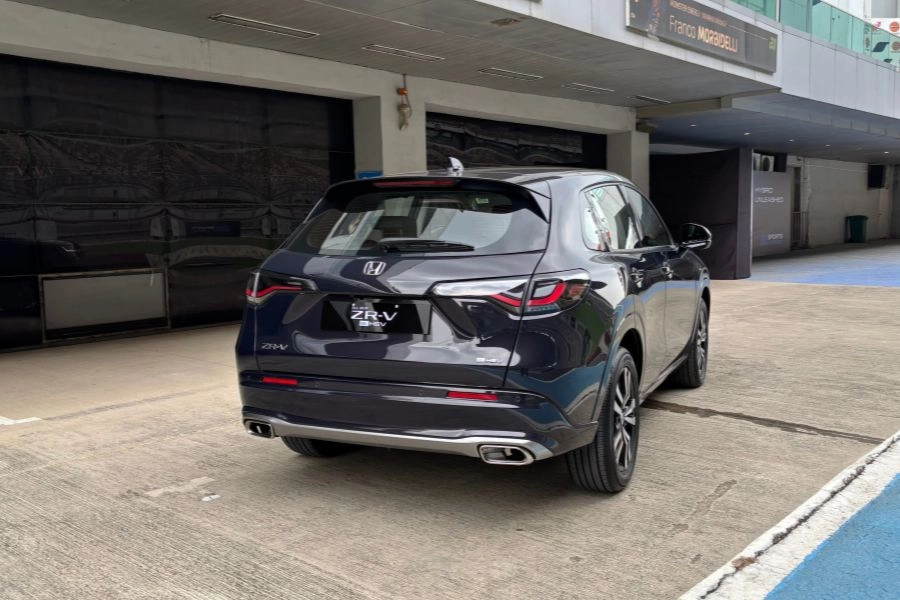
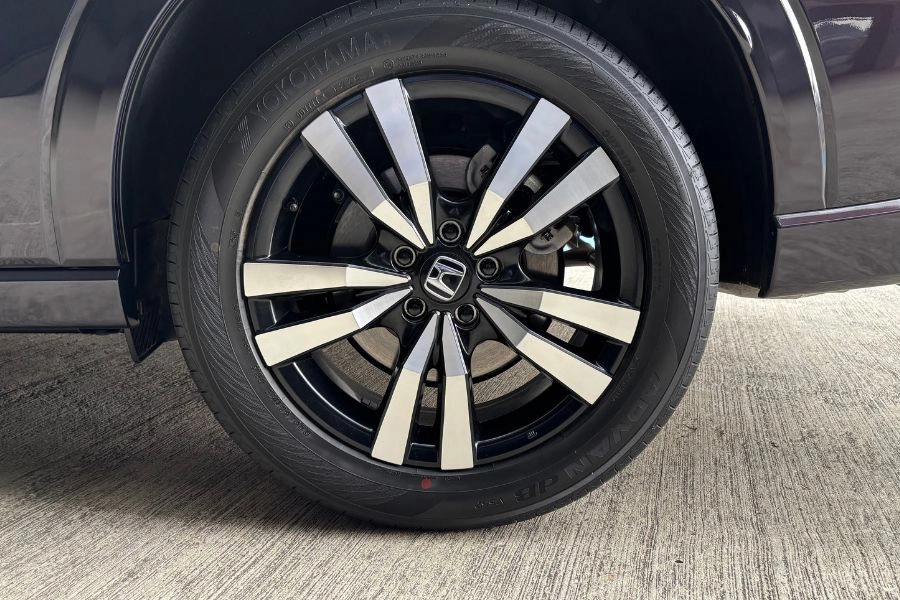
Honda has also resisted the temptation of adding fake exhaust outlets. Instead, the silver finished exhaust surrounds are neatly integrated into the bumper, keeping the design clean and tasteful. The 18 inch alloy wheels may not be the most intricate in terms of design, but they fill the wheel arches well and complete the stance of the SUV. Also on offer are 4 exterior colours, crystal black pearl, platinum white pearl , meteoroid gray metallic and twilight black pearl.
Overall, the Honda ZR-V is exactly what you would expect from a modern Honda. It is clean, mature and understated, and it is a design that is likely to age gracefully even a decade from now. At the same time, it misses that one standout element that makes you stop and look back after parking it. It is, in many ways, a design that is hard to hate, but just as easy to forget.
Honda ZR-V – Interior and Features and Comfort
The Honda ZR-V’s cabin follows the same philosophy as its exterior. Finished in an all black theme, it is clean, understated and refreshingly functional, staying true to Honda’s approach of prioritising ergonomics over flashy gimmicks.
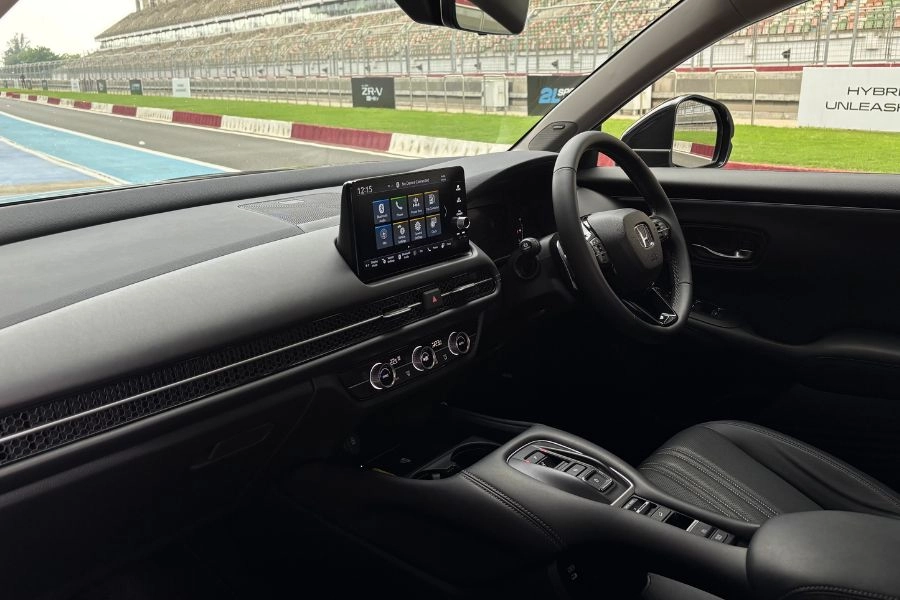
The dashboard is dominated by a 9 inch freestanding touchscreen with wireless Apple CarPlay, wireless Android Auto and Bluetooth connectivity. Thankfully, Honda has retained physical shortcut buttons and a volume knob, making the system much easier to operate on the move. Below it sit honeycomb finished AC vents that span the width of the dashboard, followed by physical dual zone climate control switches. You also get a PM2.5 cabin air filter, while the dashboard itself is wrapped in soft touch leatherette, giving the cabin a premium feel.
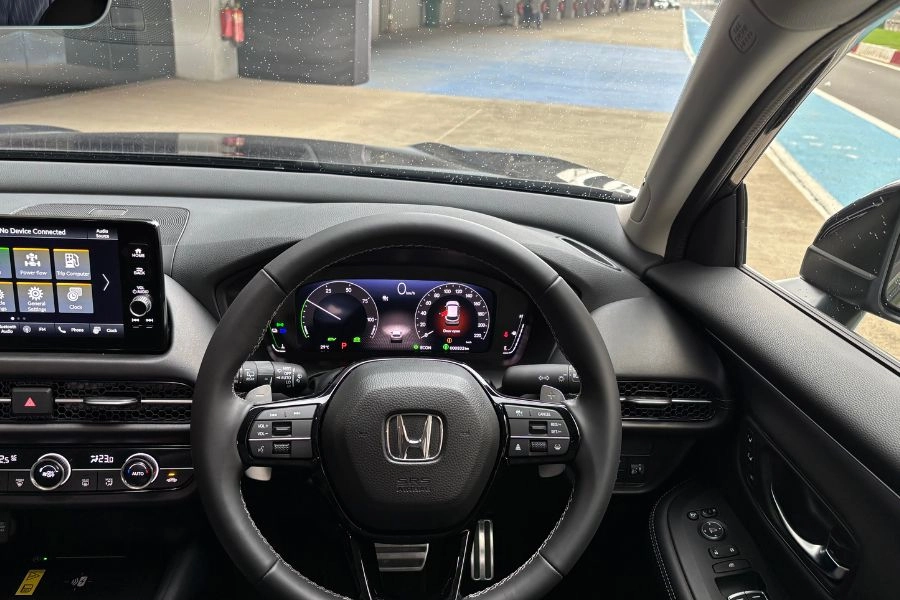
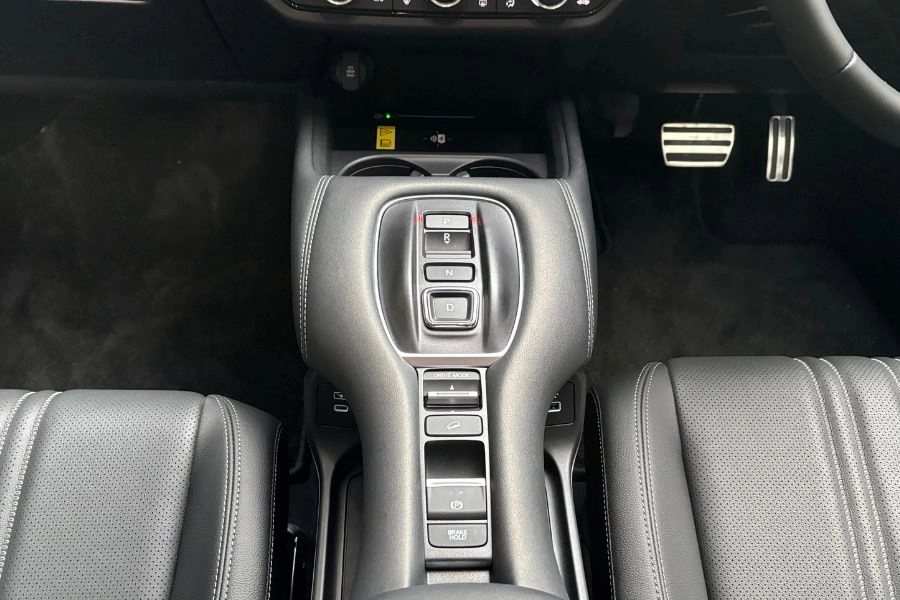
Ahead of the driver is a 10.2 inch digital instrument cluster, while the conventional gear lever makes way for electronic push button controls for the hybrid eCVT transmission. The centre console houses the drive mode selector, electronic parking brake with Auto Hold, wireless charger, cup holders, a 12V socket and two USB Type C ports. The only ergonomic gripe is that the USB ports are tucked below the charging tray, making them slightly awkward to access.
The driver gets an eight way electrically adjustable seat with two memory presets, while the front passenger gets a four way powered seat. Other features include auto folding ORVMs with a welcome function, a frameless auto dimming IRVM, aluminium finished pedals, regenerative braking paddles behind the steering wheel and a 12 speaker Bose sound system that delivers an impressive listening experience. Overall fit and finish is excellent, with solid build quality and materials that feel worthy of a CBU Honda.
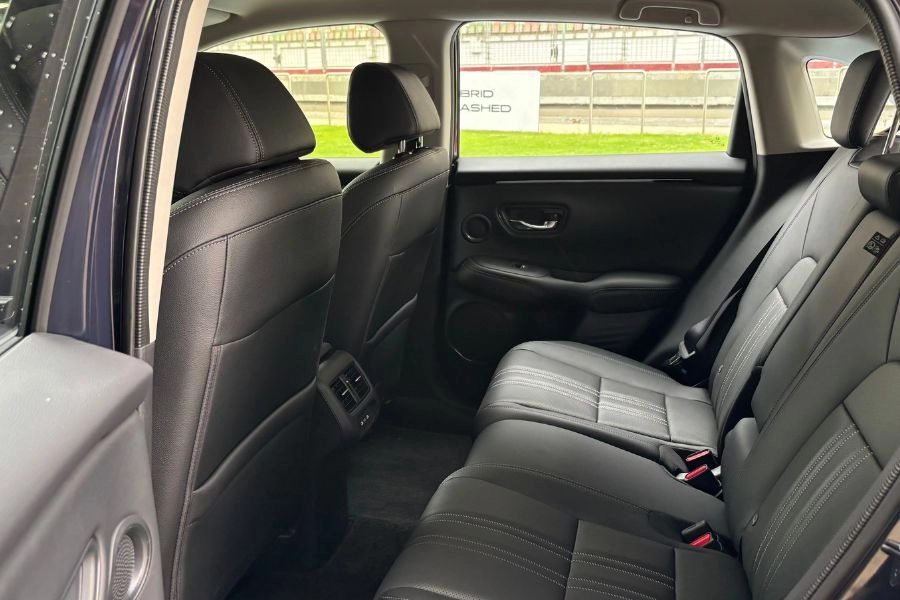
Rear passengers get AC vents, a centre armrest, three adjustable headrests and 60:40 split folding seats. However, the hybrid battery results in a slightly raised floor, leaving taller occupants in a knees up seating position with limited under thigh support. At six feet tall, I found rear space adequate rather than generous, and long journeys may not be as comfortable as some rivals.
One notable omission is the lack of rear sunshades or even privacy glass, something that would have made a noticeable difference in Indian conditions. Then there is the absence of a sunroof. Personally, I do not consider this a drawback, but in today’s market, where buyers often expect one regardless of how often they use it, it could become a talking point against the ZR-V.
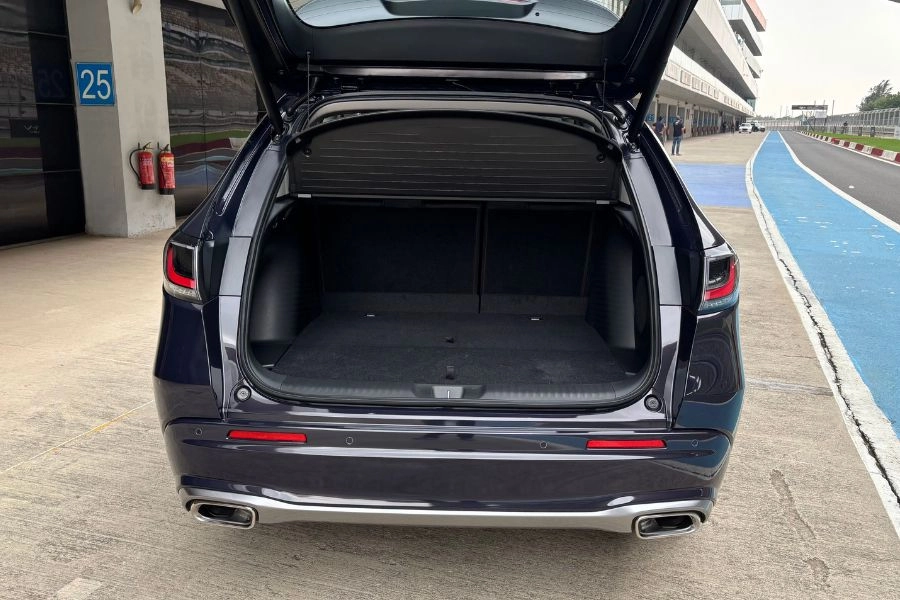
Practicality remains strong with over 1,300 litres of luggage space available with the rear seats folded, along with a powered tailgate featuring gesture control. Overall, the Honda ZR-V’s cabin impresses with its quality, thoughtful ergonomics and solid build, even if it misses a few headline grabbing features that buyers in this segment have come to expect.
Honda ZR-V – Driving and Dynamics
Before we get into how the Honda ZR-V drives, it is worth pointing out that this was not a conventional road test. Our drive was limited to the Buddh International Circuit, which means this review focuses on the SUV’s performance, handling and overall dynamics. Ride quality, real world fuel efficiency and the Honda SENSING ADAS suite are aspects we will reserve for a comprehensive road test.
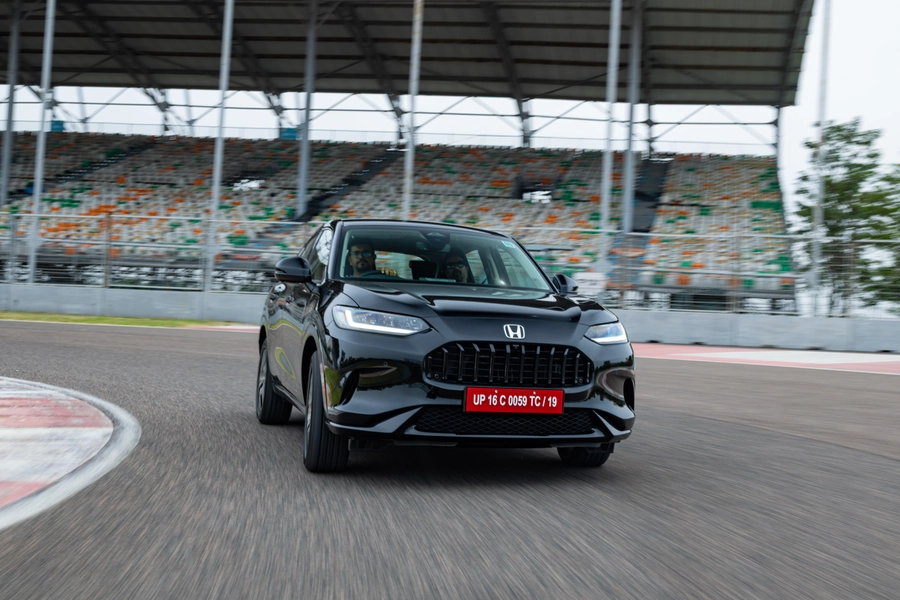
Powering the ZR-V is Honda’s familiar 2.0 litre naturally aspirated petrol engine paired with a self charging hybrid system and a permanent magnet electric motor. Combined, the system produces 184 PS and 350 Nm of torque, with drive sent to the front wheels through Honda’s eCVT transmission with an engine linked clutch. There are three drive modes on offer, namely Econ, Normal and Sport, while the car automatically switches between EV Drive, Hybrid Drive and Engine Drive depending on the driving conditions.
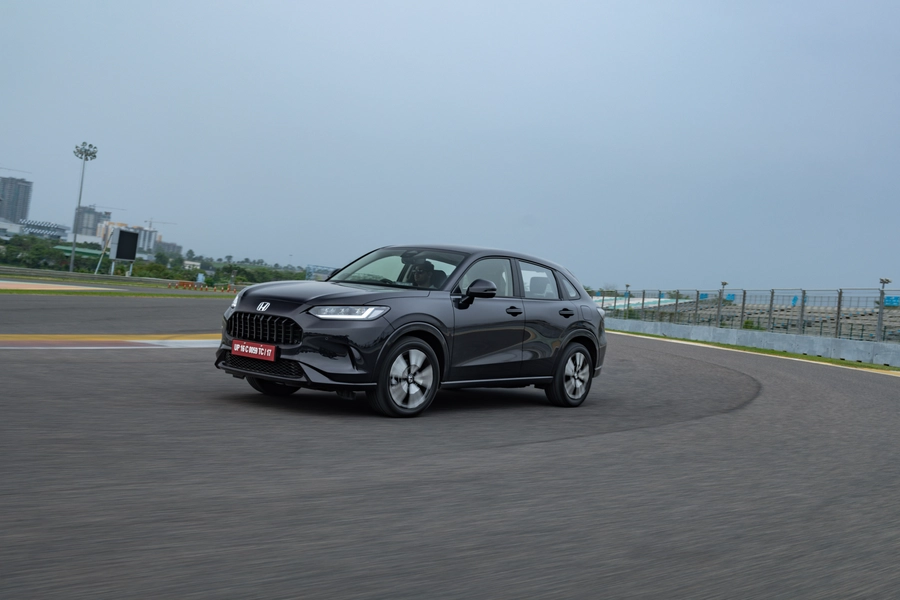
The drive begins in the pit lane under a regulated speed limit of 40 kmph, and the first thing you notice is just how refined the ZR-V feels. At lower speeds, the SUV often operates in EV mode, making it eerily quiet. The transition between electric and petrol power is seamless, and unless you deliberately bury the throttle, you hardly notice the engine coming to life.
Push harder though, and the Honda ZR-V quickly changes character. Instant torque from the electric motor masks the initial hesitation, while the naturally aspirated petrol engine comes alive with a familiar Honda soundtrack. It is not an aggressive or overly sporty note, but there is something satisfying about hearing a naturally aspirated engine rev freely in an era dominated by downsized turbocharged units.
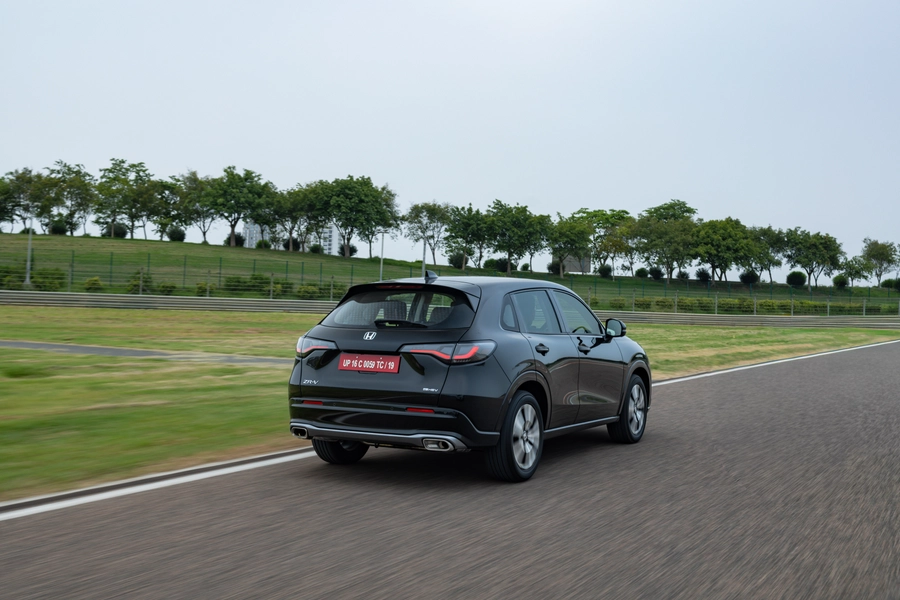
Straight line performance is impressive. Honda claims a 0 to 100 kmph time of 7.8 seconds, and during our informal stopwatch run on the main straight, I managed an 8 second sprint.
What surprised me even more was the ZR-V’s handling. Despite being an SUV riding on conventional road tyres, body roll was remarkably well controlled. The steering feels direct and predictable, allowing you to place the car confidently through corners, while the suspension keeps the body composed even when changing direction quickly. The ZR-V uses McPherson struts at the front and a multi link rear suspension, and the setup does a commendable job of balancing comfort with composure.
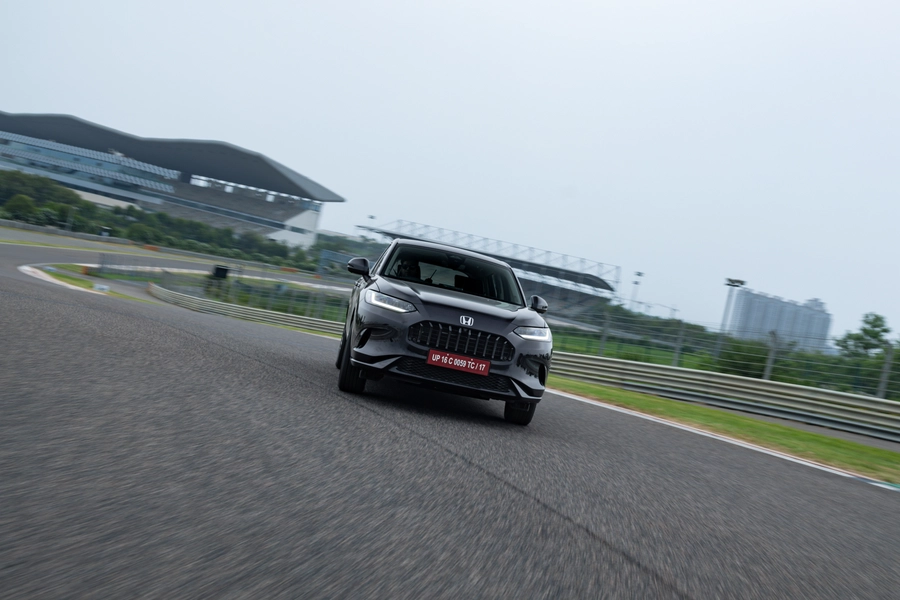
The slalom course further highlighted this. I comfortably completed it at around 75 kmph without clipping a single cone, and more importantly, without the excessive body movement you would normally associate with an SUV. Speaking to the instructors afterwards, none of the participants managed to unsettle the car or knock over any cones, which says as much about the ZR-V’s predictable chassis as it does about the controlled environment of the exercise.
That is not to say it completely defies physics. Through tighter corners, you can still feel the higher centre of gravity, and there is some body roll if you really begin to lean on the chassis. After all, this is still a family SUV, not a hot hatch pretending to be one.
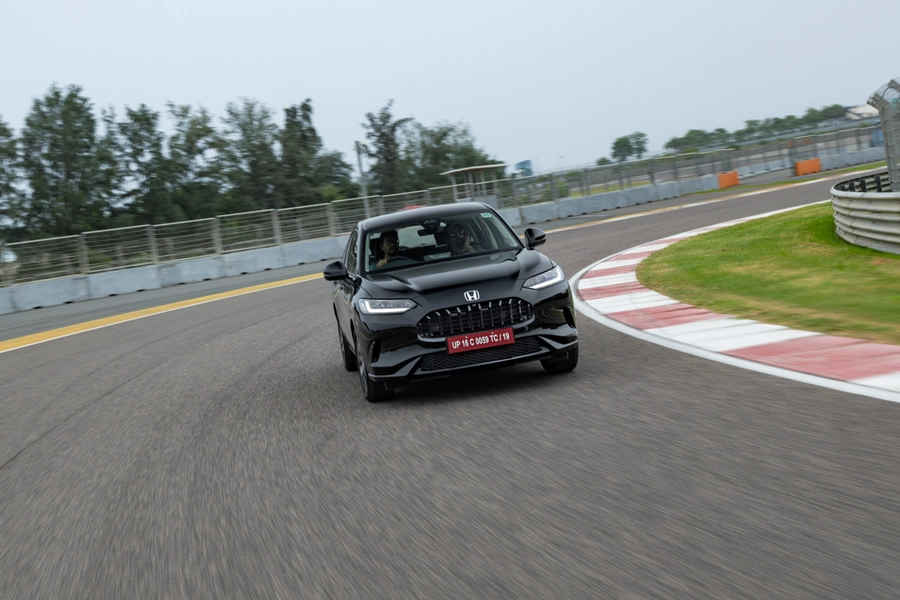
Braking performance deserves a special mention. Equipped with disc brakes on all four wheels and regenerative braking, the Honda ZR-V shed speed confidently lap after lap, with a reassuring pedal feel and no noticeable fade during our session. Stability under hard braking was equally impressive.
We were also able to stretch the SUV to an indicated 160 kmph on the main straight, which was the maximum speed permitted during the event. Even at triple digit speeds, the ZR-V remained composed and confidence inspiring, suggesting it should make for a relaxed highway cruiser.
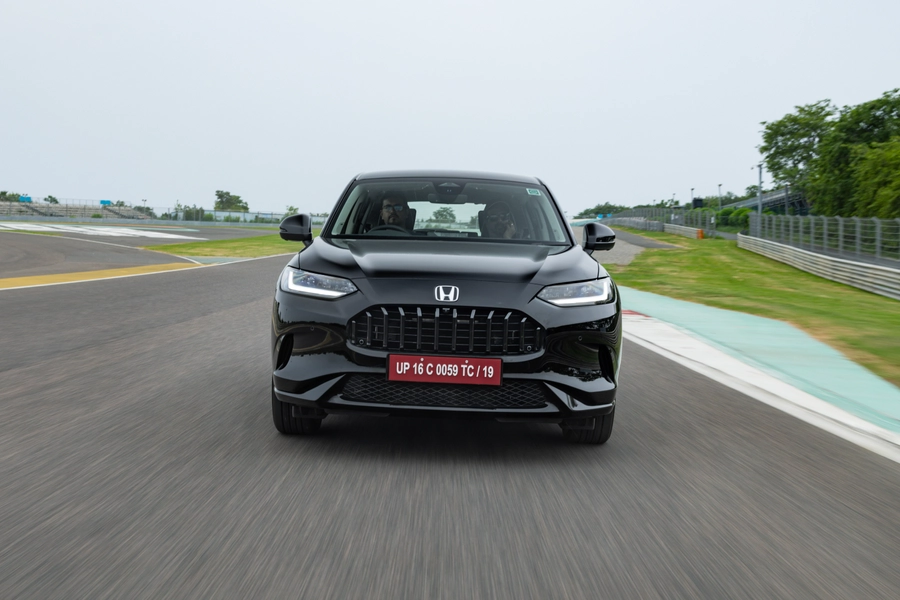
As for Honda SENSING, the ZR-V comes equipped with a comprehensive Level 2 ADAS suite featuring systems such as Lane Keep Assist, Adaptive Cruise Control and Collision Mitigation Braking. However, given the limited nature of the track session, we did not have the opportunity to evaluate these systems in real world conditions. Similarly, while Honda claims an ARAI certified fuel efficiency of 22.8 kmpl and E20 fuel compatibility, a racetrack is hardly the place to judge efficiency.
Honda ZR-V – Verdict
Overall, the Honda ZR-V impressed where it mattered most. It feels refined, quick and remarkably composed for an SUV. More importantly, it carries itself with the confidence you would expect from a global Honda product. No owner is likely to spend their weekends chasing lap times at a racing circuit. The ZR-V’s natural habitat will be long expressway drives, airport runs, weekend getaways and the daily commute. Based on our first experience, it seems more than capable of handling all of those duties while still offering enough dynamic ability to put a smile on the driver’s face when the road begins to twist.
Honda is yet to announce the ZR-V’s price for India. However, industry estimates suggest it could be positioned in the premium CBU SUV segment, where it will go up against the Volkswagen Tiguan R-Line, Volkswagen Tayron and Skoda Kodiaq.
That also means Honda has a tough task ahead. While the ZR-V impresses with its refined self charging hybrid powertrain, excellent build quality and well sorted driving dynamics, its European rivals offer larger cabins, an additional third row of seats in the case of the Kodiaq, and a more feature rich package. The hybrid powertrain remains the ZR-V’s biggest differentiator, but whether that alone is enough will ultimately depend on Honda’s pricing.
For now, the Honda ZR-V leaves a strong first impression. Whether it becomes a success story in India will depend less on how it drives and far more on what Honda writes on the price tag.