

Every now and then, a company makes something that feels like it has arrived a few years too early. For Mahindra, that moment was the debut of the INGLO platform last year. A proper born electric architecture. Flat floor. Big battery packaging. High computing power. A clean slate for a new generation that began with the launch of the XEV 9e and the BE 6. A year later, the next chapter is here. The first proper conventional family-sized electric SUV born entirely out of that INGLO philosophy. They’ve called it the XEV 9S, and it comes loaded with tech, screens and features that clearly aim to make it stand apart in a segment that’s gaining traction very quickly.
But the real question is simple. Does the XEV 9s genuinely move the game forward for Indian electric SUVs, or is all that technology just a clever way of masking what the SUV is actually like to live with?
Let’s get straight into it.
Mahindra XEV 9s – Exterior Design
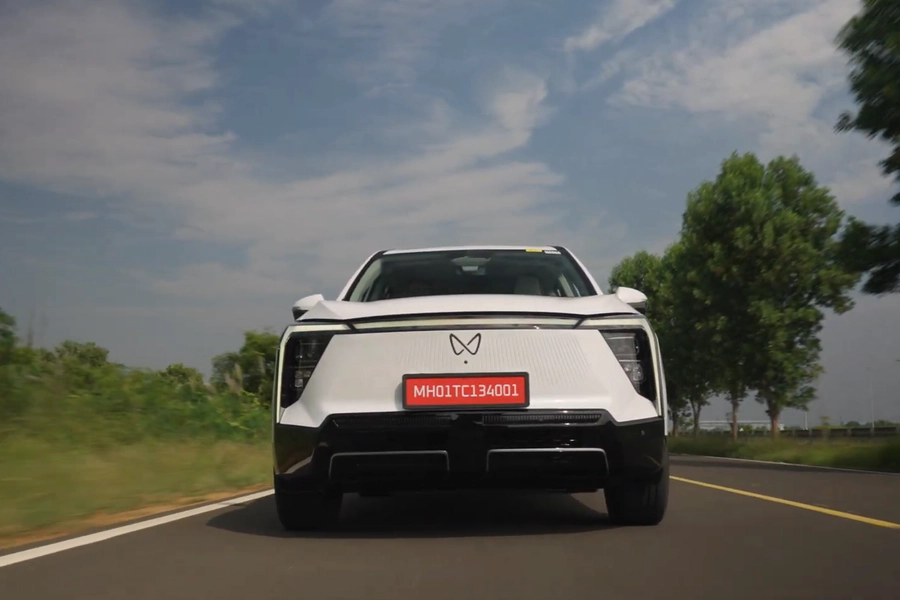
The XEV 9s at first sight looks very close to its coupe sibling but stand there for a moment and the differences start showing. The LED strip running across the nose is thicker, the headlamps sit beside a clean, closed grille, and the Infinity logo is now placed squarely in the middle instead of sitting on the bonnet. The bumper below is finished in gloss black with two slim openings that handle the cooling duties.
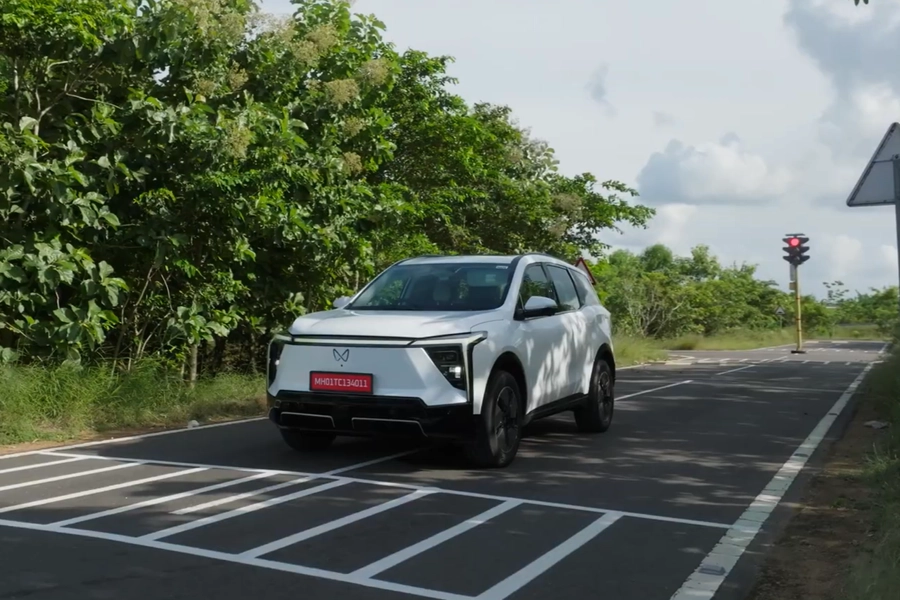
Move to the side and it’s easy to assume this is just an electric XUV700—but it isn’t. But that’s not the case. The XEV 9s is a born-electric SUV built on Mahindra’s INGLO platform, which has completely different underpinnings from the XUV700’s monocoque ICE architecture. What Mahindra has done is adapt a modified version of the XUV700’s body shell to fit the familiar seven-seat silhouette buyers recognise, while everything beneath, from the floor to the battery integration is pure INGLO. And because the top hat had to be re-engineered to sit on a flat EV skateboard, a few dimensions have shifted, the 9s has a shortened wheelbase measuring in at 2762 mm opposed to the 9e and BE6’s 2775 mm.

The rear is again recognisable. The sheet metal is shared with the 700 including the overall shape of the tail-lamps. What’s different is everything inside them. Mahindra has redesigned the internal elements with a crisp honeycomb-style pattern and then linked both lamps with a clean black trim panel. Instead of a flashy connected light bar. The bumper is squared off, finished in gloss black with a faux diffuser and the same serrated detailing seen on the sides.
Mahindra XEV 9s – Interior Design and Comfort
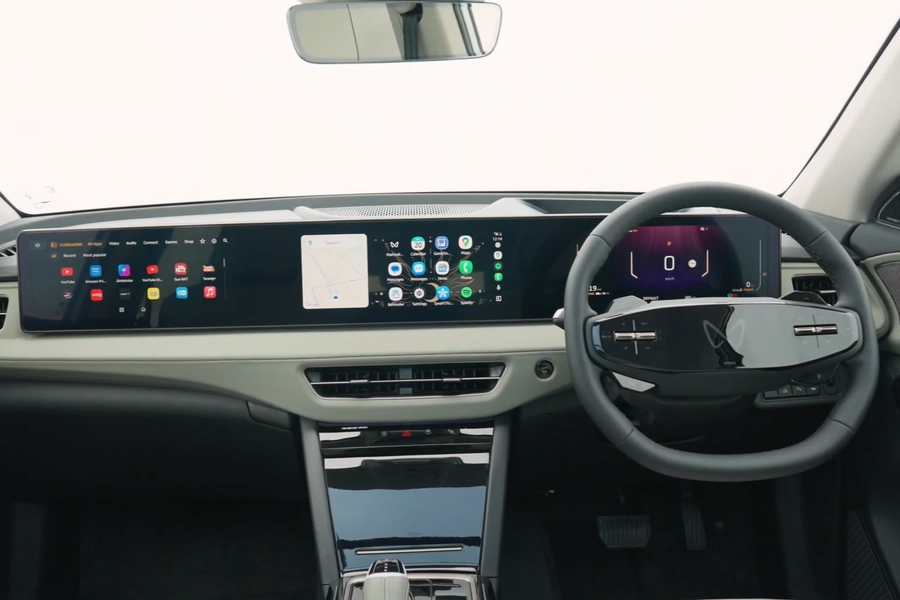
On the inside, the dashboard of the XEV 9s is lifted straight from the 9e, along with the two-spoke steering wheel. A triple-screen 12.3-inch runs the width of the cabin, one display for the driver and the rest as touchscreens. The section below the screens is finished in the same olive-green leatherette used in the XEV 9e. It looks good and feels premium to touch, but I honestly expected Mahindra to use a different colour palette here to give the 9s its own identity and differentiate it from the 9e, the two cabins feel almost identical, apart from the extra row of seats in the 9s.
Since the extra row of seating has come up, it makes sense to talk about the second row first. Mahindra has actually packed this area quite well. The seats slide and recline, you get optional ventilation on the top variant, a powered boss mode, window sunshades, and even a small lounge desk that folds out neatly. There’s also provision for rear-seat entertainment, with device holders on both seatbacks and a 65W charger to power whatever you mount there. That said, the flat-floor INGLO design comes with a trade-off. The battery pack raises the floor by an inch or two, but under-thigh support in the second row is surprisingly good.

Then comes the all-important third row, which was Mahindra’s biggest selling point for this SUV marketing campaign of “Space for Seven”. It’s a bit of a letdown. Kids will be fine back there, but adults will struggle on longer drives. If you’re tall, it’s best to skip the third row altogether. It’s not all sour grapes, Mahindra have kitted out the XEV 9s fairly well with wireless Apple Carplay and Android Auto connectivity, integrated apps, 5G support, a wireless charging pad for your phone and powered front seats with memory settings. A 16-speaker Harman Kardon audio system with Dolby Atmos is also included on the higher trims.

Mahindra XEV 9s – Safety Suite
Safety is solid across the Mahindra XEV 9s lineup. The SUV uses a high-stiffness body, disc brakes on all four corners, six or seven airbags depending on the variant, and laminated door glass to reduce cabin noise. The top-spec model goes further with L2+ ADAS, relying on five radars and a vision camera to offer lane centring, blind-spot detection, and emergency steering assistance. There’s more tech to talk about. You get VisionX AR HUD, AutoPark Assist, driver monitoring via DOMS, 360-degree cameras, blind-view monitoring, and a full TPMS system with individual tyre pressure readouts.
The Mahindra XEV 9s also steps into the connected car space with NFC-based digital key access, video calling, in-car recording, and remote connectivity features. The XEV 9e and the XUV700 both scored a full five stars in their respective BNCAP and GNCAP tests, so it’s reasonable to expect the 9s to follow suit. We’ll have to wait for the official figures once it has been tested, but the engineering and safety kit suggest it should perform well.
Mahindra XEV 9s – Battery Pack, Power & Driving Range
The Mahindra XEV 9s is offered with three distinct battery packs: 59 kWh, 70 kWh and 79 kWh. All versions put out an identical 380 Nm, but their power output scales with battery size, 231 hp for the smallest, 245 hp for the mid-spec unit, and a healthy 286 hp with the largest pack. A single rear-mounted motor handles propulsion, sending power exclusively to the back wheels.
During our drive, we sampled the 79 kWh configuration. The company claims that the smallest battery can manage up to 521 km on the MIDC test cycle, with the 70 kWh setup stretching that to around 600 km. The flagship 79 kWh version is rated at 679 km. These are laboratory numbers, of course real-world figures will vary, but they provide a good ballpark.
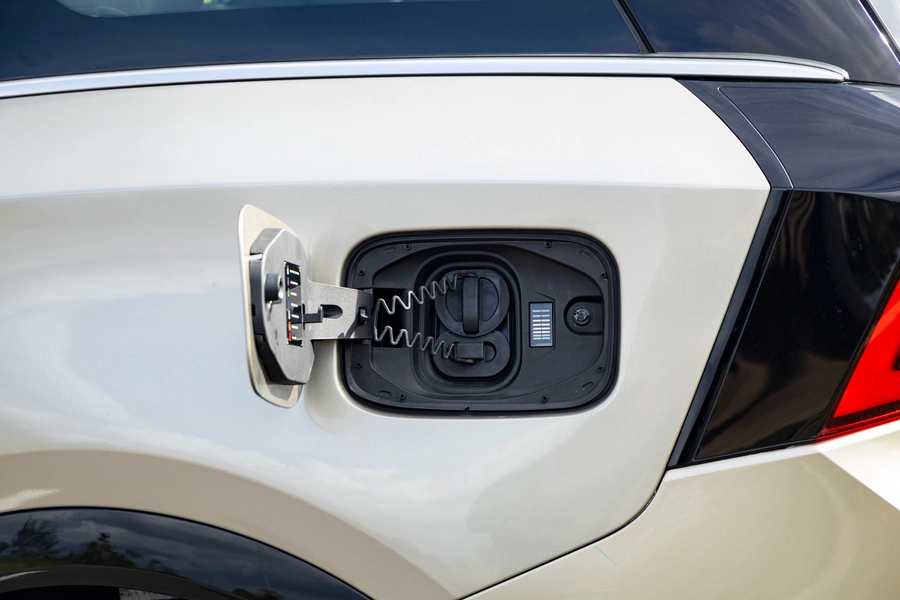
Home charging options include a 7.2 kW AC charger as standard and an optional 11.2 kW unit. The former takes close to 12 hours to refill the largest battery, while the latter trims the wait to roughly eight hours. For those relying on public infrastructure, the SUV’s ability to accept up to 180 kW of DC fast charge is a major advantage, taking the 79 kWh pack from 20% to 80% in roughly 20 minutes under ideal conditions.
Mahindra XEV 9s – Performance & Road Behaviour
One prod of the accelerator and the Mahindra XEV 9s wastes no time revealing its electric character. The motor’s immediacy, combined with the rear-drive layout, makes for brisk starts, even in its gentlest driving profile. There are three modes on offer: Range, Everyday and Race. The first prioritises efficiency and keeps responses easygoing. Everyday mode is likely where most drivers will spend their time, balancing strong performance with comfort. Race mode sharpens everything, letting the motor deliver its full potential.
Out on the highway, this large SUV carries its 282 hp effortlessly. The claimed 0–100 kph time of seven seconds feels entirely believable, and an additional Boost switch on the steering wheel unleashes a short burst of extra power for quick overtakes. At cruising speeds, maintaining momentum is effortless, and you rarely feel the need to switch to the most aggressive mode unless you’re in a real hurry.

Regenerative braking is adjustable across multiple levels. The mild settings feel natural, while the strongest introduces a noticeable slowdown the moment you lift off the throttle. There’s even a full coasting mode for drivers who prefer minimal drag, and a one-pedal function for tight urban environments.
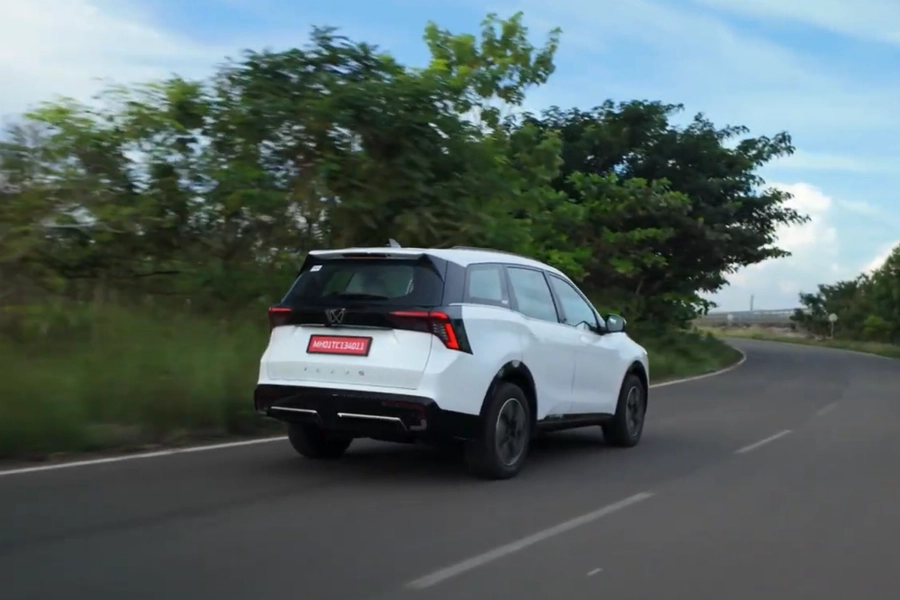
Underneath, the Mahindra XEV 9s rides on independent suspension at both ends. The first two equipment packs get frequency-dependent passive dampers, while the top variant benefits from an adaptive setup capable of reacting to surface changes in milliseconds. Paired with 18-inch wheels and tall tyres, the ride quality is impressively plush broken patches, dips, and sharp edges are dealt with far more confidently than expected. Despite its size, the SUV stays composed through bends, the steering feels predictable, and body control inspires confidence at higher speeds.
Mahindra XEV 9s – Verdict
Mahindra’s XEV 9s lands in the market as a surprisingly well-rounded family EV, and its introductory price of ₹19.95 lakh only strengthens its appeal. Even the base trim arrives with a generous equipment list—triple digital displays stretching across the dash, a panoramic sunroof, connected features, LED lighting, wireless smartphone integration, an electric parking brake and more.
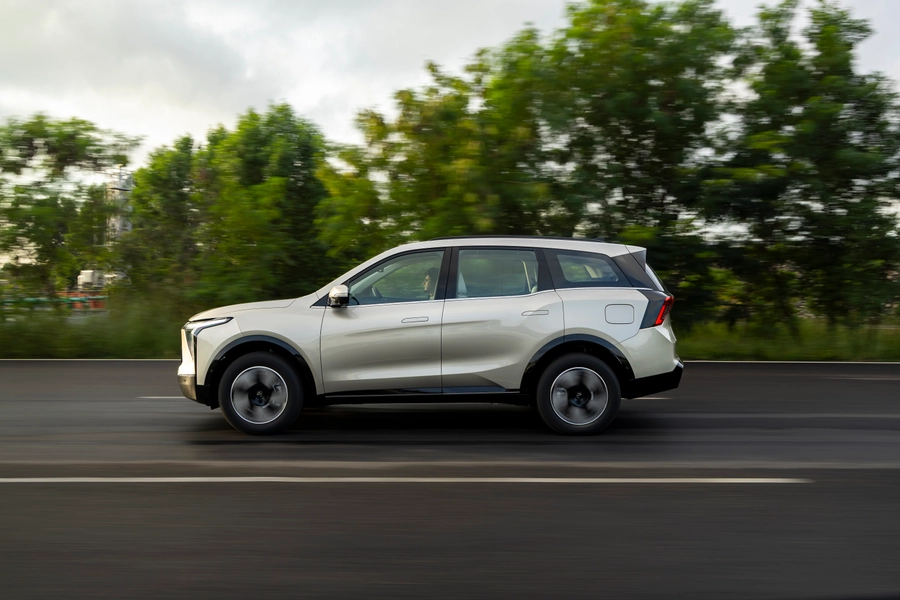
It delivers the refinement and poise that many buyers will appreciate, offers a practical three-row layout that actually works for families, and brings performance levels that make daily commuting and long trips equally effortless. There are still a few minor shortcomings some might wish for more physical buttons, and there’s a touch of float at high speeds but none of these detract meaningfully from the overall package.
For anyone looking to transition into a full-size electric family SUV without compromising on space, comfort or everyday usability, the XEV 9s stands out as a confident, capable and thoroughly modern choice.