
Car manufacturers have had interesting nomenclature approaches when it comes to naming their cars, some say it is brand uniformity, others say when you think of a name you can subconsciously relate to that brand and some people outright call it superstition. We have seen it on many brands, for Instance Mahnindra with their never-ending saga of SUVs ending wit the letter “O”, “Scorpio”, “Bolero”, “XUV 7XO” and then Skoda with their SUVs names starting with K and ending with Q, like Kodiaq, Kushaq and Kylaq.
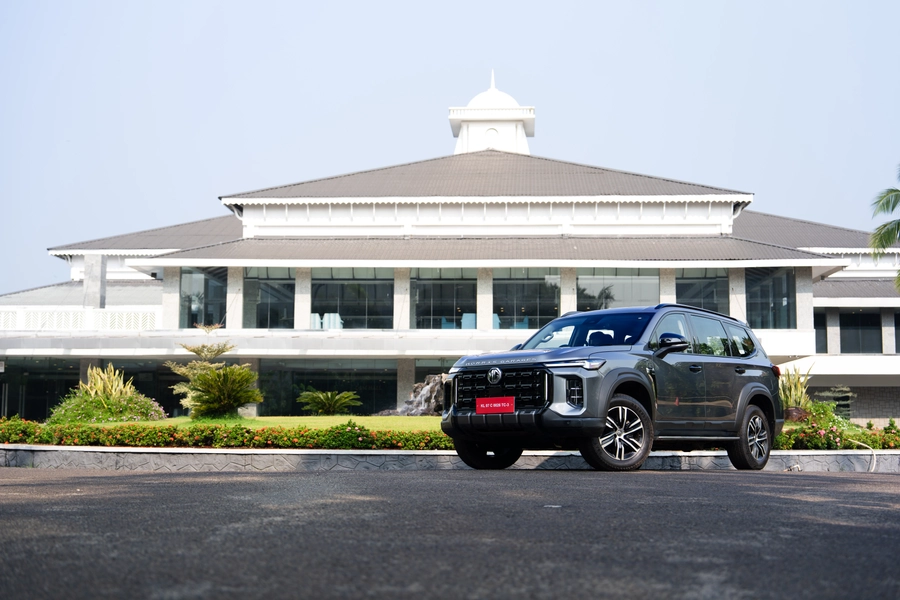
But the brand we’re focusing on today is MG, they have SUVs like the Astor and the Hector and now there’s a new SUV on the block right on top of the SUV food chain, the MG Majestor. MG says this is India’s D+ segment SUV, meaning it sits slightly above the regular D segment SUVs in terms of features, size, comfort and appeal. So, call it superstition or subconscious marketing, but in this segment, you need a lot more than just a good name, especially when the Fortuner has been sitting comfortably at the top for years.
MG Majestor – Exterior Design
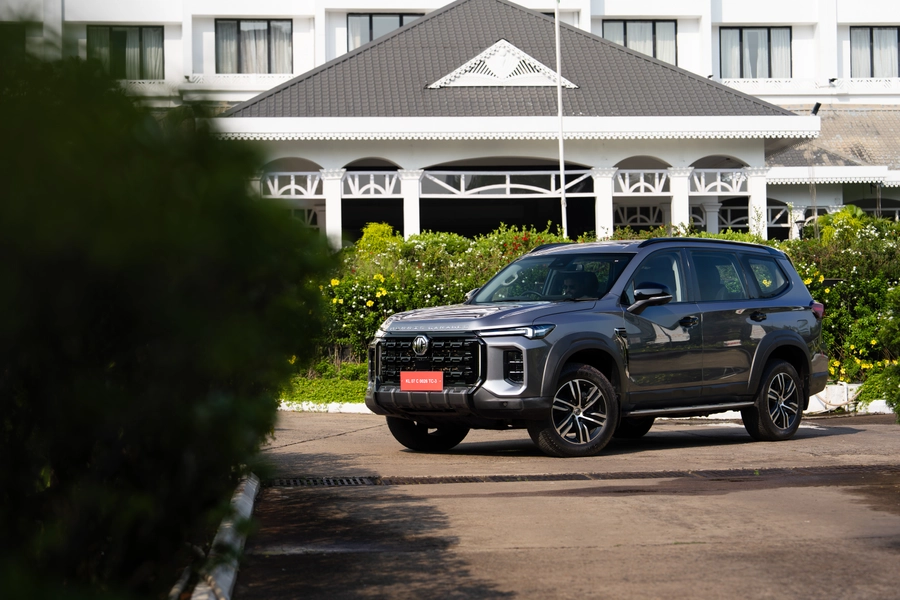
From the first glance, the MG Majestor looks imposing, an attribute which unfortunately its predecessor did not fully carry. Up front, you get slim LED DRLs, along with a piano black grille that has chunky elements, giving it a strong sense of presence and that butch appeal. The front skid plate is finished in silver and is segmented, which adds to the wide stance of the car.
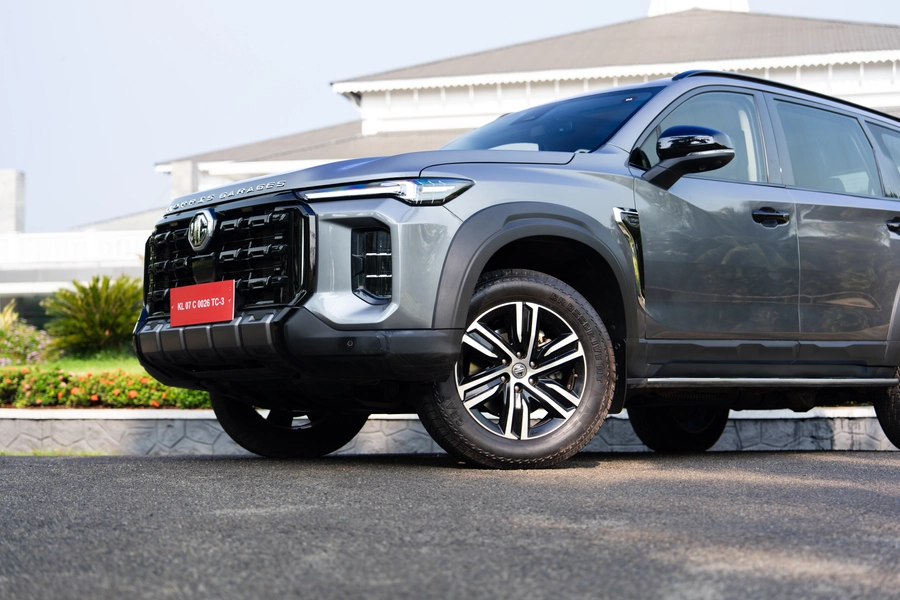
The headlights are vertically stacked triple projector units, and you also get additional thin DRLs integrated into the grille, apart from the ones above the headlamp. The grille itself looks wide and properly fills up the front fascia, adding to that butch look.
Moving to the side, dimensionally, it looks longer and taller than most rivals, and that is because it is. The MG Majestor measures 5046mm in length, 2016mm in width, and 1870mm in height, making it the tallest, widest, and longest in the segment. And if it is going up against cars like the Fortuner, it needs those numbers to compete.
It rides on 19 inch diamond cut alloy wheels, which fit the overall design well. They do not feel too big or too small. You also get thick plastic cladding around the wheel arches, which adds to the SUV stance. From the side, you do notice some resemblance to its predecessor, the MG Gloster.
At the rear, you get a connected tail lamp design. Interestingly, you do not see the MG logo here. Instead, you get Morris Garages spelled out, with the “Majestor” badge placed below it. The bumper is chunky with plastic cladding, and you get dual exhaust tips, which look much cleaner than the fake quad exhausts seen on the Gloster.
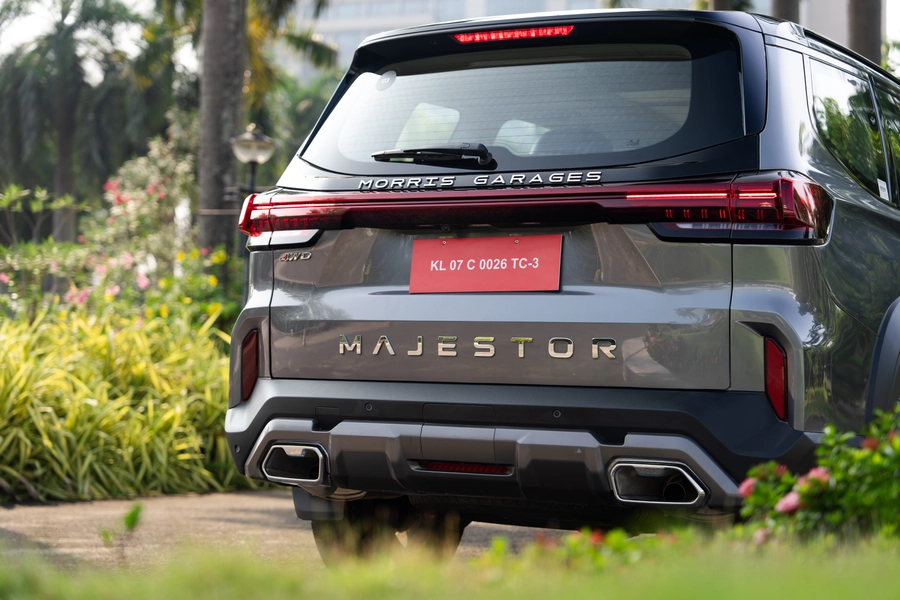
That said, the rear, especially with the multiple badges, Morris Garages and Majestor, does feel slightly overdone. A simpler MG logo would have probably worked better. But overall, it still looks good. Talking about the exterior specs briefly, the ground clearance is 219mm, which is quite solid, and it has a water wading capacity of 810mm. We will get into how that translates on the road when we talk about the driving.
MG Majestor – Interior Design and Features
The interiors have been completely redesigned compared to its predecessor, although some elements like the steering wheel have been carried forward.
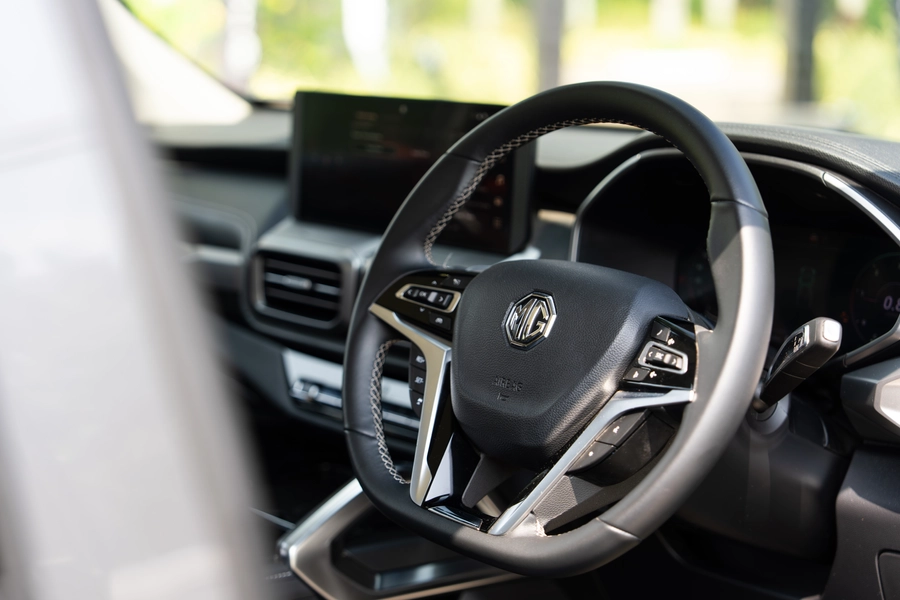
The cabin has a simple and minimalistic layout with a monotone black finish. At the center, you get a large free standing 12.3 inch touchscreen, with AC vents placed neatly below it. There is also a 12.3 inch digital instrument cluster. The steering wheel feels chunky and comes loaded with physical buttons for cruise control, volume, and media controls, which is always a good thing.
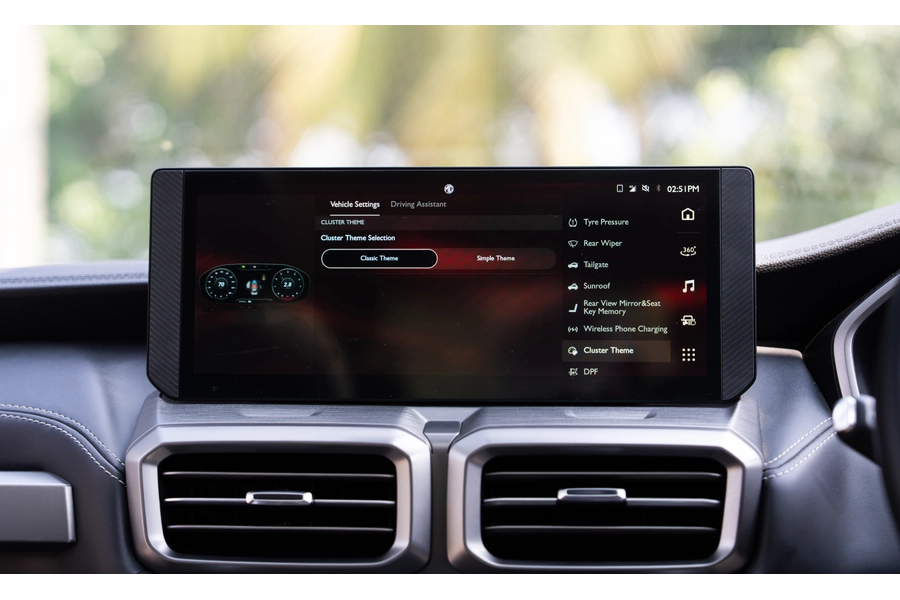
In the center console, you get dual wireless phone chargers, and there are these silver chunky grab handles, which honestly feel like something you would see on a Mercedes GLE or even a Porsche Cayenne. On the dashboard as well, on the driver and co driver side, you get a large grab handle, which does remind you of something like the older generation Mahindra Scorpio or even the Mercedes G-Class.
Overall, the cabin looks clean and well put together.
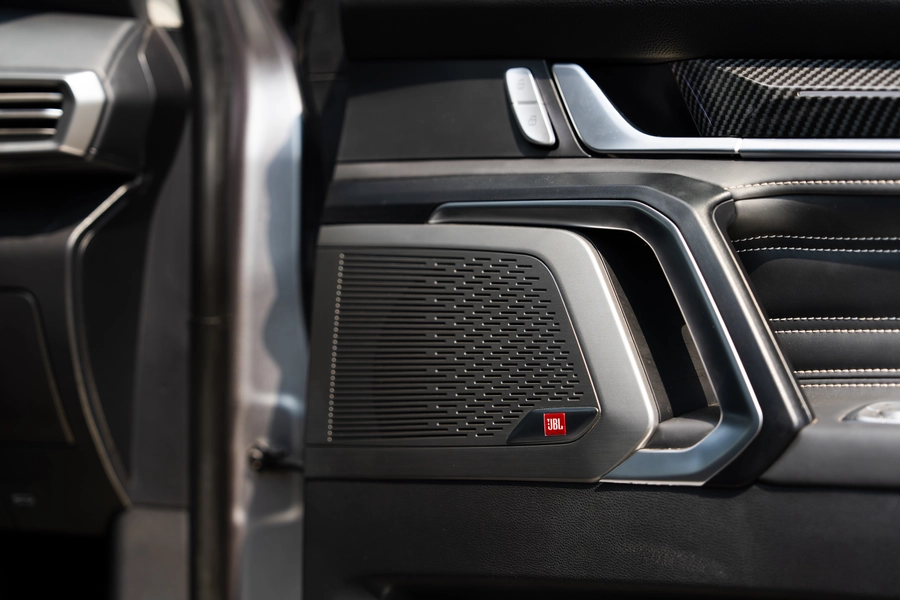
In terms of features, you get front massage seats with eight massage patterns, ventilated front seats, and a 12-way powered seats with memory function for the driver seats and ORVM. There is also three zone climate control, 64 way ambient lighting, and a 12 speaker JBL sound system.
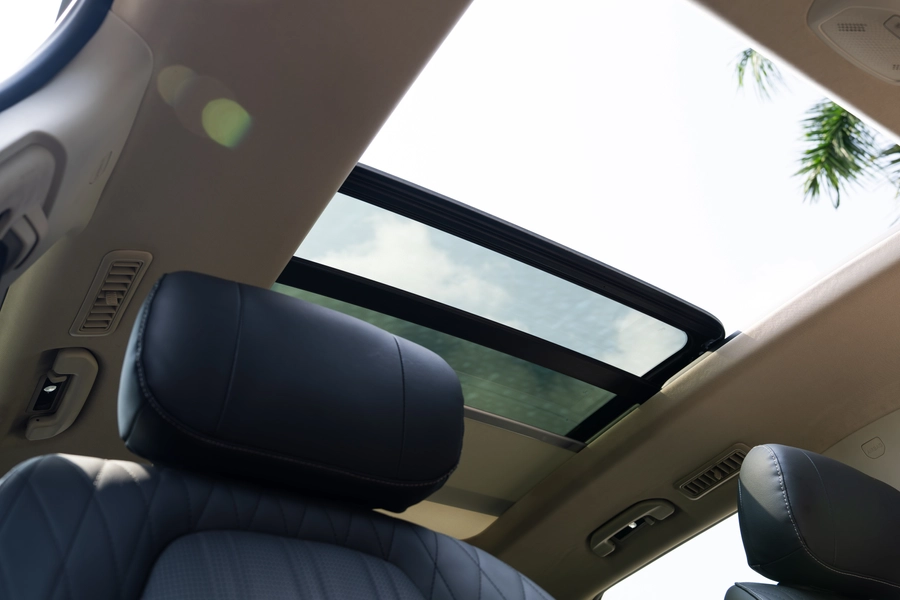
For connectivity, you get wireless Apple CarPlay and Android Auto, along with MG’s iSmart 2.0 connected car system, which offers around 75 connected features. There is also a panoramic sunroof that adds a sense of airiness to the otherwise all black cabin.
Moving to the second row, you have the option of either a bench seat or two individual captain seats. One thing that feels like a miss, especially for India, is the absence of rear sunshades. Given the amount of glass area in a car of this size, it is something manufacturers should really start including more consistently. Apart from that, you get multiple charging ports, a 220 volt power socket, and a powered tailgate.
MG Majestor – Comfort
The MG Majestor prioritises comfort and refinement within the full-size SUV segment, offering a more composed ride while retaining its core capabilities. It uses a double-wishbone front suspension and a five-link rear setup, tuned to absorb road imperfections effectively. Over uneven surfaces, the suspension filters out sharp impacts, keeping the cabin insulated and reducing disturbance for occupants.
At higher speeds, the SUV remains stable, with controlled body movements and predictable behaviour over highway undulations. The suspension avoids excessive softness, maintaining a balance between comfort and stability. In city conditions, the Majestor handles speed breakers and potholes with a softer setup, improving everyday usability. The suspension absorbs minor imperfections, making it suitable for daily driving, especially on inconsistent road surfaces.
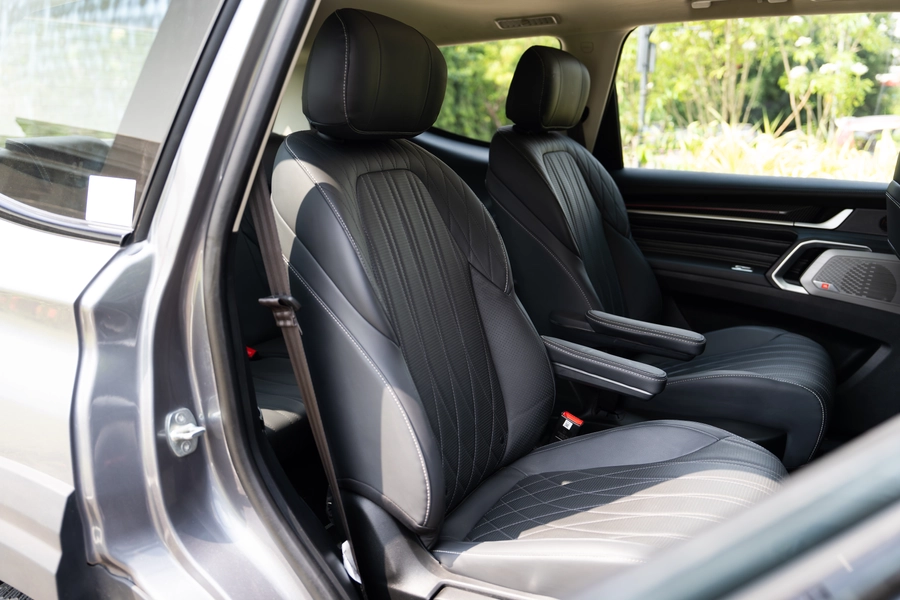
Rear-seat comfort is a key focus, particularly in variants with captain seats. The suspension limits vertical movement, ensuring a composed ride for passengers. However, seat support may vary depending on configuration, with taller occupants potentially finding limited thigh support. Despite its comfort-oriented tuning, the MG Majestor maintains its ability to handle rough roads. The suspension manages impacts while keeping the vehicle stable and aiding traction over uneven terrain.
Overall, the setup delivers effective ride quality, stable high-speed behaviour, strong rear-seat comfort and adequate off-road capability, positioning the MG Majestor as a comfort-focused SUV suited for long-distance use.
MG Majestor – Driving and Performance
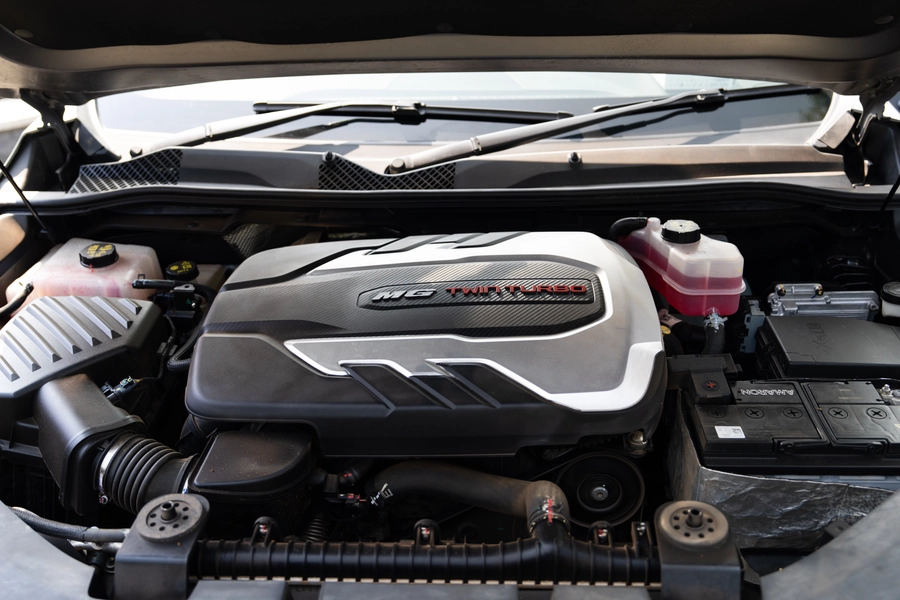
The MG Majestor uses the same 2.0-litre twin-turbo diesel engine and 8-speed automatic gearbox as the Gloster, producing around 213 to 215hp and 478Nm, with no changes to the powertrain. The engine is tuned for strong low-end torque, making it easy to drive in city conditions with minimal effort. Power delivery is linear, aided by the twin-turbo setup, and remains consistent across the rev range, supporting steady highway performance. Refinement is typical for a diesel, with some noise at lower speeds, but it becomes less noticeable while cruising. The 8-speed automatic transmission prioritises smooth shifts, operating unobtrusively in traffic and maintaining low engine revs at higher speeds.
The MG Majestor is stable for an SUV its size given the ladder-frame construction and comfort-oriented suspension setup. At low speeds, the steering remains light, aiding manoeuvrability in city conditions and tight spaces, while retaining enough consistency for accurate placement. As speeds rise, steering weight increases, improving control and straight-line stability on highways.
In corners, body roll is evident but controlled, with the suspension managing lateral movement to maintain composure. The SUV is not tuned for aggressive driving, but remains stable during routine directional changes. The ladder-frame architecture results in less sharp responses compared to monocoque SUVs, though it contributes to a more robust and stable feel across varied road conditions.
On uneven surfaces, the suspension allows the wheels to maintain contact with the ground, supporting grip and control. Handling remains predictable without sudden shifts in behaviour. The available four-wheel-drive system improves traction in low-grip conditions by distributing power across the wheels, enhancing stability on loose or uneven terrain.
Braking is progressive and stable, with the SUV maintaining control even under higher-speed deceleration. Overall, the MG Majestor’s handling focuses on ease of use and consistent behaviour, making it suited for highway driving, daily use and occasional off-road conditions rather than dynamic performance.
MG Majestor – Offroad Hardware
The MG Majestor, unlike most of its rivals, comes with a serious amount of off road hardware. To begin with, you get triple differential locks for the front, centre, and rear differentials, which is something you do not usually see in this segment.
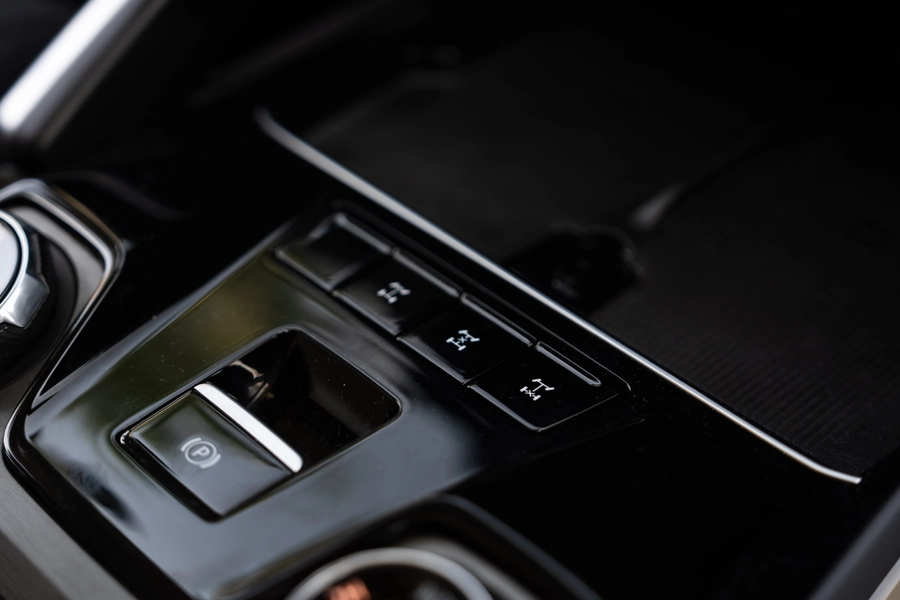
You also get a low range gearbox with multiple drive modes including four wheel drive low, four wheel drive high, two wheel drive high, and an auto mode. In terms of terrain modes, there are 10 on offer, including snow, rock, normal, sand, and mud.
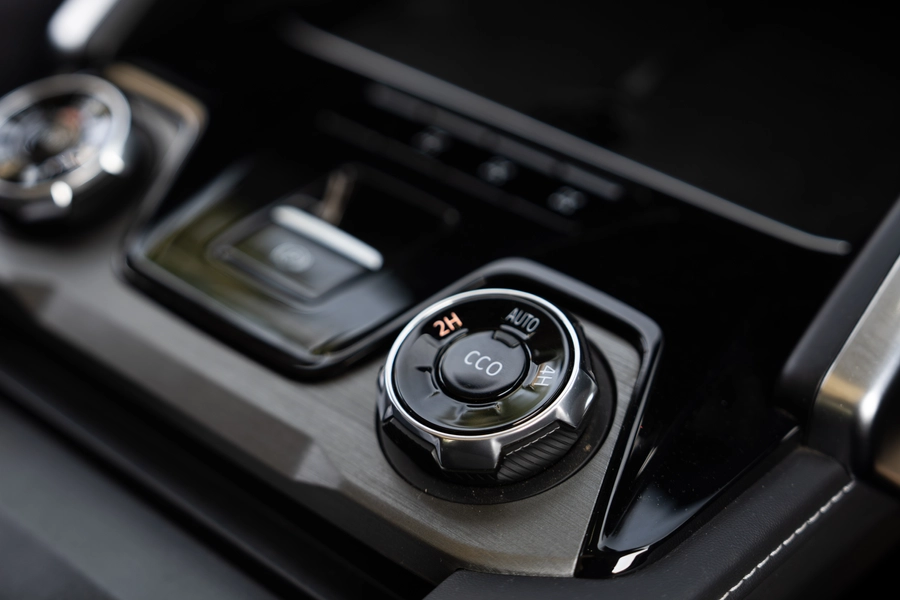
There is also a segment first crawl control feature, which is essentially a low speed cruise control for off road situations, making tricky sections a lot easier to manage.
And as mentioned earlier, it also offers a water wading capacity of 810 millimetres, which is the highest in the segment. Which means, if you are a Bangalorean or a Mumbaikar reading this, especially during the monsoons, you really do not have to worry about driving through flooded streets in the Majestor.
MG Majestor – Safety
On the safety front, the MG Majestor stands out in a very specific way. It is currently the only ladder frame SUV in its segment to offer Level 2 ADAS. Most other cars that offer ADAS in this price bracket are based on monocoque platforms.
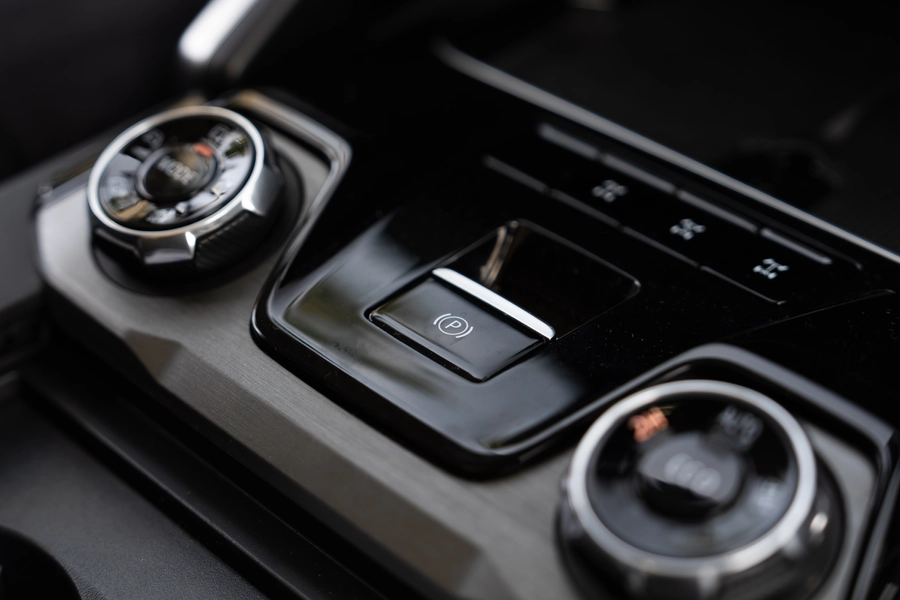
The system includes features like adaptive cruise control, automatic emergency braking, intelligent headlamp control, and lane keep assist. Beyond ADAS, you also get a 360 degree camera, electronic parking brake, auto hold, hill hold assist, hill descent control, and rollover mitigation, along with six airbags.
Now while six airbags is the current standard across the industry, for a car of this size and positioning, it does feel slightly underwhelming. Especially when rivals like the Fortuner offer seven airbags, and cars like the Kodiaq and even the Volkswagen Tayron offer nine, MG could have considered seven or maybe eight.
MG Majestor – Verdict
As a package, the MG Majestor brings together a lot. There is a strong focus on luxury, tech and creature comforts, the cabin feels well put together for the most part, and the overall size and road presence definitely work in its favour. Yes, lower down in the cabin you do come across some scratchy plastics, but that is something we have seen across the segment and it is not a deal breaker.
That said, the biggest question still remains pricing. And that is going to be the deciding factor. If MG wants to seriously challenge something like the Fortuner, pricing has to be spot on. If they manage to place it somewhere in the 40 to 45 lakh rupee range, this could turn out to be a very strong contender in the segment, and possibly one of the most well rounded options out there.
Pingback: Cars, SUVs launching in May 2026: Honda City, Majestor & more - Shutterdrives
Pingback: MG Majestor Launched at Rs 40.99 Lakh: Targets Fortuner and Kodiaq - Shutterdrives