
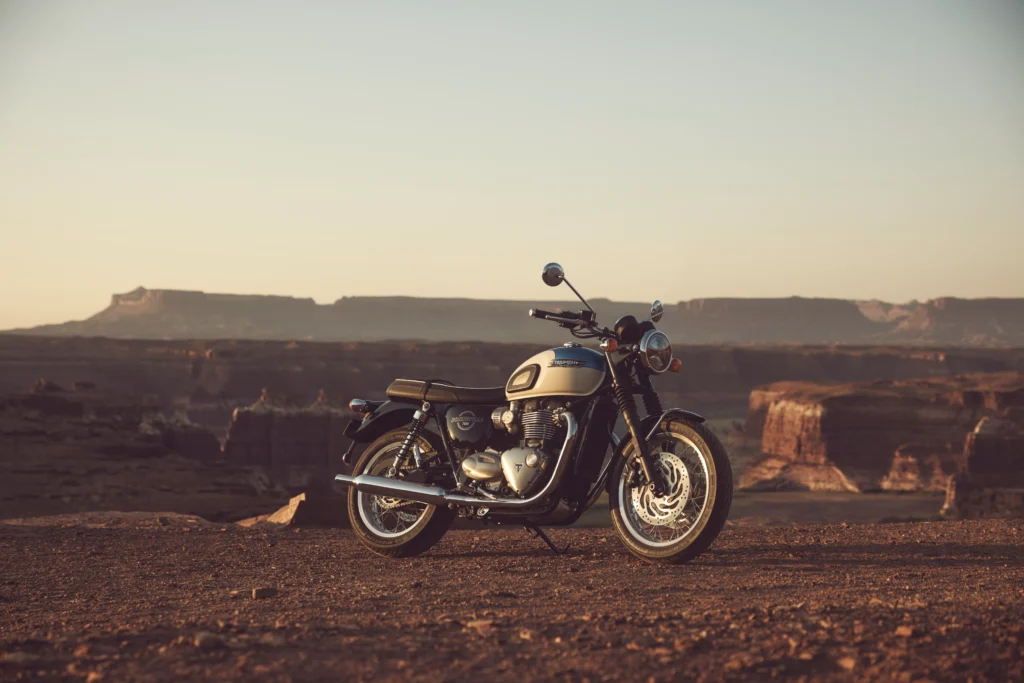
There was a time when a motorcycle was simply a way to get from one place to another. Today, that idea has changed. For many riders, the motorcycle is the destination itself. It is about the Sunday morning ride, the long road trip, the search for a new route or simply owning something that reflects who you are.
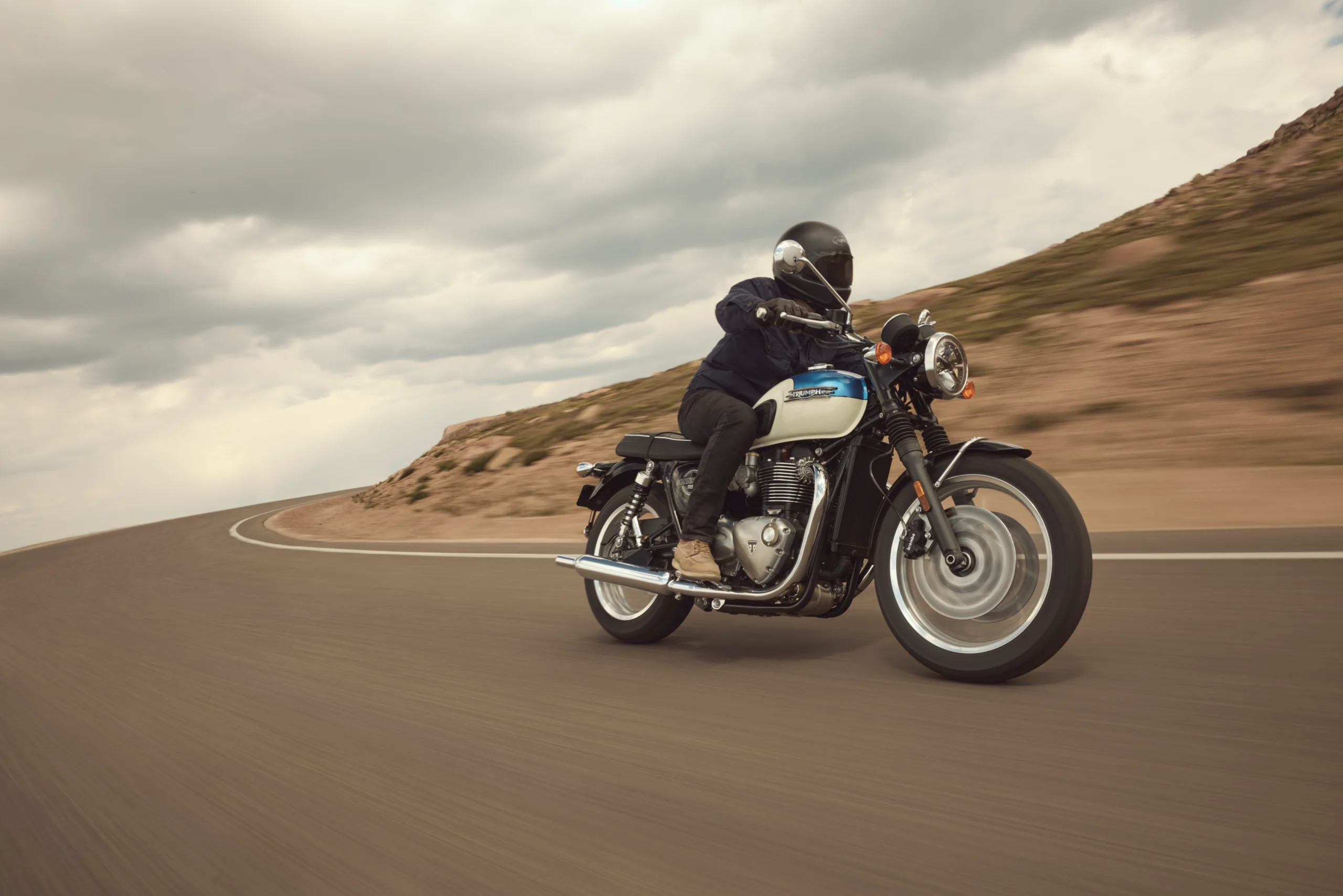
Few motorcycles represent that change in attitude quite like the Triumph Bonneville. Long before motorcycles became lifestyle products, the Triumph Bonneville was already building a reputation around speed, racing and the people who rode them.
Where The Bonneville Story Began
The story goes back to the Bonneville Salt Flats in Utah, a place that has become closely associated with speed records and some of the most memorable moments in motorcycle history.
In 1948, American racer Rollie Free arrived at the Salt Flats on a Vincent Black Shadow with one clear objective: to go as fast as possible. He stripped down to his bathing suit and sneakers, lay flat on the motorcycle and crossed the 150 mph mark. The resulting photograph became one of the defining images of motorcycle culture, capturing the rebellious attitude of an era when going fast mattered as much as following the rules.
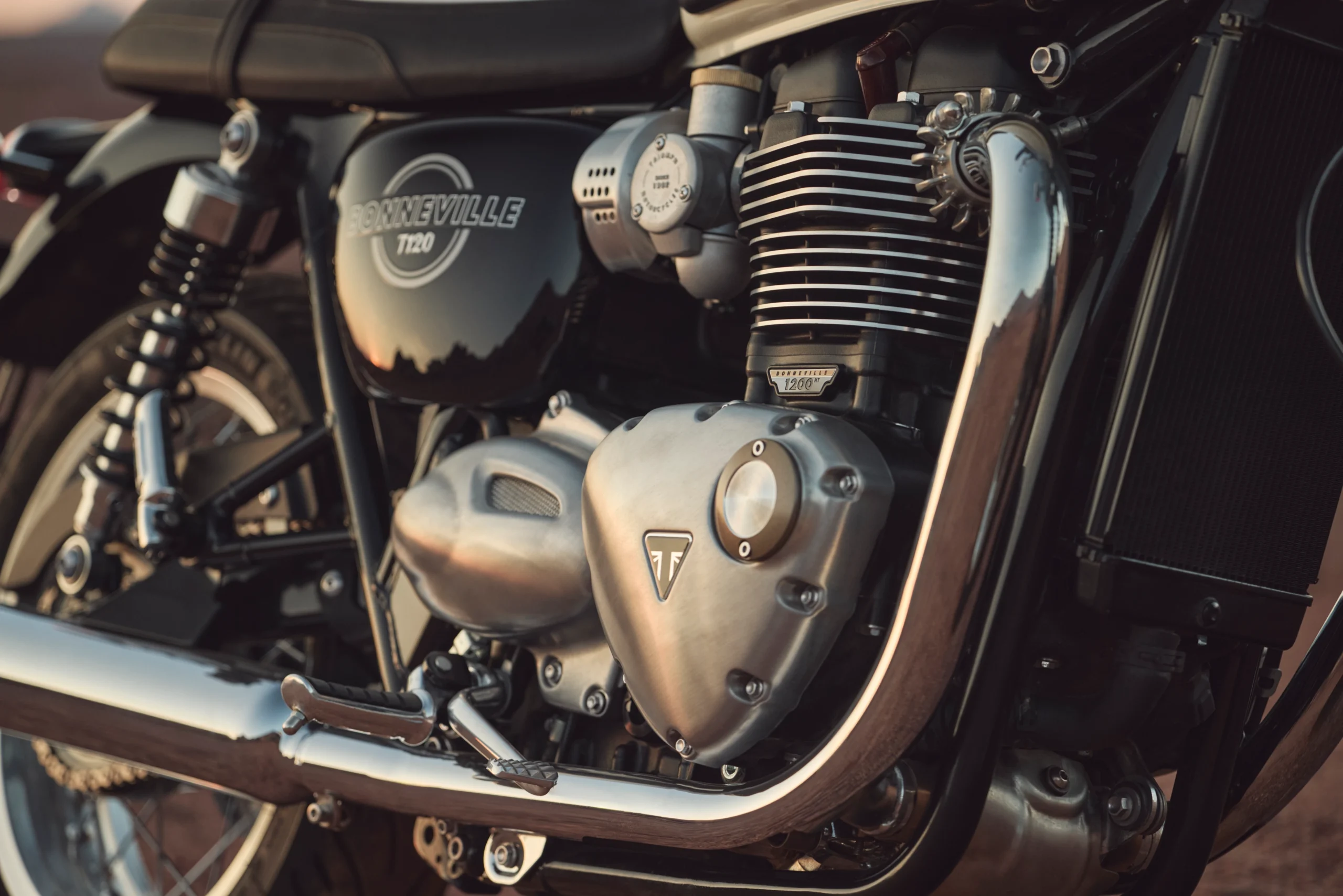
Triumph would soon make its own mark at the same location. In 1956, Johnny Allen rode the streamlined, Triumph powered Devil’s Arrow to a speed of 214.40 mph. Just three years later, Triumph introduced a new high performance twin and gave it a name inspired by that very location: Bonneville. The Triumph Bonneville name would go on to become much bigger than a reference to a salt flat.
Steve McQueen Made It Cool
Speed gave the Bonneville its identity, but people gave the motorcycle its personality. Few people were more important to that image than Steve McQueen.
McQueen was not simply a Hollywood star who happened to appear on a motorcycle. He was a genuine rider and enthusiast who raced, competed in off road events and owned and rode Triumph motorcycles away from the cameras.
His connection with Triumph became particularly memorable through The Great Escape. In the famous motorcycle sequence, McQueen rides a Triumph TR6 Trophy, including the jump over the barbed wire fence. The scene helped create one of the most recognisable images of motorcycle freedom ever put on screen.
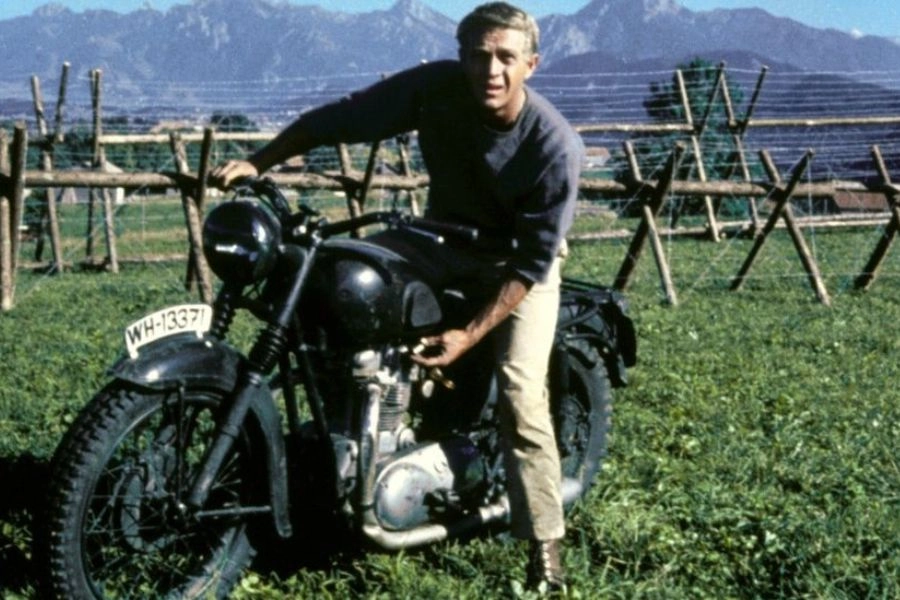
The leather jacket, the Triumph and McQueen’s attitude became part of the same image. The motorcycle was no longer just a machine. It represented independence, adventure and a willingness to do things differently.
That connection is a major reason why the Triumph Bonneville continues to carry such a strong cultural identity decades later.
More Than Just A Bonneville
Triumph’s history with performance did not stop with the Bonneville. In 1969, Malcolm Uphill became the first rider to complete a 100 mph lap of the Isle of Man TT on a production motorcycle, riding a Triumph Bonneville Thruxton.
The story of the Triumph Bonneville has therefore always been connected to more than specifications or outright performance. It has been shaped by racing, record attempts, cinema and the personalities who chose to ride one.
Steve McQueen remains perhaps the most famous example. He raced Triumphs, competed off road and continued riding them in his personal life. For him, a Triumph was not a prop that appeared when the cameras started rolling. It was simply part of his life.
That authenticity became an important part of what made the Triumph Bonneville different.
Why The Bonneville Still Matters
The same idea is increasingly visible in India today. Motorcycles are no longer chosen only for mileage, practicality or the ability to navigate traffic. Riders are travelling longer distances, forming riding communities, exploring unfamiliar roads and using their motorcycles as an extension of their personality.
This is where the Triumph Bonneville still feels relevant.
The technology may be completely different from what riders experienced in the 1950s and 1960s. Modern motorcycles offer levels of refinement, safety and performance that those early machines could never match. Yet the basic attraction remains the same. It is the feeling of starting an engine and riding simply because there is an interesting road ahead.
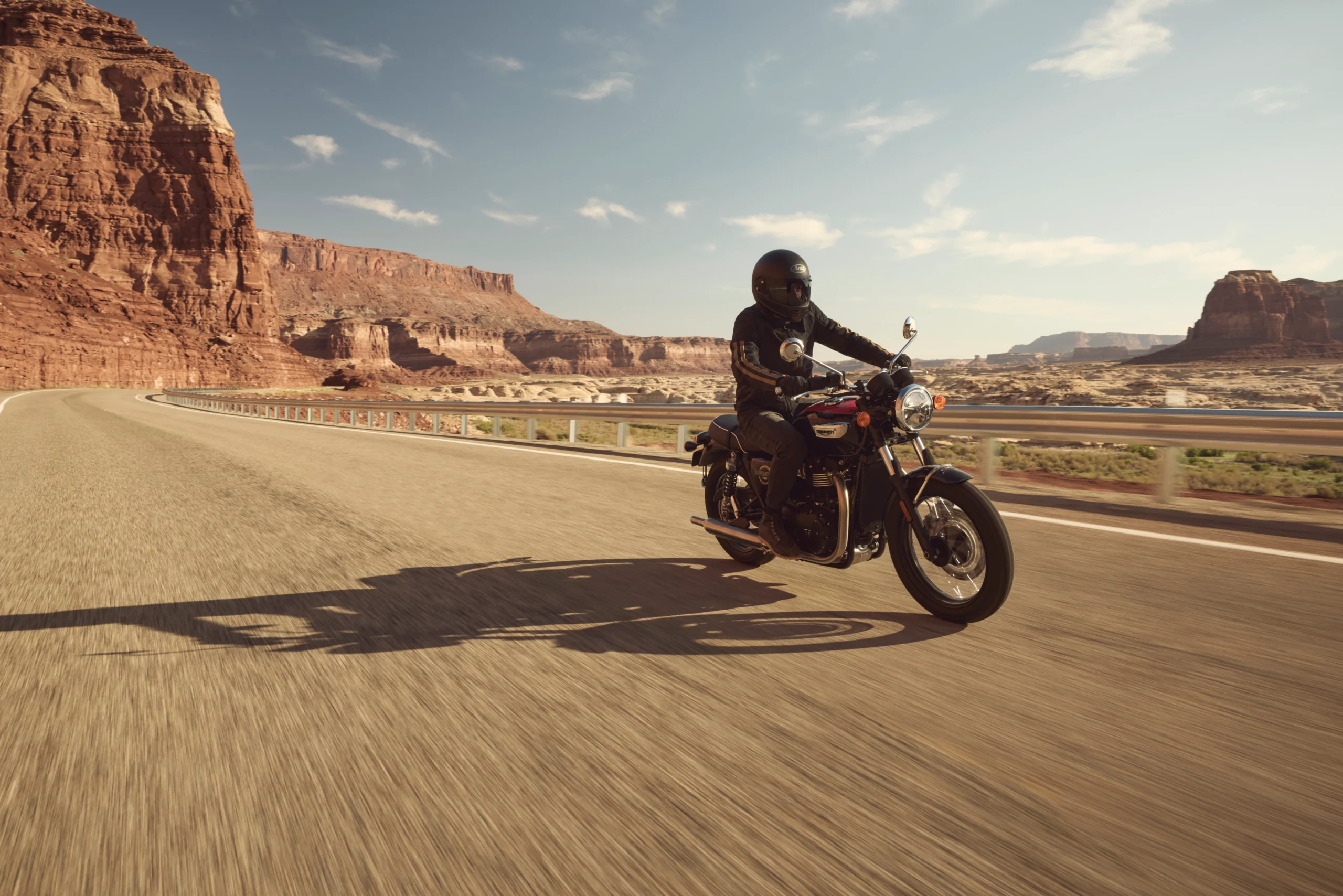
The Triumph Bonneville has survived because its story was never only about the motorcycle. It was about speed, freedom, adventure and the people who chose to live a little differently.
As Triumph prepares to take the Bonneville name into its next chapter, that history gives the motorcycle plenty of weight before it even reaches the road.