
Every family has a middle child. You have the firstborn, who usually gets all the attention, is often the most pampered and, more often than not, sets the benchmark for everyone who follows. Then there’s the youngest, the apple of everyone’s eye, who somehow manages to get away with just about everything. And somewhere between the two is the middle child. Often overlooked, sometimes misunderstood, and constantly caught between trying to live up to the eldest and carving out an identity of their own.
Now, you might be wondering why we’re discussing family dynamics in a car review. Well, that’s because, much like a family, a car manufacturer’s lineup has its own set of siblings.
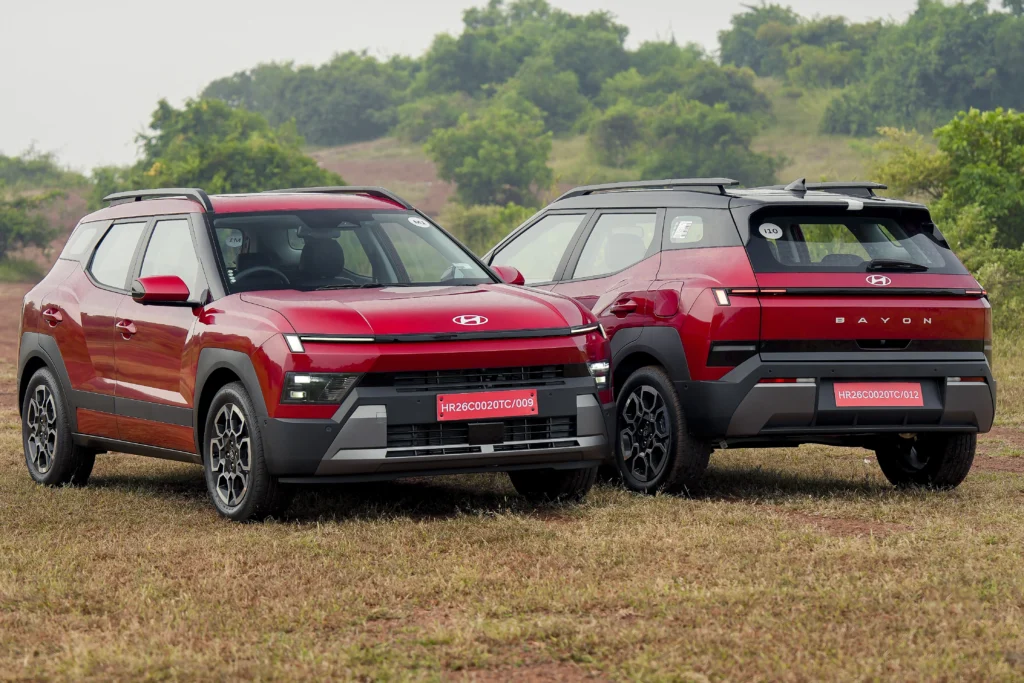
And in Hyundai’s SUV family, the Creta is the more established elder, while the Venue is the younger, more compact sibling. But sitting right between the two is the latest addition to the family, the Hyundai Bayon.
Positioned as the middle child, the Bayon has an interesting task ahead of it. Does it borrow too much from its siblings, or does it manage to establish an identity of its own? More importantly, does it have what it takes to avoid the dreaded middle child syndrome? Well, let’s find out.
Hyundai Bayon – Exterior Design
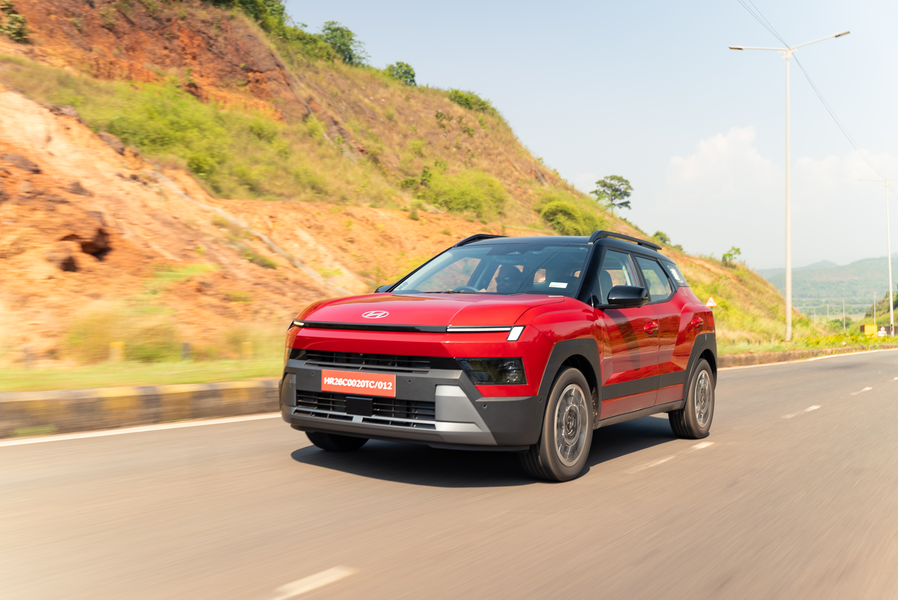
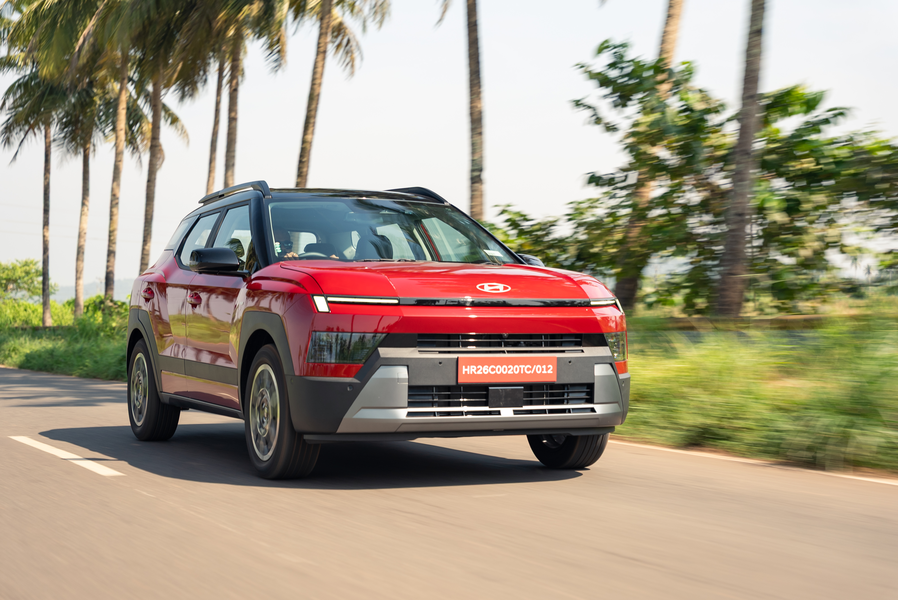
Moving on to the exterior, the Bayon follows Hyundai’s latest design philosophy, but there’s something rather interesting about the way it has been executed. It has an almost neo-retro character to it, while still managing to look thoroughly modern. In fact, it almost feels like what someone in the 1980s might have imagined a modern car would look like. There’s a certain charm to its unconventional styling, and it certainly doesn’t look like your typical crossover.
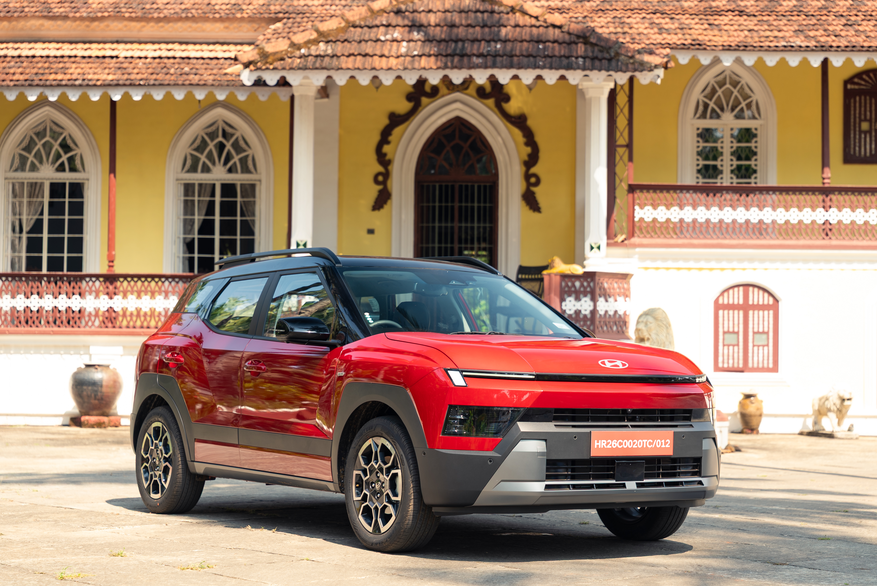
Continuing with our middle-child analogy, the Bayon also finds itself neatly positioned between its two siblings in terms of dimensions. The Venue, being a sub-four-metre SUV, measures around 3.99 metres, while the Creta stretches to approximately 4.33 metres. The Bayon, meanwhile, measures 4.24 metres, making it around 250 mm longer than the Venue and roughly 90 mm shorter than the Creta. So, it genuinely does sit somewhere between the two in terms of overall length.
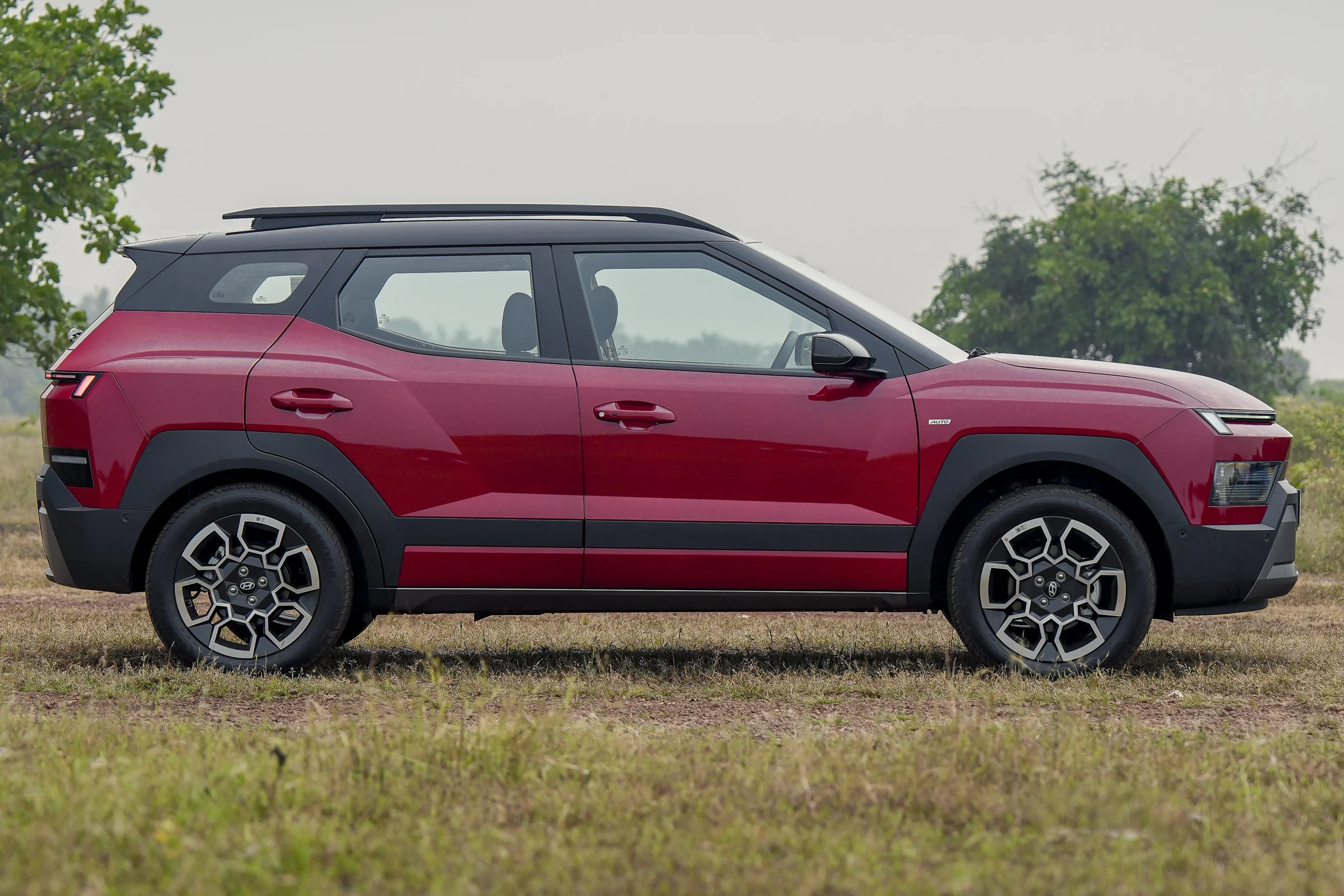
Interestingly, the Bayon gets a wheelbase of 2,600 mm, just 10 mm shorter than the Creta’s 2,610 mm. That’s a rather interesting figure, and we’ll come back to what this means for passenger room and overall cabin space when we get to the interior.
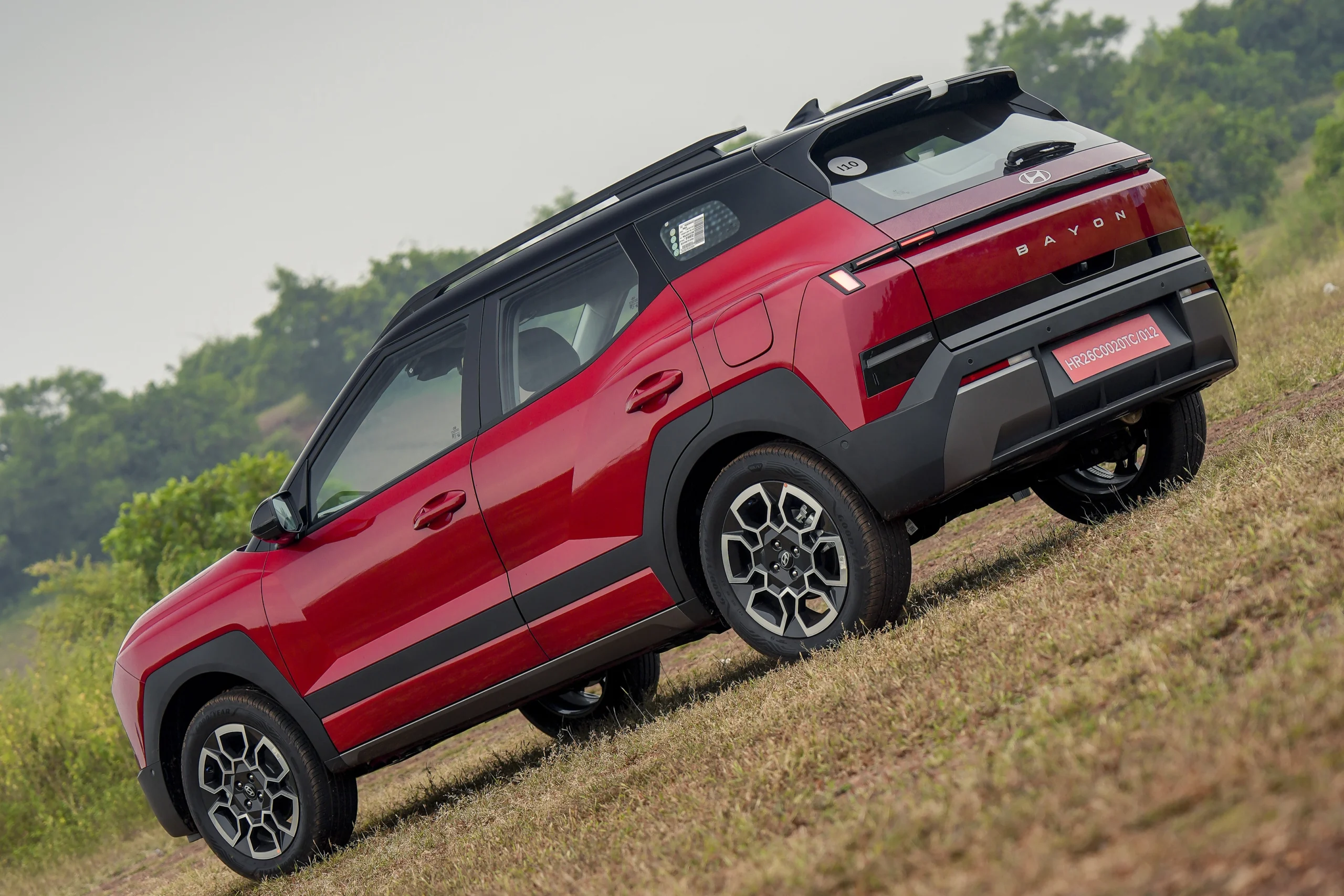
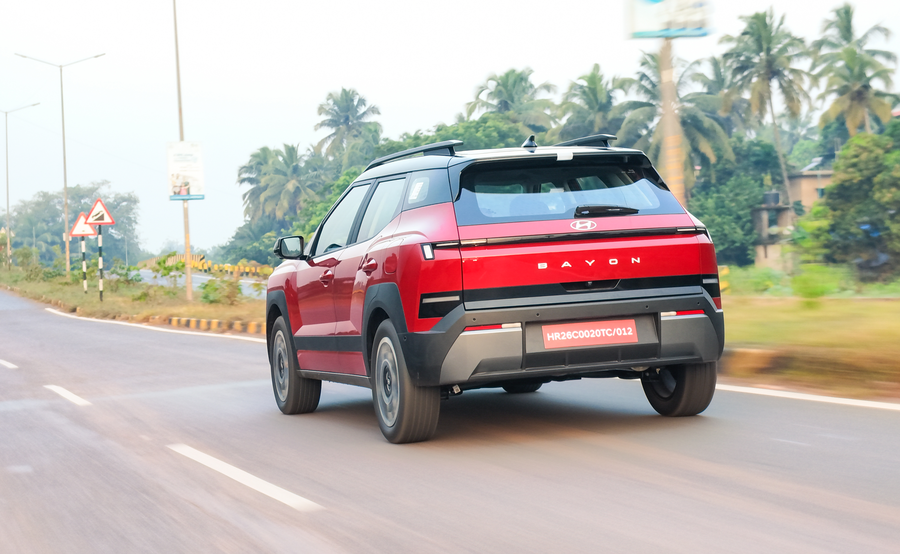
Moving towards the rear, things get even more interesting. The Bayon gets generous amounts of black plastic cladding around the wheel arches and lower bodywork, giving it the rugged appearance you’d expect from a crossover. However, when you look at its overall proportions and how it carries itself on the road, it feels more like a hatchback on stilts than a conventional SUV.
One of my favourite design elements has to be the rear spoiler. It almost appears to be split into two sections, with the high-mounted stop lamp neatly integrated between them. It’s an unusual touch, particularly for a car in this segment, and gives the rear a rather distinctive appearance.
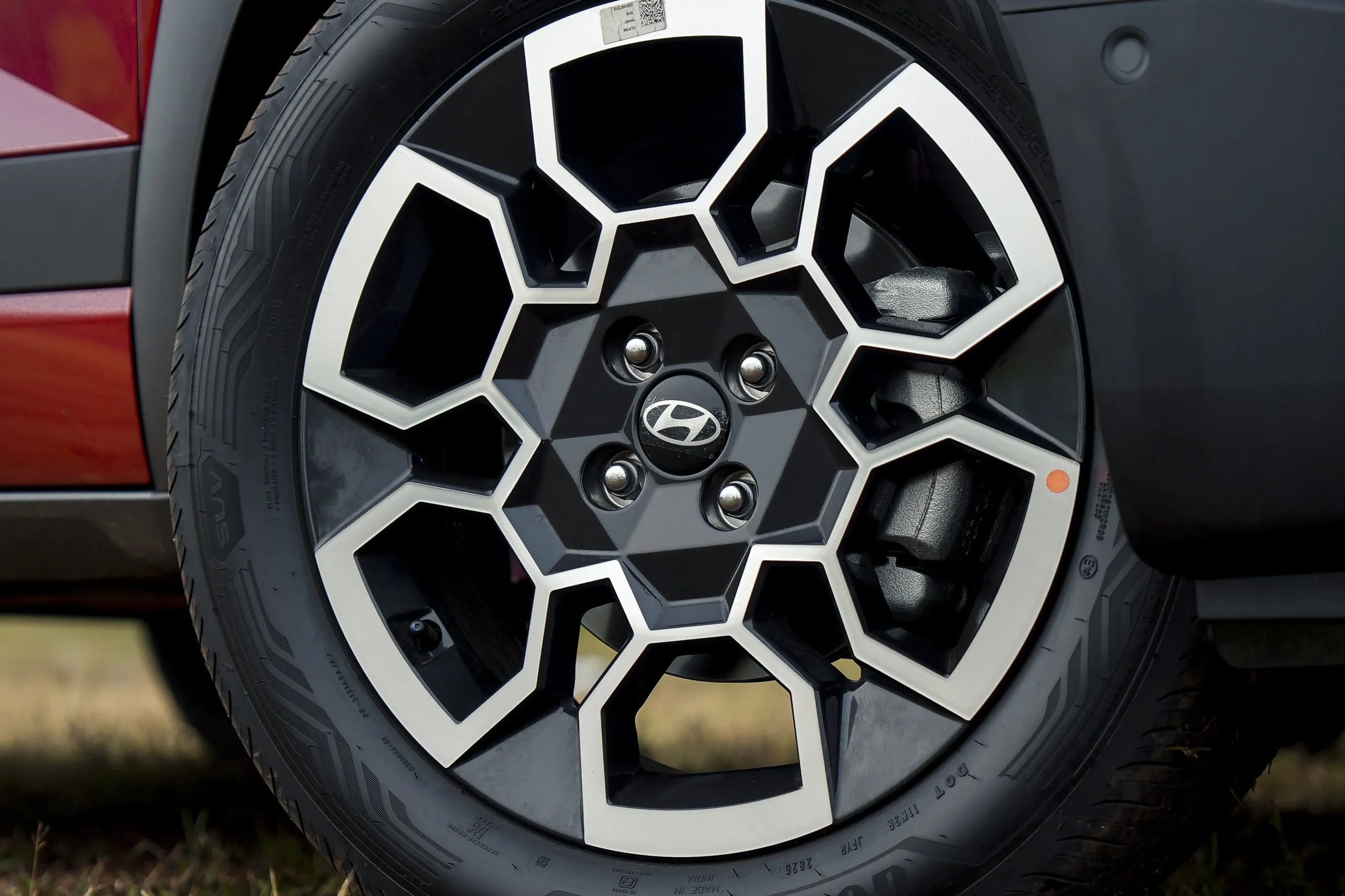
You also get 17-inch alloy wheels, ground clearance of 205 mm and a rather extensive colour palette with close to ten options, including matte, gloss and dual-tone finishes. Overall, the Bayon isn’t a bad-looking car by any means, but it lacks that immediate wow factor. In a segment this crowded, where design plays such a crucial role in making a first impression, the Bayon feels a little too plain vanilla to really stand out.
Hyundai Bayon – Interior Design and Features
Hyundai markets the Bayon as an Intelligent Utility Vehicle, and that philosophy is quite evident when you look at the amount of technology packed into the cabin. You get a 12.3-inch touchscreen infotainment system paired with a matching 12.3-inch digital instrument cluster, along with some rather distinctive AC vents and a D-cut steering wheel with the drive mode selector neatly integrated into it.
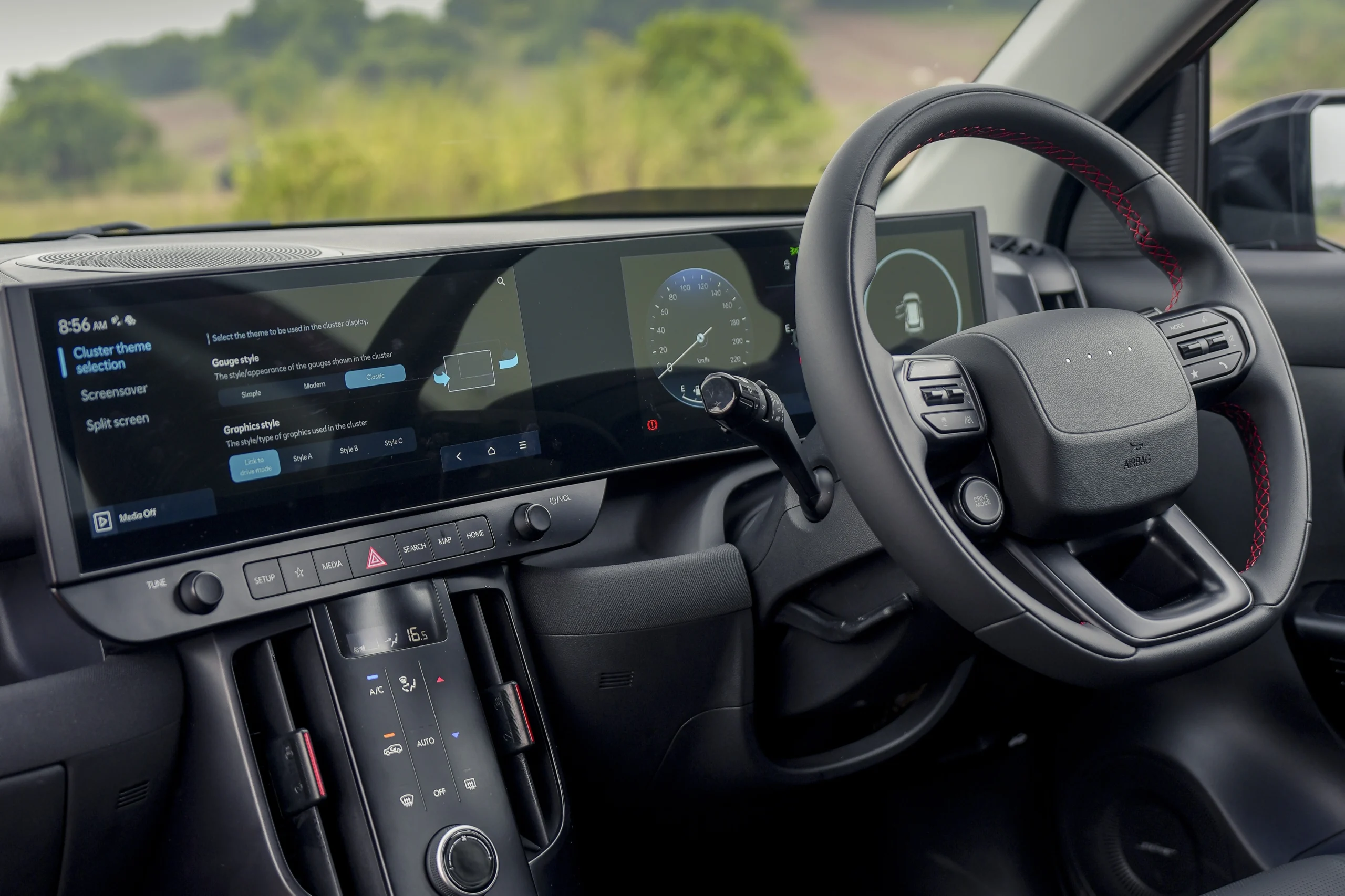
The cabin is offered in two interior themes, a lighter black and olive grey combination and an all-black theme with contrasting red stitching. The latter, which is what we had on our test car, looks particularly nice and gives the cabin a sportier character.
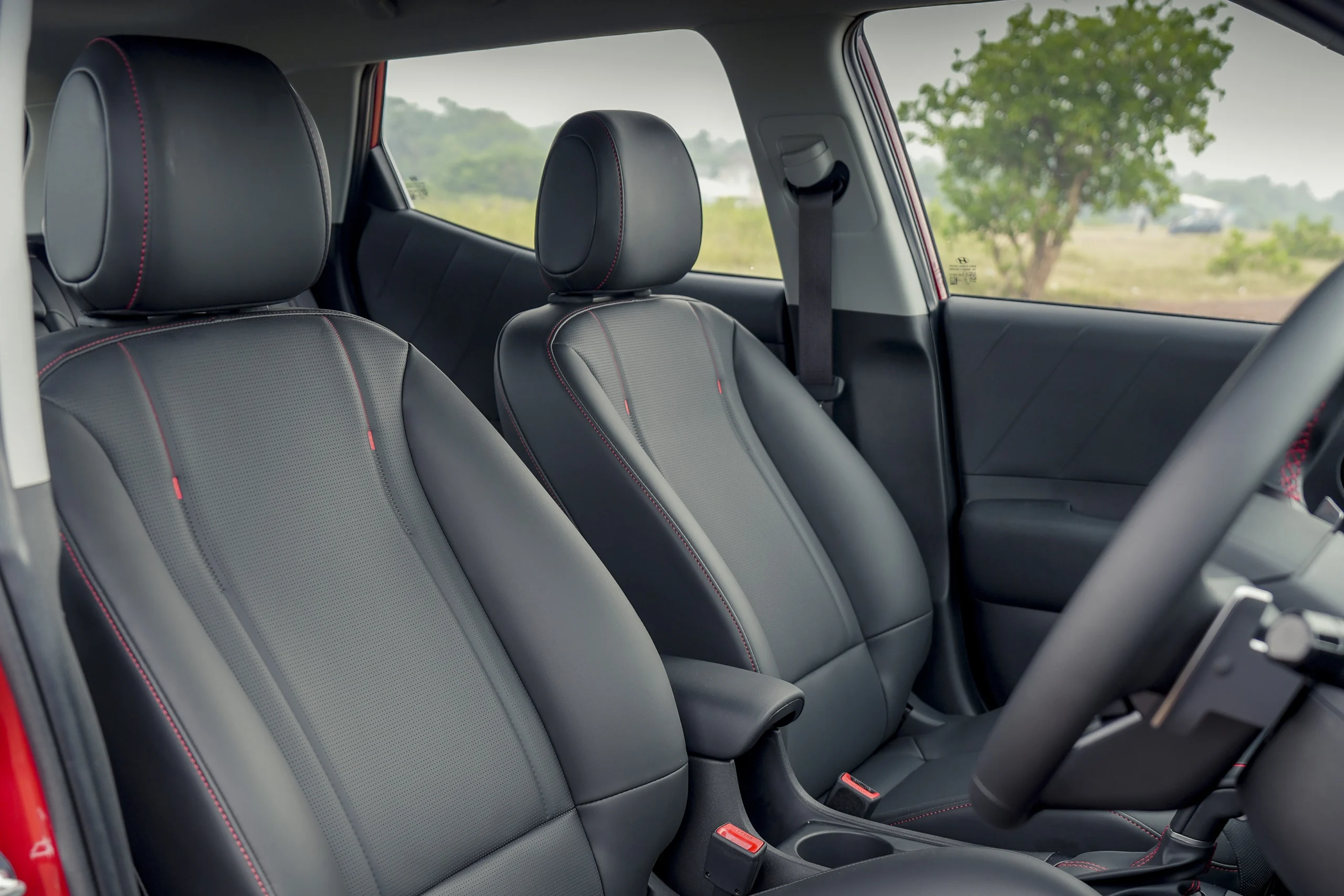
You also get a panoramic sunroof, ventilated front seats, an eight-way electrically adjustable driver’s seat, ambient lighting, wireless charging, wireless Android Auto and Apple CarPlay, and a Bose eight-speaker sound system. There’s plenty of technology to talk about, including a surround-view monitor, blind-view monitor and Level 2 Pro ADAS. However, one rather surprising omission is rear sunshades, a feature offered on both the smaller Venue and the larger Creta.
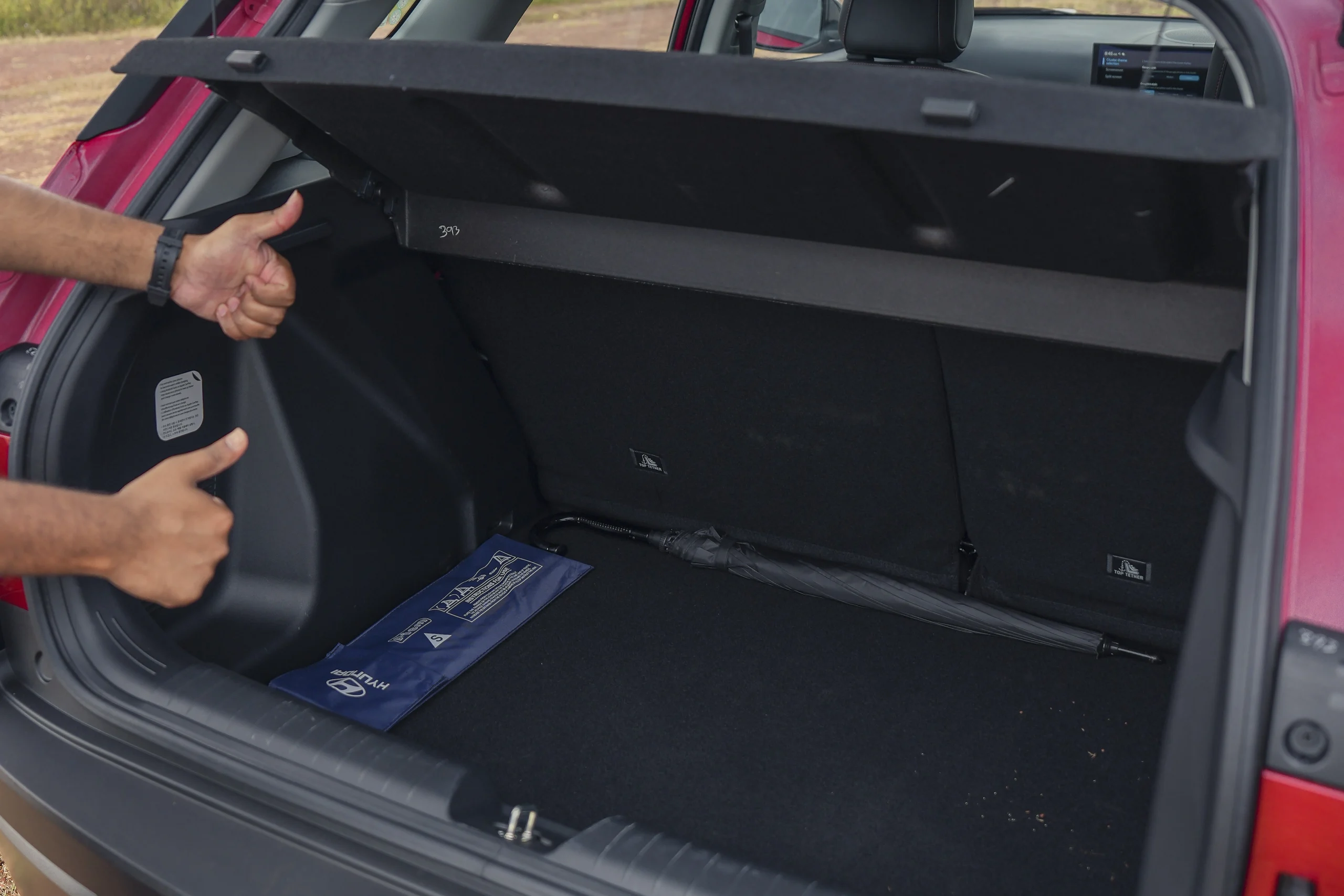
In terms of practicality, the Bayon gets a 505-litre boot, measured up to the roof, although its actual usable capacity is par for the course. The 60:40 split rear seats add flexibility, while a spare tyre neatly tucked beneath the boot floor enhances practicality. The loading lip, however, is rather high and could make loading and unloading heavy luggage a bit of a task.
Hyundai Bayon – Comfort and Convenience
The Bayon is a comfortable place to be, particularly in the rear, where the reclining seatbacks and generous headroom make longer journeys more relaxing. However, the absence of a centre headrest is a noticeable miss. Up front, Hyundai has struck a good balance between physical controls and touchscreen functionality.
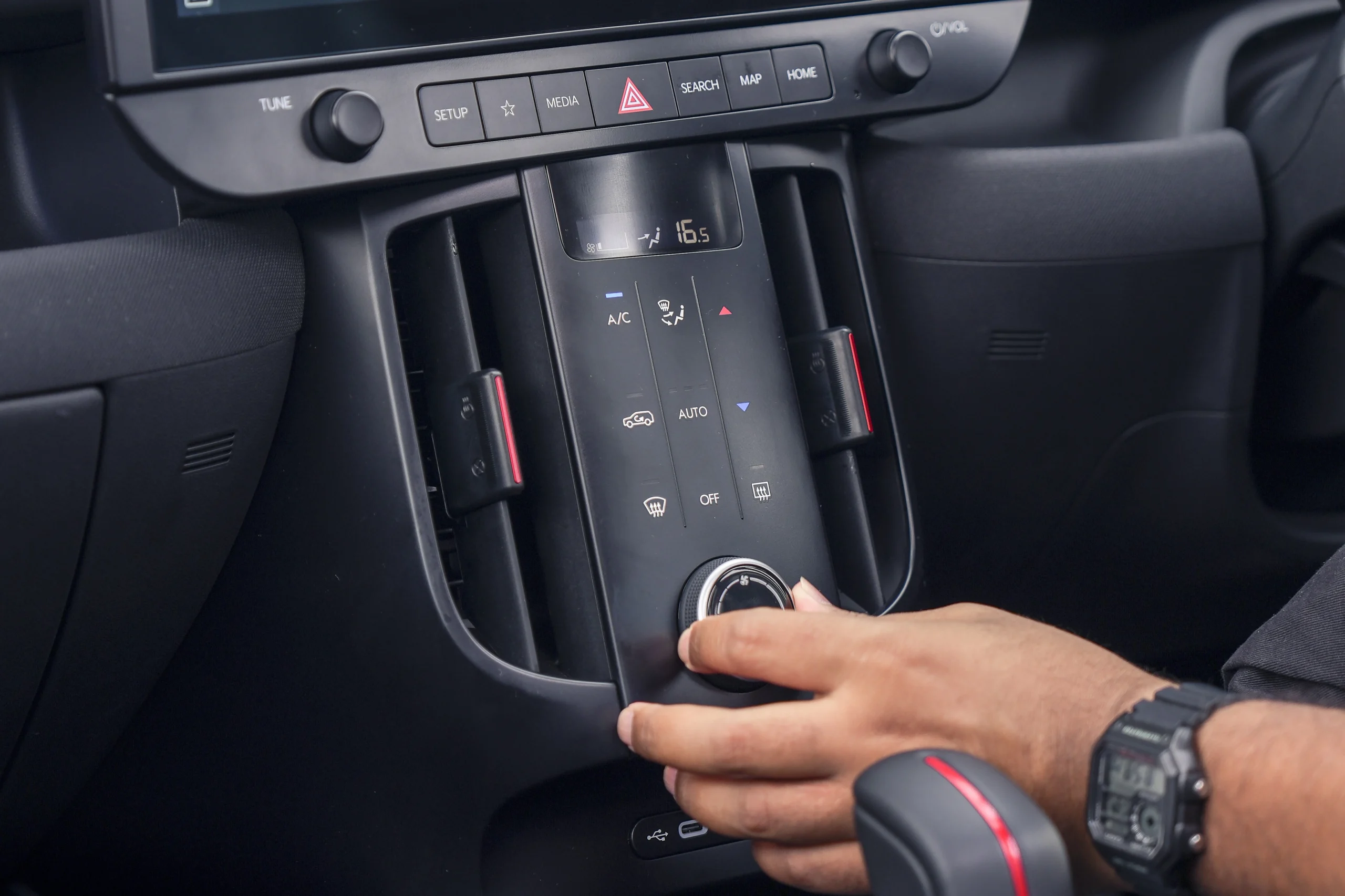
The buttons feel tactile, and we particularly appreciate having dedicated physical buttons for critical functions rather than having everything buried inside the infotainment system. The new Hyundai steering wheel also feels great to hold, with the drive mode selector neatly integrated into it, almost giving it a German-car-like touch.
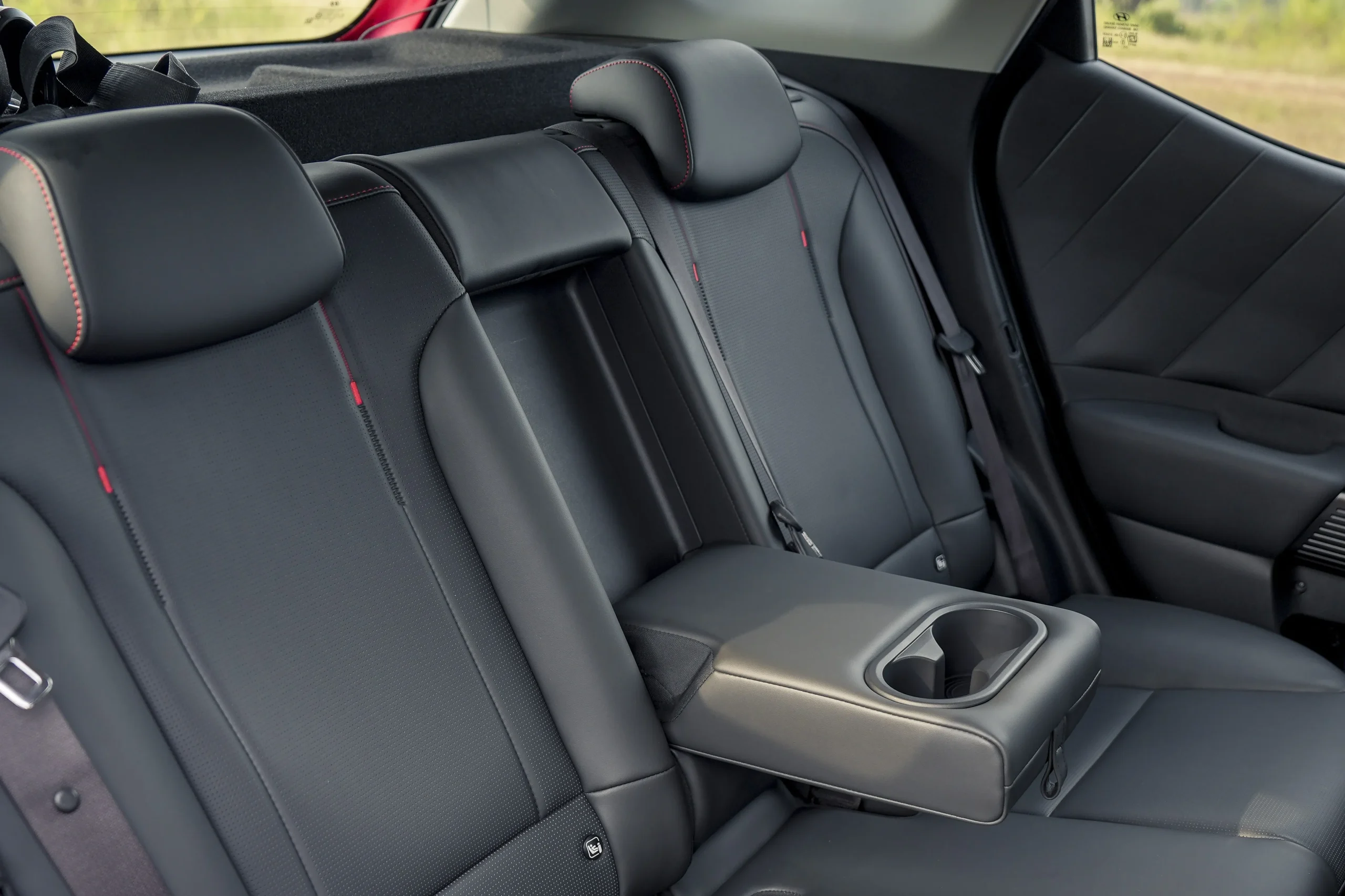
Fit and finish are generally good, although there are quite a few scratchy plastics around the cabin. The black interior with contrasting red stitching on our test car looks particularly sporty, almost giving it an N Line-like character. One major omission, especially for Indian conditions, is the lack of rear sunshades. While the sloping roofline and unusually shaped rear windows could make their integration difficult, it is still a feature offered on the smaller Venue, making its absence in the Bayon all the more disappointing.
Hyundai Bayon – Powertrain
Hyundai has kept things rather simple with the Bayon’s powertrain options, offering just one engine choice: a 1.5-litre, naturally aspirated, four-cylinder petrol engine producing 115 PS and 143.8 Nm of torque. This engine can be paired with either a six-speed manual gearbox or Hyundai’s Intelligent Variable Transmission (iVT), essentially a CVT.
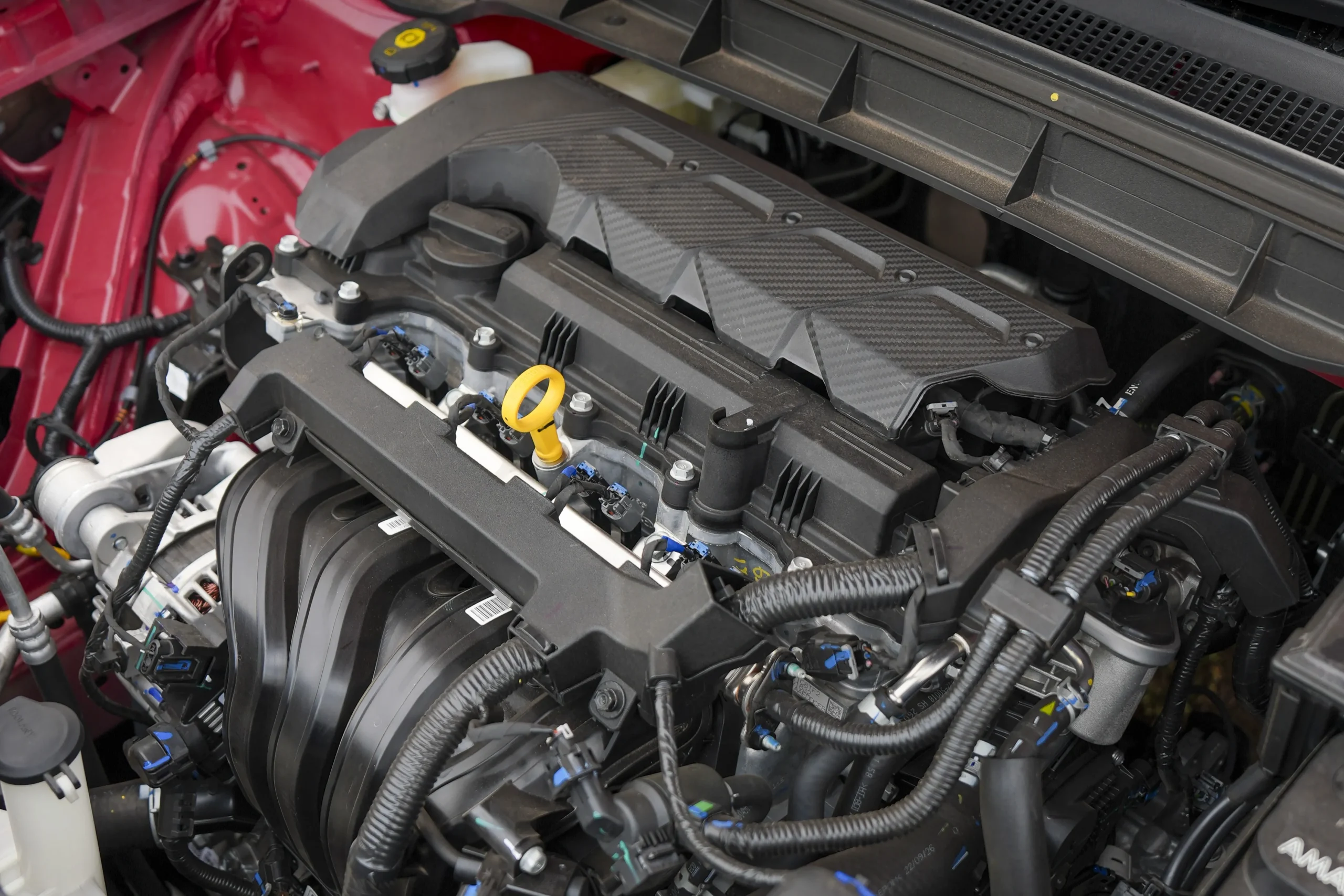
The eldest sibling, the Creta, gets three engine options: a 1.5-litre naturally aspirated petrol, a 1.5-litre turbo petrol and a 1.5-litre turbo diesel, along with a sporty N Line derivative. The youngest, the Venue, is equally pampered with a 1.0-litre turbo petrol, a 1.2-litre naturally aspirated petrol and a 1.5-litre diesel, along with its own N Line variant. And then there’s the middle child, the Bayon, which has to make do with just one naturally aspirated petrol engine. Hyundai has, however, committed to introducing a CNG option with this same engine in January 2027.
And that’s particularly concerning when you’re competing in a segment where powertrain choice can make or break a buying decision. Sure, this 1.5-litre naturally aspirated unit is tried and tested, doing duty in the Creta, Venue and even the Verna, but having a good engine and offering customers a choice are two very different things.
Hyundai Bayon – Driving and Dynamics
The Bayon’s 1.5-litre naturally aspirated petrol engine is a familiar and well-proven unit, but its performance is best described as adequate rather than exciting. It has a linear power delivery and a fairly refined nature, revving all the way to 6,500 rpm, but there isn’t much punch when you put your foot down. It takes its own sweet time to reach 100 kmph, and highway overtakes, particularly at speeds approaching 120 kmph, require a little planning.
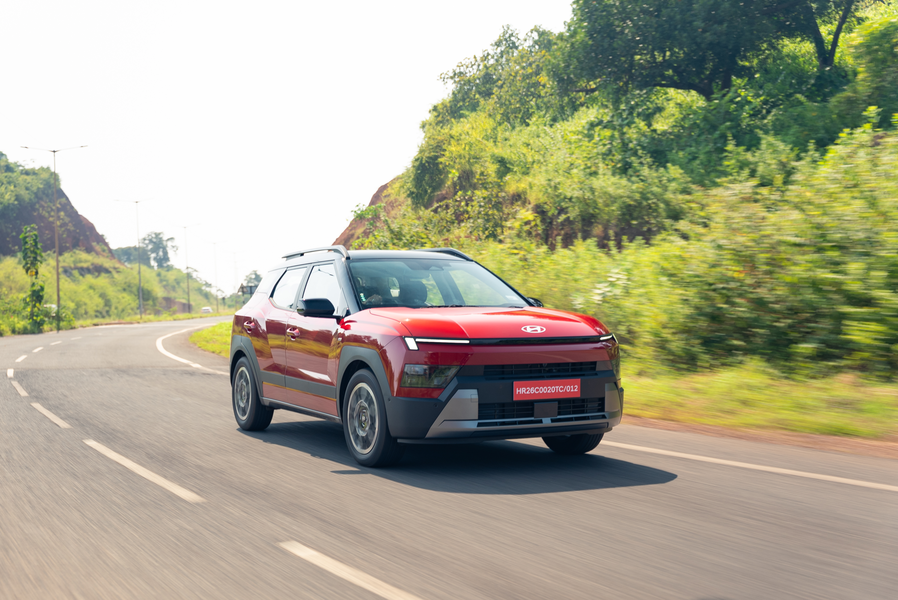
Around town, however, the engine is perfectly sufficient for everyday driving. The iVT gearbox is smooth when driven sedately, although push the car harder and you begin to notice the simulated gear changes. The three drive modes and paddle shifters add some involvement, with the latter giving you a degree of control and making the CVT feel like a pseudo-manual.
We think Hyundai missed an opportunity. It already has a 1.5-litre turbo-diesel doing duty in both the Creta and Venue, so offering it in the Bayon would have made a lot of sense. Alternatively, Hyundai could have considered its 1.0-litre turbo-petrol from the Venue, perhaps in a slightly higher state of tune, producing around 130 PS instead of the Venue’s 120 PS. That would have given the Bayon a distinct position between the Venue and Creta, without stepping on the toes of either. With the Creta’s turbo-petrol sitting at 160 PS, there was room to create a meaningful performance gap between the three SUVs.
Hyundai Bayon – Verdict
So, does the Bayon really do enough to distinguish itself from the Creta, and more importantly, does it justify the premium over the Venue? Honestly, not quite. If you’re already considering the Bayon at ₹10 lakh (ex-showroom), spending another lakh to get the Creta seems like the more sensible decision, especially considering the additional engine options and the more rounded package it offers. At the same time, the Bayon doesn’t quite justify the premium over the Venue, particularly when it is limited to just one powertrain option.
In many ways, the Bayon does suffer from the middle-child syndrome we spoke about at the beginning. However, I don’t think 2026 is necessarily its year to shine. With the next-generation Creta expected around 2027, there’s a possibility that it could move further upmarket, giving the Bayon more room to establish itself. This is, of course, just speculation on our part, but it could give the Bayon the differentiation it currently lacks.
That said, if you’re looking for something a little different from the sea of Cretas and Venues on our roads, the Bayon does have its appeal. It offers a good mix of comfort, technology and Hyundai’s familiar reliability, while sitting neatly between its two siblings. But if value for money is your priority, we’d recommend stretching your budget a little and going for the Creta instead. Like most middle children, the Bayon might eventually get its moment in the spotlight. But for now, it just isn’t quite there yet.