
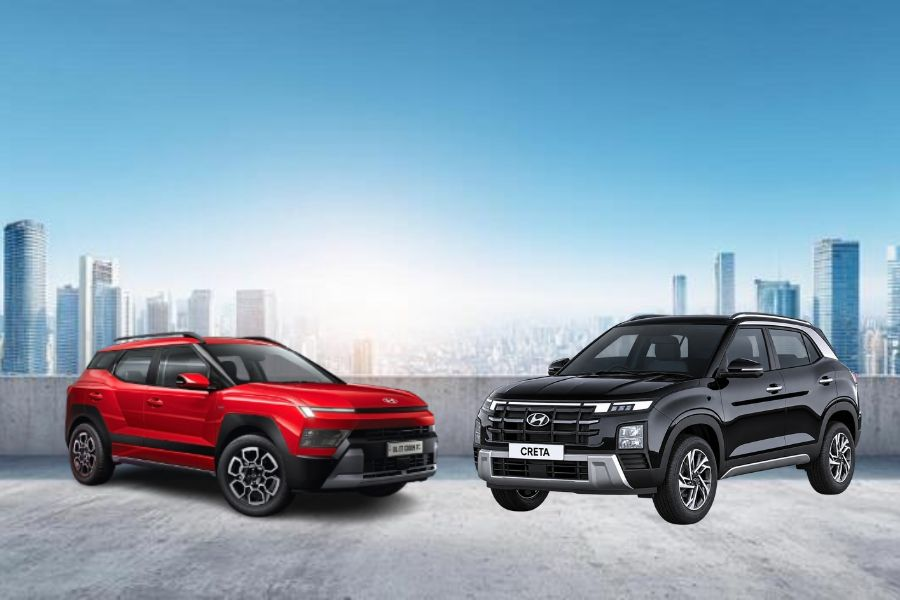
Hyundai has expanded its presence in the midsize SUV segment with the launch of the new Bayon, priced between Rs 10 lakh and Rs 18 lakh (ex showroom). The new SUV joins the Creta, which continues to be one of the most popular models in the segment. While both SUVs share several features and even the same naturally aspirated petrol engine, there are some important differences in their equipment, dimensions and powertrain options. So, how does the Hyundai Bayon compare with the Creta, and which one offers more for the money?
Hyundai Bayon vs Hyundai Creta – Dimensions
The Hyundai Bayon is slightly shorter than the Creta, measuring 4,245mm in length compared to the Creta’s 4,330mm. However, it is 20mm wider at 1,810mm, while its height of 1,605mm is 30mm less than the Creta. The wheelbase difference is minimal, with the Bayon measuring 2,600mm against the Creta’s 2,610mm.

One of the Bayon’s biggest advantages is its boot space. It offers 505 litres of luggage capacity, which is 72 litres more than the Creta’s 433 litres. The Bayon also gets 205mm of ground clearance, 15mm more than the Creta. However, the Creta has a larger 50 litre fuel tank, compared to the Bayon’s 43 litre unit. While the dimensions differ on paper, the similarities in wheelbase suggest that the difference in overall cabin space may not be significant.
Hyundai Bayon vs Hyundai Creta – Engine and gearbox options
Both SUVs share a 1.5 litre naturally aspirated petrol engine that produces 115hp and 144Nm of torque. In the Bayon, this engine is offered with a 6 speed manual gearbox or a CVT automatic. The Creta gets the same two transmission options with its naturally aspirated petrol engine.
However, the Creta has an advantage when it comes to powertrain choices. It also gets a 1.5 litre turbo petrol engine producing 163hp and 253Nm, paired with a 7 speed DCT automatic. Buyers can also choose a 1.5 litre diesel engine that produces 116hp and 250Nm, with manual and automatic gearbox options.
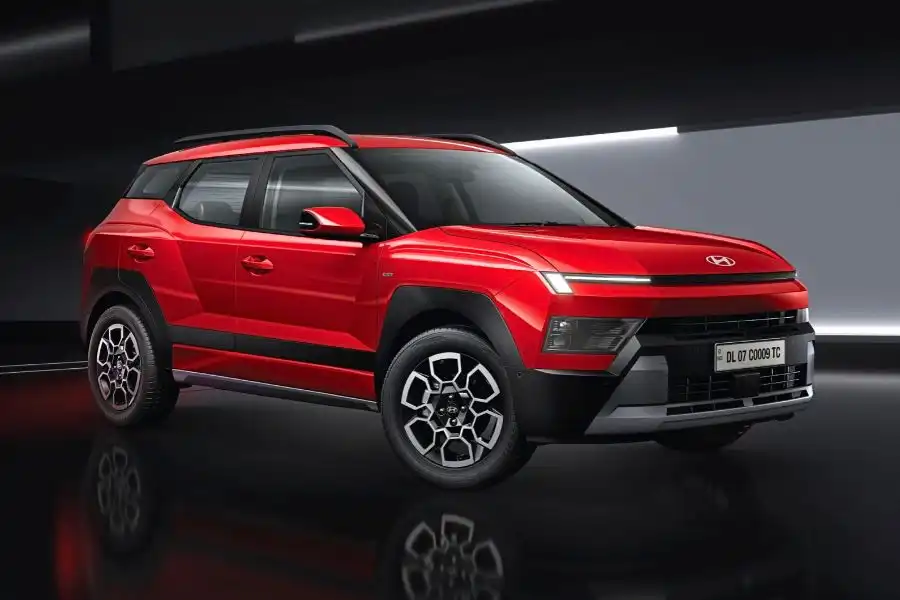
The Bayon is currently available only with a petrol engine, although Hyundai plans to introduce a CNG version in 2027. This would make it the only Hyundai model longer than four metres to receive a CNG option. In terms of claimed fuel efficiency, the Bayon’s CVT version returns 18.6kpl, compared to the Creta’s 17.7kpl. The Bayon’s smaller size and likely lower weight could contribute to this difference. Its claimed mileage with the manual gearbox is yet to be announced.
Hyundai Bayon vs Hyundai Creta – Exterior design and Features
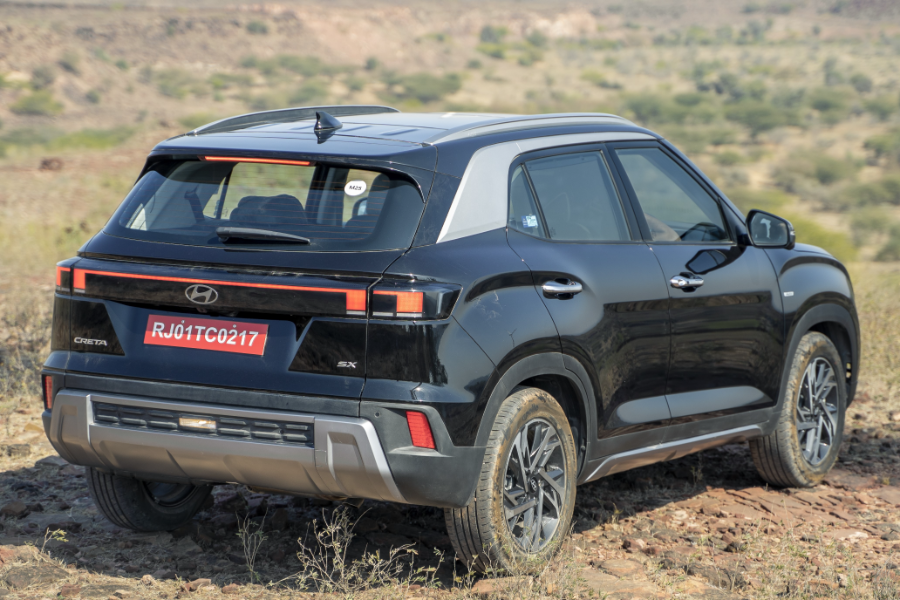
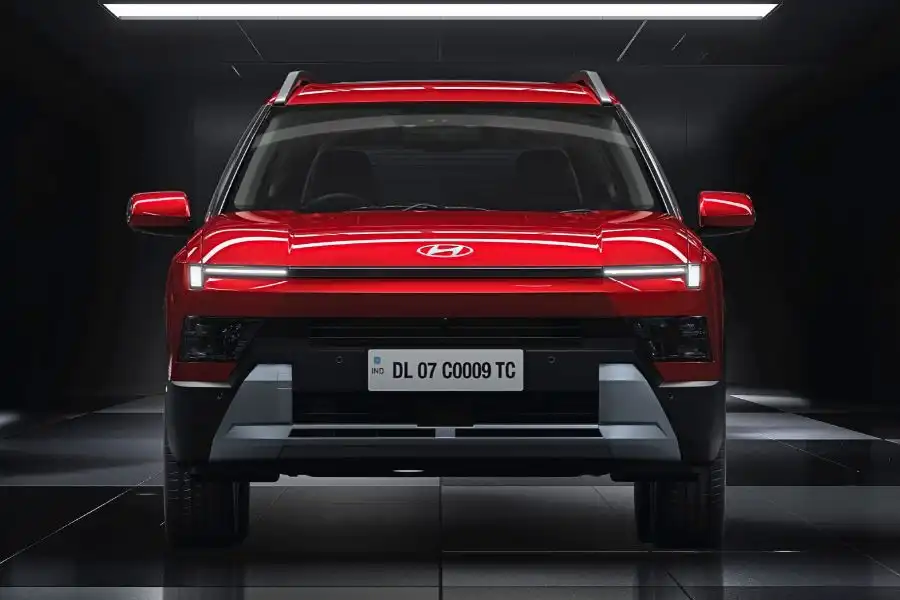
Both SUVs get similar exterior equipment, including LED lighting, automatic headlamps, a rear spoiler, electrically adjustable and foldable ORVMs and roof rails. The Bayon gets automatic projector LED headlamps, while the Creta uses automatic LED units. Both models also get LED tail lamps, although the Creta features an LED light bar.
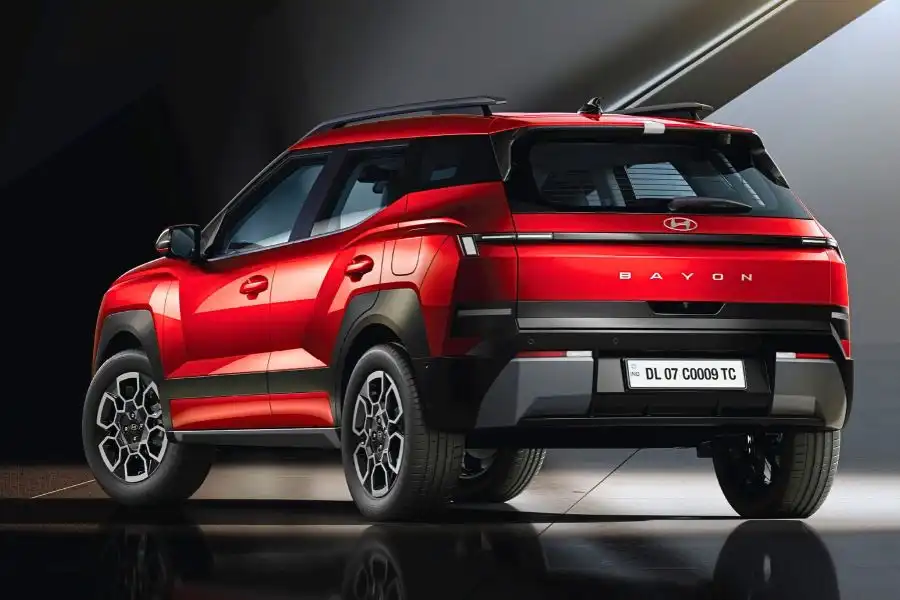
The main difference is in their wheel sizes. The Bayon gets 17 inch alloy wheels, while the Creta sits on larger 18 inch alloy wheels. Both SUVs are available in single tone and dual tone colour options. Neither model gets front or rear fog lamps.
Hyundai Bayon vs Hyundai Creta – Interior design and Technology
The Bayon gets an advantage in terms of screen size, featuring a 12.3 inch infotainment system and a 12.3 inch digital driver’s display. The Creta, meanwhile, gets two 10.25 inch screens. The Bayon also introduces Hyundai’s generative AI voice assistant, which can help with navigation, destination searches, calls, SMS messages, climate control and sunroof operation. It can also provide real time weather and sports updates.
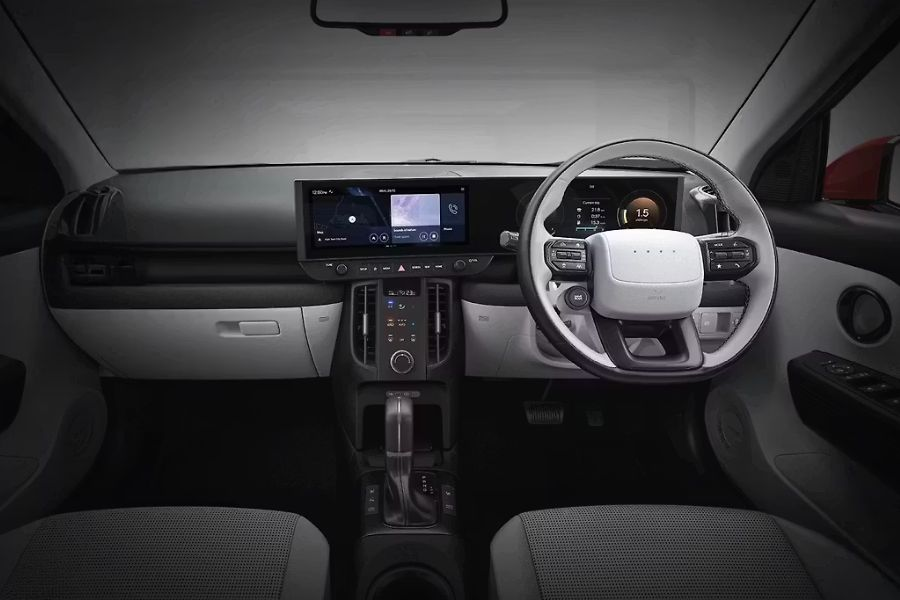
Both SUVs get wireless Android Auto and Apple CarPlay, a panoramic sunroof, ventilated front seats, leatherette upholstery and an eight speaker Bose sound system. However, the Creta offers some additional convenience features. These include dual zone climate control, wireless phone charging for rear passengers and an eight way powered front passenger seat. The driver’s seat also gets a memory function, while the powered boss mode allows rear passengers to adjust the front passenger seat.

The Creta further gets rear sunshades, an air purifier and a cooled glove box, none of which are available in the Bayon. Both SUVs get reclining rear seats with a 60:40 split, ambient lighting, connected car technology, over the air updates and Type C charging ports for front and rear passengers.
Hyundai Bayon vs Hyundai Creta – Technology and Safety
In terms of driving technology, both SUVs offer Normal, Eco and Sport drive modes, paddle shifters, adaptive cruise control and an idle start stop system.
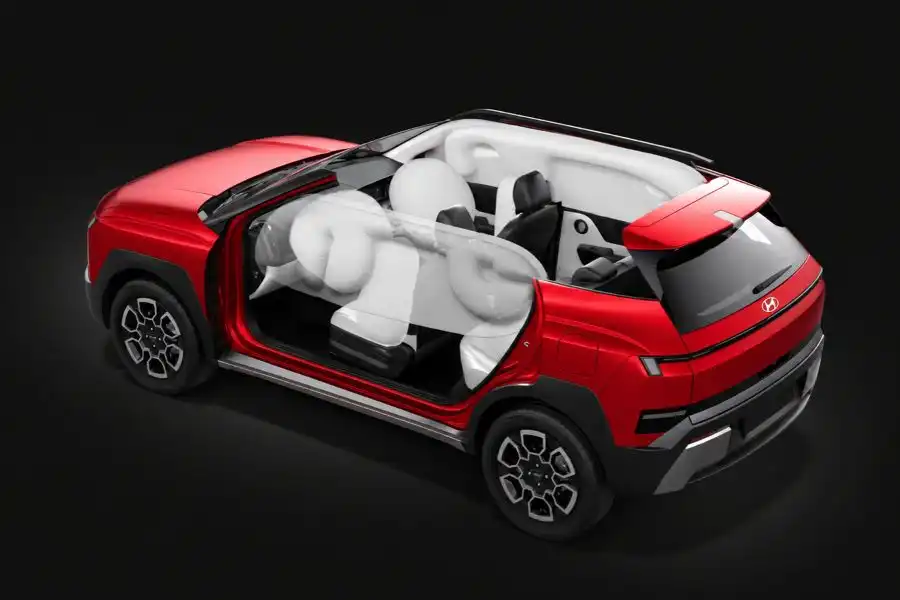
Safety equipment is also largely similar, with both models getting six airbags, front and rear parking sensors, a 360 degree camera, an electronic parking brake with auto hold, TPMS, hill start assist and hill descent control. Both SUVs also get disc brakes on all four wheels, electronic stability control and traction control. However, the Bayon gets a Level 2+ ADAS package, compared to the Creta’s Level 2 system. It adds features such as map based highway driving assist.
Hyundai Bayon vs Hyundai Creta – Price
The Hyundai Bayon is priced between Rs 10 lakh and Rs 18 lakh, while the Creta’s naturally aspirated petrol manual variants are priced between Rs 10.91 lakh and Rs 17.28 lakh. The Bayon is cheaper by Rs 91,000 at the entry level and Rs 63,000 at the top end. Its CVT variants are also more affordable, with a price difference of Rs 65,000 at the entry level and Rs 69,000 at the top end.
However, the Creta offers a wider range of powertrains, including turbo petrol and diesel options, along with additional convenience features. The Bayon counters this with larger displays, a more advanced voice assistant, additional ADAS features, a bigger boot and slightly better claimed fuel efficiency.
Ultimately, the choice between the two SUVs will depend on what buyers prioritise. The Bayon offers newer technology and a competitive feature package at a lower price, while the Creta continues to make a strong case with its wider engine choices and additional comfort features.