

The mid-size SUV segment in India today has to be one of the most competitive segments for a
manufacturer to sell a car in. The segment which was started by the Duster in 2013, popularized by
the Creta in 2015 and zapped with tech by the Kia Seltos in 2019 has gotten itself a new competitor.
This competitor is not a new name.
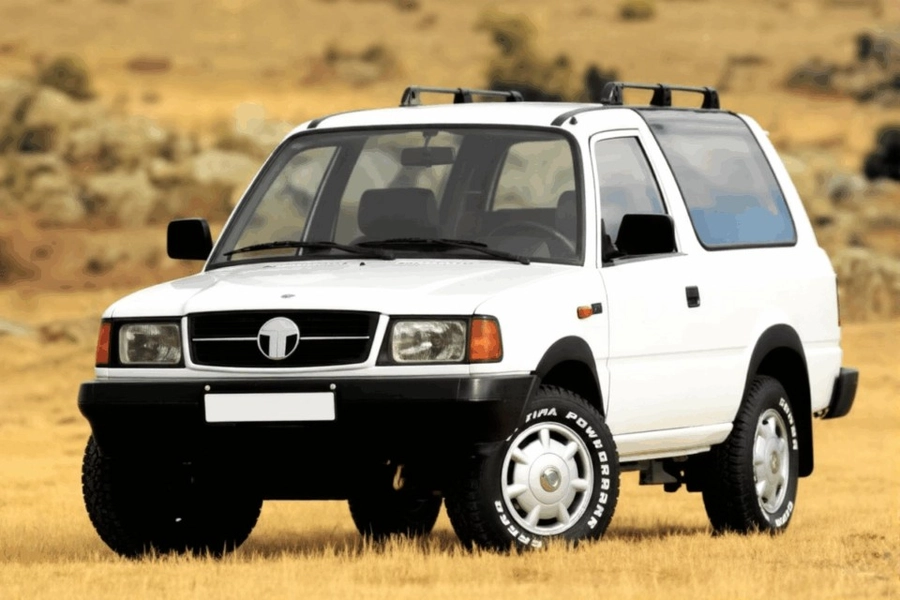
It is an Indian icon of the 90s that has been reborn for 2025 to take on the Korean onslaught. Meet the brand-new Tata Sierra, an automotive legend that makes a comeback after 22 long years, that’s almost as old as I am, and I find out does the Sierra have it in it to help Tata finally take on the Korean twins or is it here to just ride on the coattails of the “Sierra” nameplate.
Tata Sierra – Exterior Design
Let’s talk design which has always been the Sierra’s stronghold whether old or new. The older Sierra
was Mr Ratan Tata’s brainchild, was a butch 3-Door ladder-on-frame SUV with huge rear alpine
windows that makes the modern panoramic sunroofs feel modest in comparison.
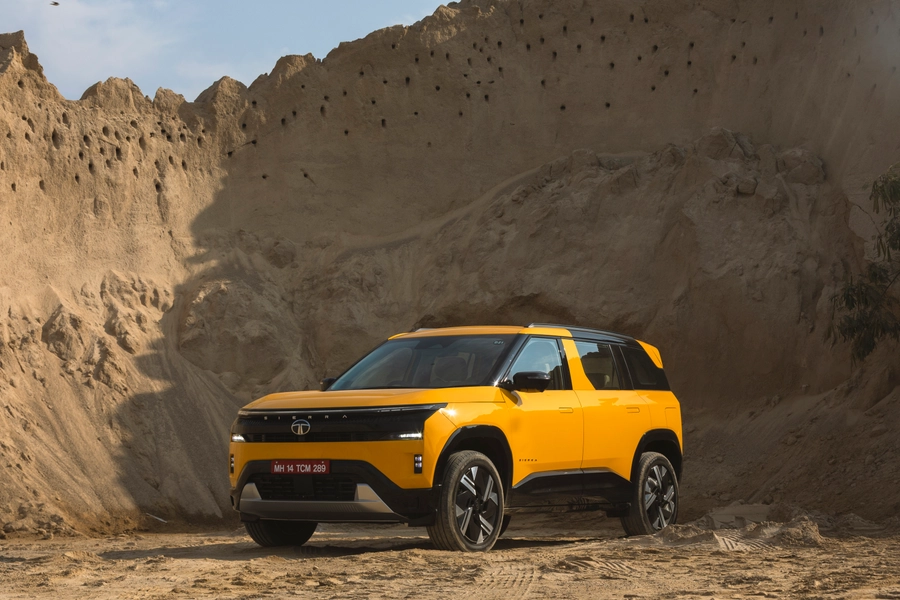
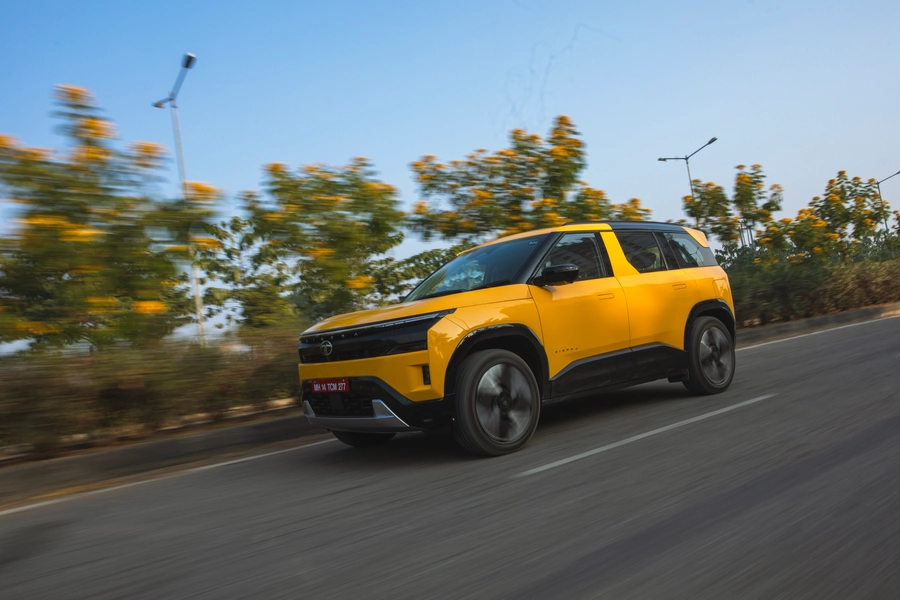
The 2025 Tata Sierra takes the bold, upright route with its retro-inspired boxy silhouette, wide LED
light bar and clean surfaces that instantly separate it from the crowd. It leans more towards a
rugged, almost concept-car vibe. The extremely slim headlamp units—just 17 mm in height, making
them among the slimmest in India sit neatly below the connected DRL. The overall effect is rugged
yet futuristic and refreshingly different from the curvy, over-styled SUVs that dominate this
segment.

In terms of proportions, the Sierra measures 4,340 mm in length, 1,841 mm in width and 1,715 mm
in height, with a generous 2,730 mm wheelbase. These dimensions place it squarely in the mid-size
SUV category. Ground clearance stands at 205 mm, and Tata claims a water-wading capability of up
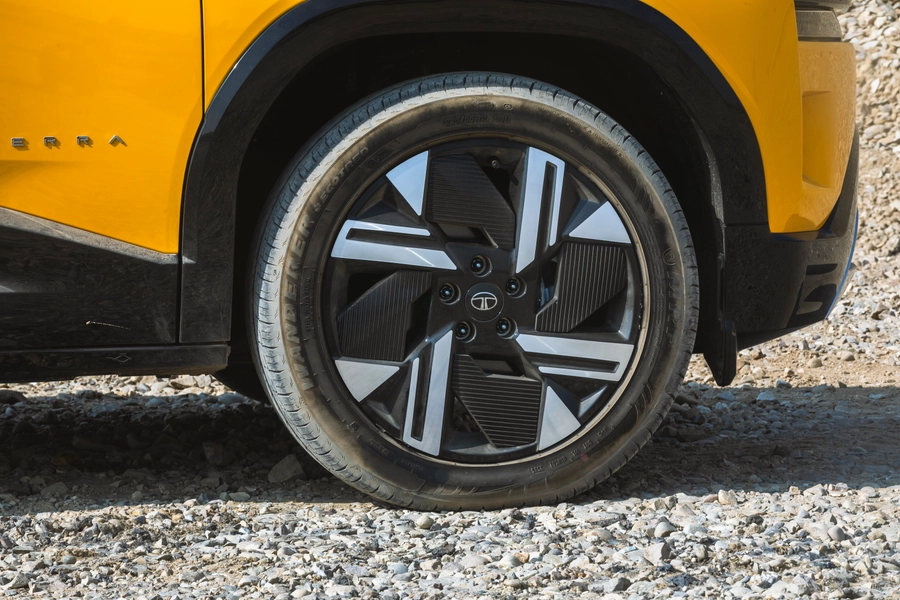
to 450 mm. The top-end variant we tested rides on 19-inch alloy wheels, which fill the arches well
and add to the Sierra’s stance.
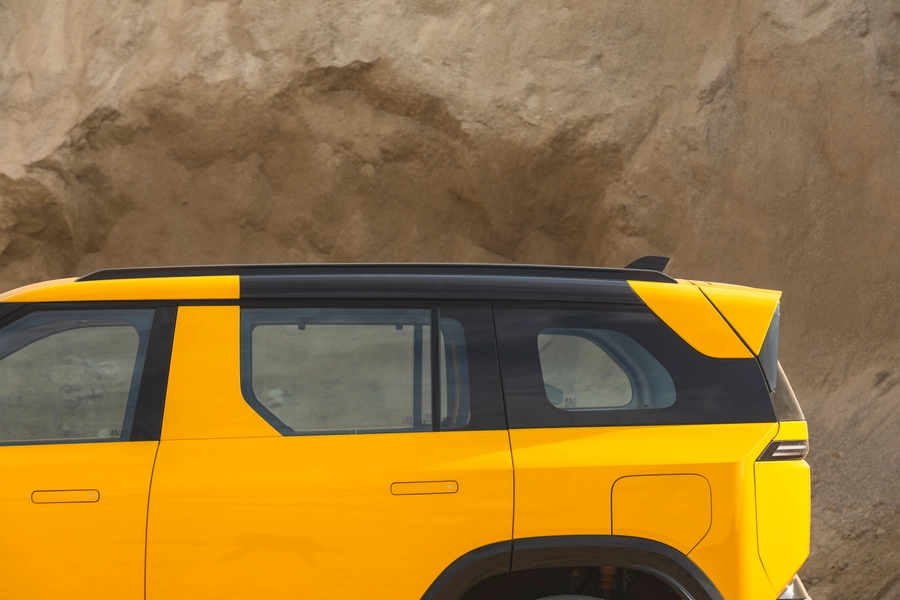
One of the cleverest design touches, though, is the design of the B-pillar. Despite being a five-door
SUV, Tata has visually masked the pillar in a way that immediately reminds you of the original three-
door Sierra. The blacked-out finish and glass integration recreate that iconic wraparound glass
effect, preserving the silhouette and nostalgia without compromising practicality. It’s a smart
solution that shows the Sierra’s roots and a great throwback to the original Sierra.
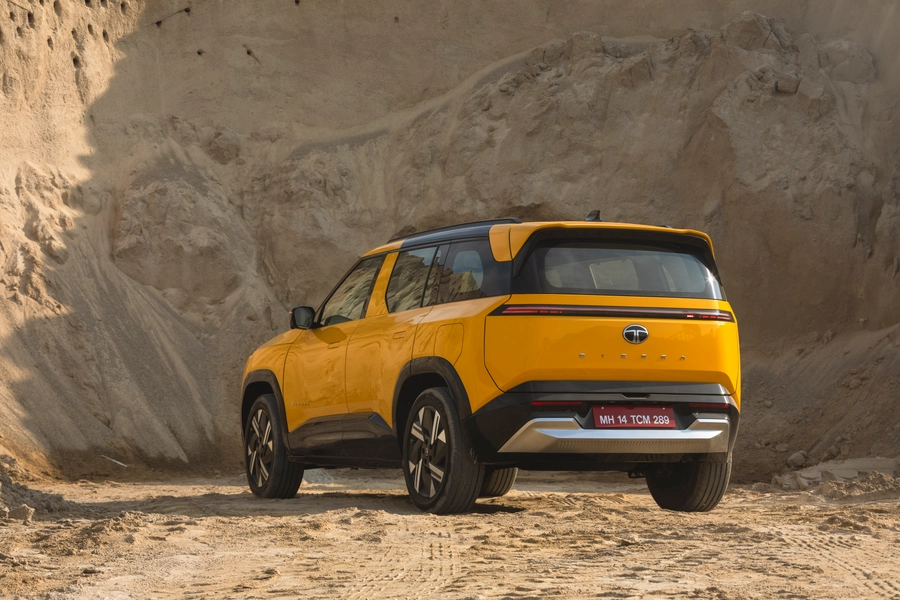
Adding to the modern feel are the flush door handles, which sit seamlessly within the bodywork. At
the rear, the Sierra keeps things clean and purposeful, staying true to its boxy roots. The upright
tailgate, slim full-width LED light bar and neatly integrated bumper give it a strong and wide look.
Tata Sierra – Interior Design
Step inside the 2025 Sierra and the focus clearly shifts to space and ambience rather than flashy
design. The cabin feels open and relaxed, staying true to what the Sierra name has always stood for.
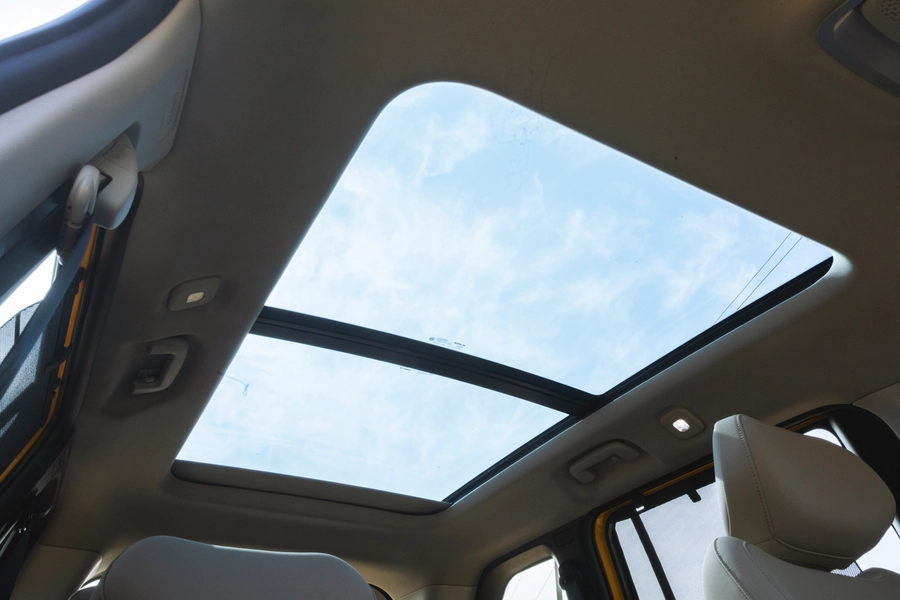
The large panoramic sunroof plays a big role here, letting in plenty of light and giving the interior a
sense of airiness that most mid-size SUVs simply do not offer.
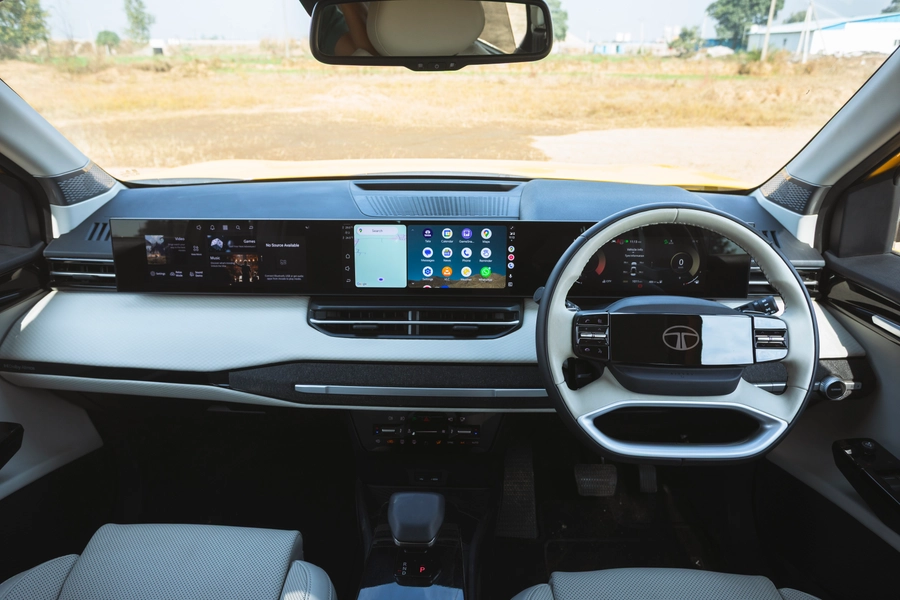
Technology plays a big role inside the new Sierra. The dashboard features a three screen layout with
dual 12.3 inch displays, one for the central infotainment system and one dedicated to the front
passenger. The driver gets a separate 10.25 inch digital instrument cluster that is clear and easy to
read while driving. Audio duties are handled by a 12 speaker JBL sound system with a soundbar and
Dolby Atmos, while features like the Arcade app store, HypAR head up display, dual zone climate control, panoramic sunroof, wireless charging, a 360-degree camera and rear sunshades round off a
very comprehensive feature list.
That said, I am not entirely sold on the three screen approach. While it looks impressive, I personally
prefer the cleaner setup offered on the lower variants with two screens. The simpler layout feels less
distracting from behind the wheel.
Tata Sierra – Comfort and Handling
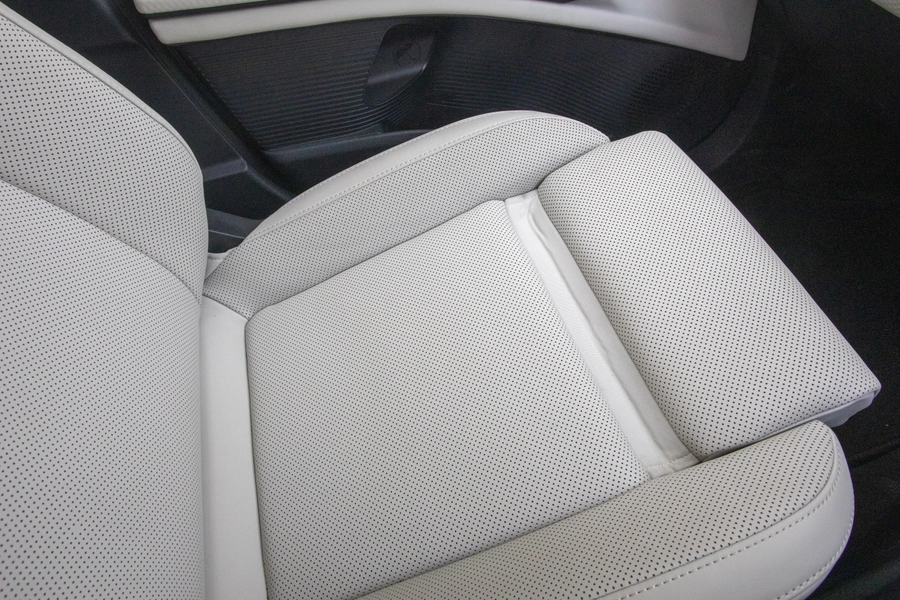
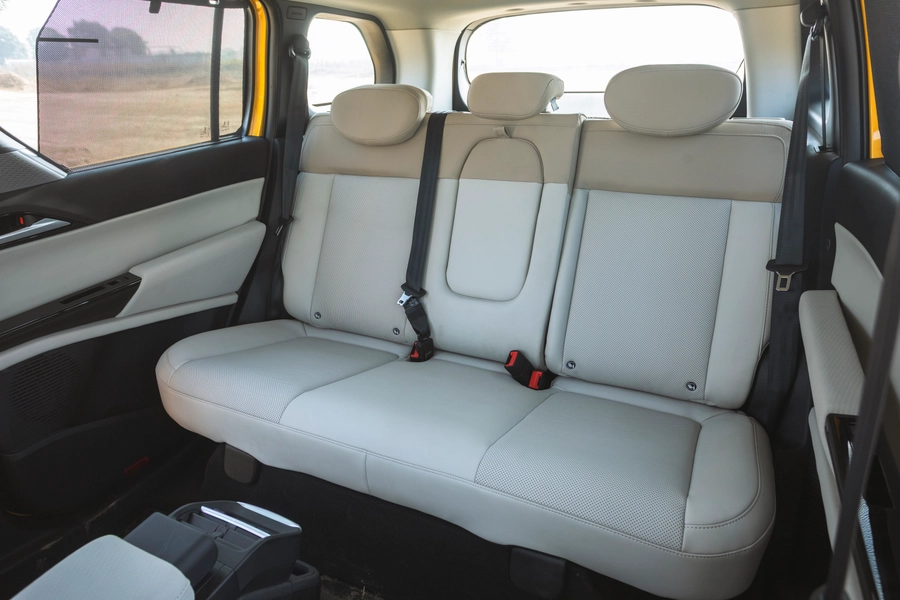
Up front, the Sierra offers seats that are immediately welcoming, with a supportive shape and the added benefit of adjustable under-thigh extension, which makes a noticeable difference on longer drives. The padding strikes a good balance, avoiding both the sink-in feel of overly soft seats and the stiffness that can lead to fatigue. Rear-seat comfort is equally well thought out. Three adults can sit comfortably thanks to generous knee and shoulder room, and the large panoramic sunroof doesn’t compromise headroom as much as you might expect.
Rear occupants also get a long list of conveniences, including sunshades for the windows, separate climate vents, USB charging points, a reclining seatback and a central armrest with cupholders. There’s even a boss mode function that moves the front passenger seat forward to free up extra legroom at the back. Safety hasn’t been overlooked either, with adjustable headrests and proper three-point seatbelts for all rear passengers.
On the road, the Sierra delivers exactly what you’d expect from a Tata SUV. Higher variants are equipped with frequency-dependent dampers, and they do an impressive job of keeping the car settled over rough surfaces. Broken roads, potholes and uneven patches are dealt with confidently, giving the SUV a solid, planted feel. There is a hint of firmness at city speeds, and sharper bumps can occasionally make themselves felt, but comfort improves noticeably as speeds rise.
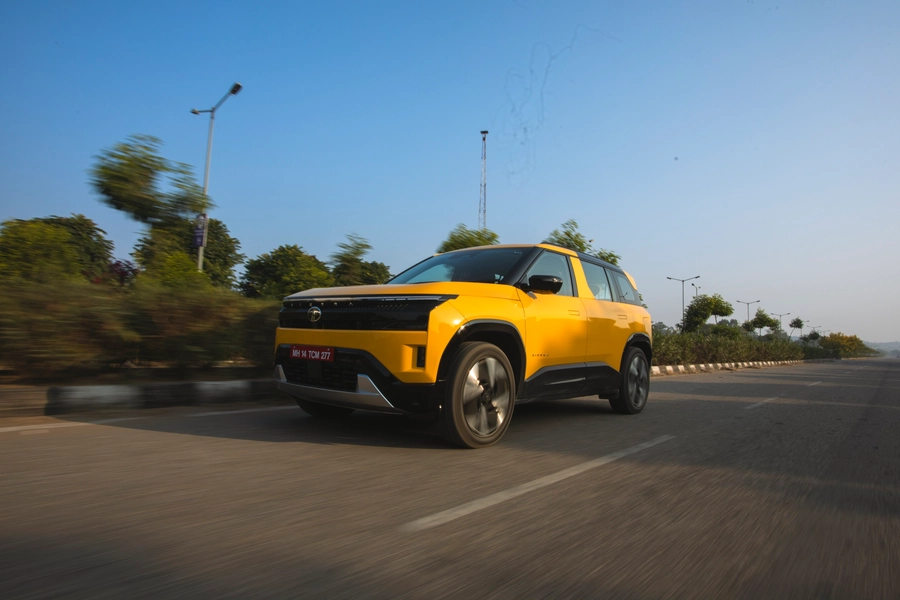
Light off-road driving is also handled with ease, helped by 205mm of ground clearance and dedicated terrain settings – Normal, Wet and Rough alongside the standard drive modes. Through corners, body movement is well managed, and from behind the wheel, the Sierra feels smaller and lighter than its size suggests. The steering is tuned more for ease than feedback, but it’s consistent and predictable, and the overall grip levels inspire confidence. On twisty roads, especially with the turbo-petrol automatic, the Sierra proves to be surprisingly engaging.
Tata Sierra – Engine Options and Performance
Powering the Sierra is a trio of engine options. Entry-level variants get a new 1.5-litre naturally aspirated petrol engine operating on an Atkinson cycle, producing 106hp and 145Nm, paired with either a 6-speed manual or a 7-speed dual-clutch automatic. Above this sits a more powerful direct-injection turbo-petrol version of the same engine family, delivering 160hp and 255Nm, available exclusively with a 6-speed Aisin torque-converter automatic. Diesel buyers are served by a familiar 1.5-litre unit shared with the Curvv and Nexon, making 118hp and up to 280Nm when paired with the automatic gearbox. Tata says this engine has been revised with internal updates and a new tune. During our drive, we experienced both the turbo-petrol and the diesel automatic.

The turbo-petrol stands out as the highlight of the range. Tata’s new Hyperion engine feels smooth and refined, whether idling or cruising at speed. Throttle response is quick, turbo lag is well contained, and power delivery is clean and progressive rather than aggressive. While it lacks a strong mid-range surge, it remains responsive enough, especially in Sport mode. Performance figures back this up, with a 0–100kmph sprint completed in just over 10 seconds, edging out rivals like the Creta N Line turbo-petrol. Rolling acceleration is equally impressive, making overtakes easy and stress-free.
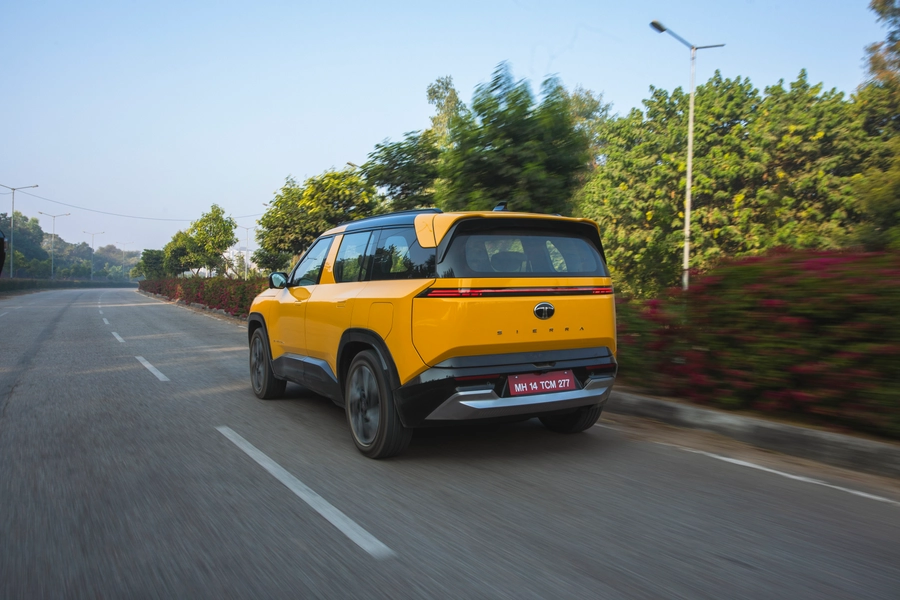
Paired to this engine is a 6-speed torque-converter automatic that prioritizes smoothness over outright speed. Paddle shifts are leisurely, but in normal driving, the gearbox feels well matched to the engine, delivering seamless upshifts and rarely catching you in the wrong ratio. It also holds gears intelligently when required, reducing the need for manual intervention. The diesel, on the other hand, makes its presence felt more clearly. Engine noise and vibrations are noticeable throughout the rev range, reminding you that this is a traditional.
Tata Sierra – Verdict
The Tata Sierra makes a strong case for itself as a well-rounded midsize SUV that blends comfort, space and road manners with a modern powertrain lineup. Its ride quality remains a standout, soaking up broken roads with ease while still feeling composed and confident at higher speeds. The new turbo-petrol engine impresses with its refinement and performance, making it the pick of the range, while the diesel continues to appeal to long-distance highway users.
Add to that a spacious, well-equipped cabin and a practical boot, and the Sierra emerges as a compelling family SUV. It may not be the most engaging from a steering feel perspective, but as an everyday all-rounder that’s comfortable, capable and easy to live with, the Sierra delivers exactly what most buyers in this segment are looking for.
What seals the deal is the Sierra’s unmistakable throwback design and the weight the name itself carries. It’s a combination that adds emotional appeal to an already competent package, and it strongly suggests that Tata Motors has struck the right chord with this revival.
Pingback: 2026 Tata Punch Facelift Set for Launch Tomorrow: What to Expect - Shutterdrives