
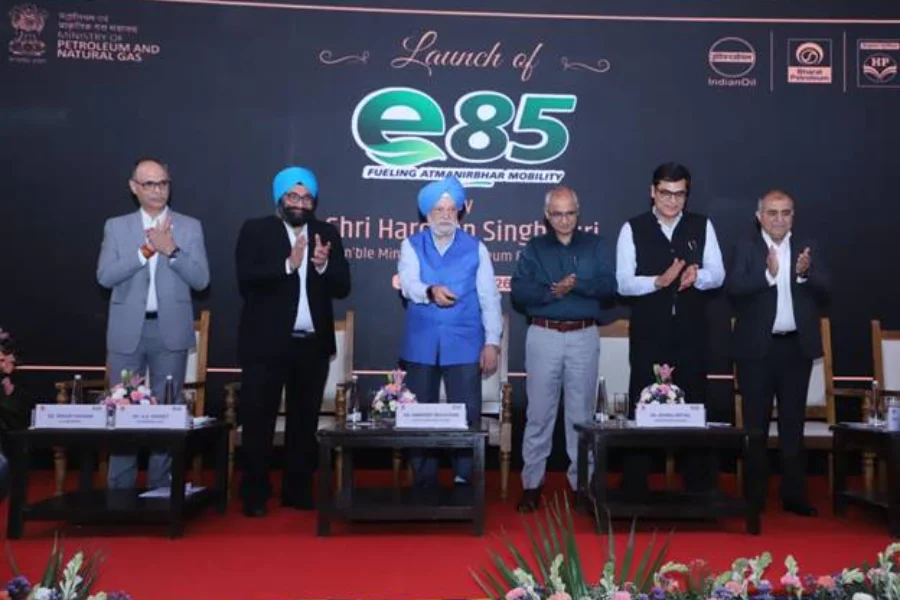
India has initiated the supply of E85 Ethanol fuel across 48 public sector oil marketing company retail outlets, marking a significant step in the country’s alternative fuel strategy. The E85 fuel was launched by the Honorable Minister for Petroleum and Natural Gas Shri Hardeep Singh Puri launched E85 fuel at an IndianOil retail outlet in New Delhi on the occasion of World Environment Day 2026
This rollout enables users of flex fuel vehicles to access higher blends of ethanol at select locations, with plans for a phased national expansion. The government has outlined a roadmap to scale the number of outlets to 500 by December 2026 and further to 5000 by December 2027. This expansion is expected to support a rise in aggregate ethanol blending levels to nearly 26 per cent by 2030 to 31.
The introduction of E85 fuel, which consists of 85 per cent ethanol and 15 per cent petrol, is also aligned with India’s efforts to reduce dependence on imported crude oil. At present, ethanol blended fuels have already achieved a 20 per cent blending rate, significantly ahead of earlier timelines.
Ethanol policy and government perspective
Speaking at the launch, Union Minister Hardeep Singh Puri stated that India has managed to balance energy availability, affordability, and sustainability while maintaining stable fuel supplies. He highlighted that fuel price increases in India have remained among the lowest globally since February 2026. The expansion of ethanol blending has been a key contributor to this stability.
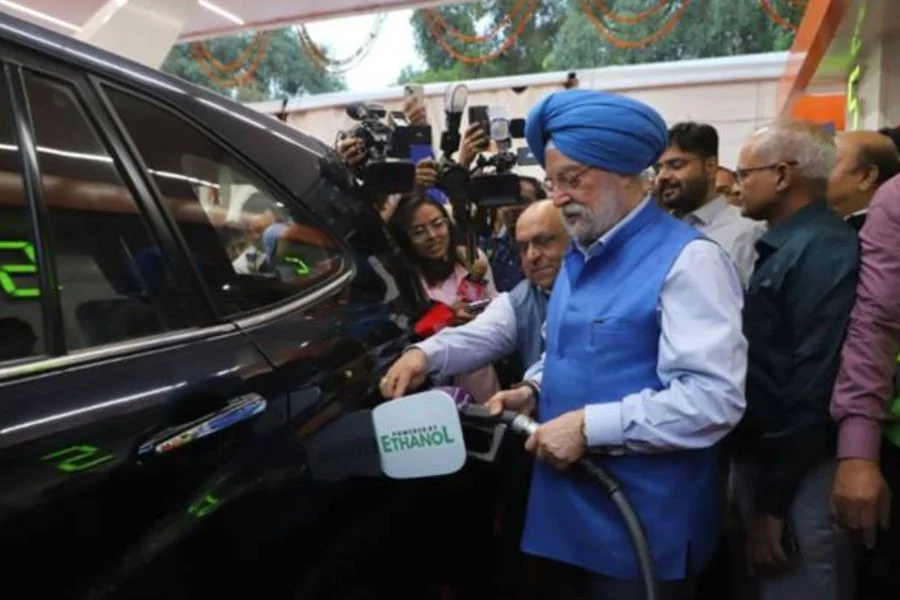
The Minister noted that ethanol blending has increased from 1.53 per cent in 2014 to 20 per cent today. This transition has resulted in foreign exchange savings of over ₹1.84 lakh crore and reduced crude oil imports by nearly 302 lakh metric tonnes. He also emphasised the role of farmers in this shift, stating that they have moved from being food providers to energy contributors through ethanol production.
Ethanol benefits and fuel characteristics
E85 offers several economic and environmental advantages. The fuel is priced around ₹20 per litre lower than conventional petrol, making it a cost effective option for consumers. The use of ethanol in higher blends also contributes to a reduction in lifecycle greenhouse gas emissions by approximately 61% compared to standard petrol vehicles.
From a technical standpoint, ethanol has a Octane Number of about 108, which provides higher resistance to engine knocking. This allows engines to operate with improved efficiency through higher compression ratios and optimized ignition timing. Additionally, higher ethanol blends promote cleaner combustion, resulting in minimal particulate emissions and improved urban air quality.
Ethanol demand and economic impact
The government has projected that if 50% of new two wheelers and four wheelers adopt flex fuel technology, the demand for ethanol could exceed 312 crore litres. This shift would generate an estimated ₹12,403 crore in direct income for farmers. At the same time, it could lead to annual foreign exchange savings of approximately ₹15,151 crore and a reduction of 66.4 lakh metric tonnes in carbon dioxide emissions.
Such projections underline the broader economic benefits of expanding ethanol usage beyond fuel cost savings. The increased demand also strengthens rural income streams and supports domestic production.
Ethanol vehicles and current market status
Despite the push for ethanol based fuels, vehicle availability remains limited. Currently, only three motorcycles in India support E85 or flex fuel capability. These include the Suzuki Gixxer SF 250 FFV (flex fuel vehicle), priced at ₹1.98 lakh, and the Hero Splendor Plus and HF Deluxe, priced at ₹82,710 and ₹72,792 respectively, ex showroom Delhi. These models are among the first to adopt ethanol compatible engines in the two wheeler segment.
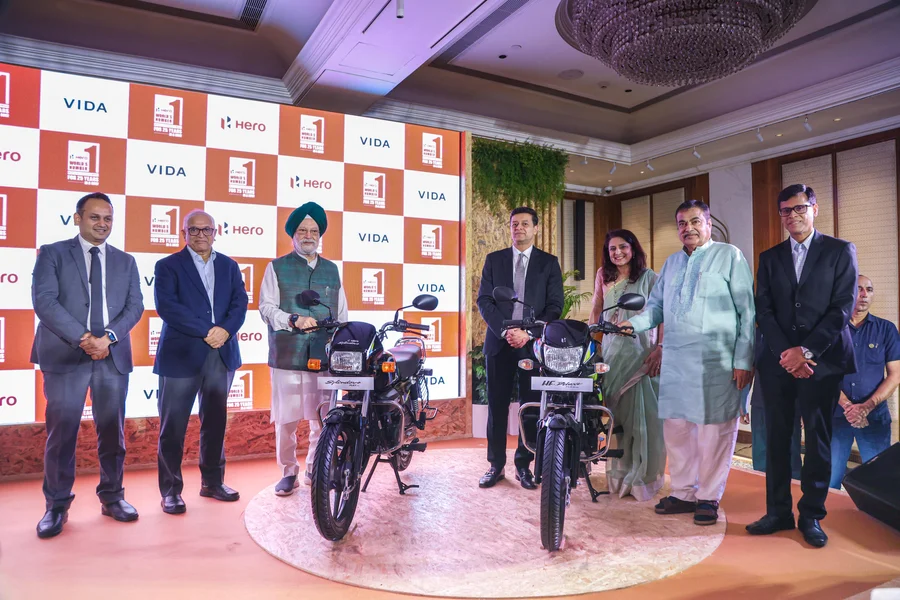
However, flex fuel vehicles come at a higher upfront cost. For instance, the E85 compliant version of the Hero Splendor Plus is priced around ₹6000 higher than its standard counterpart. There is also limited data available on fuel efficiency for these models, as manufacturers have not disclosed detailed figures.
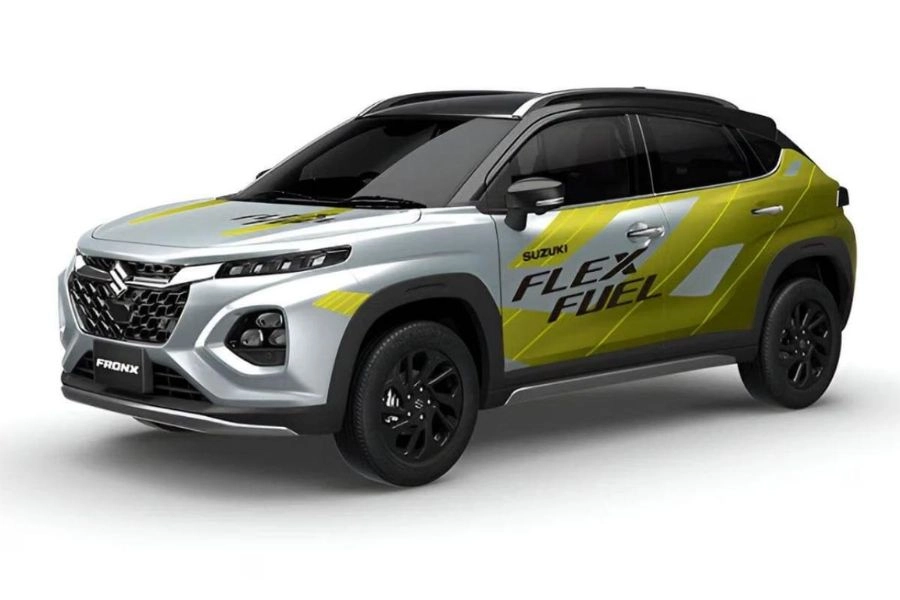
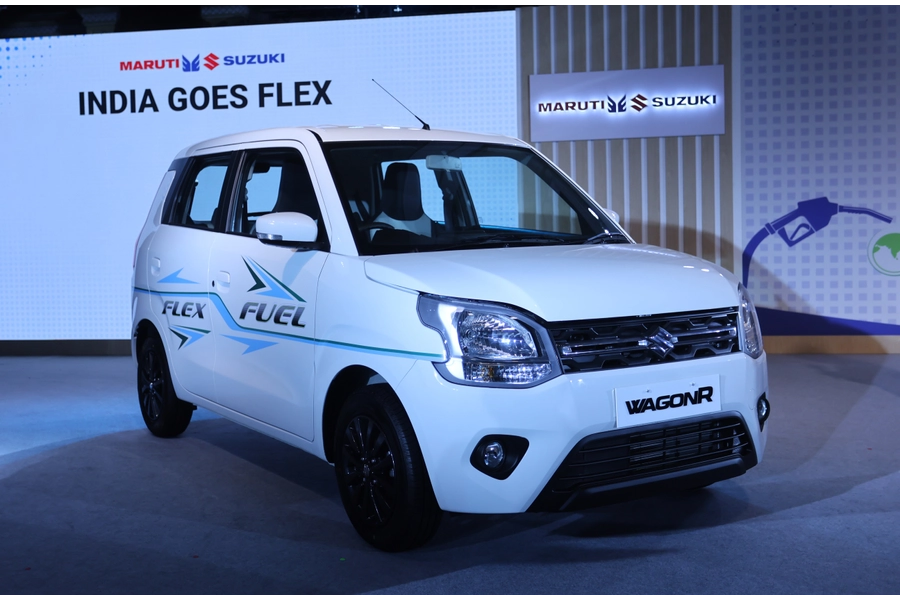
In the passenger vehicle segment, there are currently no ethanol flex fuel cars on sale. Maruti Suzuki most recently showcased a Wagon R flex fuel prototype capable of running on blends up to E100, although it is currently homologated for E85. There is no confirmed timeline for its launch in the market.
Ethanol outlook and future adoption
The expansion of E85 fuel infrastructure marks an important step in India’s transition towards cleaner fuels. However, the success of adoption will depend on the availability of compatible vehicles and wider consumer acceptance. As the number of fuel outlets increases and more manufacturers introduce ethanol compatible models, the ecosystem is expected to mature over the coming years.