
The Indian car market has bounced back strongly after the COVID 19 pandemic, but what Indians buy has changed quite a bit. SUVs have steadily eaten into the market share of hatchbacks and sedans, which were once the backbone of the Indian car market. Today, SUVs dominate the best selling charts, but Maruti Suzuki is still betting big on hatchbacks.
Maruti remains India’s largest hatchback manufacturer by volume, and one of its most important cars is the Maruti Suzuki Baleno. The name was first used on a sedan in India before being discontinued, and was revived in 2015 as a premium hatchback to take on the likes of the Hyundai i20 and Volkswagen Polo. Now in its second generation, the Baleno has received a facelift with a new design, new engine and a host of new features, including several segment firsts.
But the Baleno is more important than just its own sales numbers. The Glanza is a badge engineered Baleno, the Fronx is spawned from the Baleno’s architecture, and the Urban Cruiser Taisor is essentially a badge engineered version of the Fronx.
Now look at the numbers. In July 2026, Maruti sold 18,241 Balenos and 19,473 Fronx SUVs, while Toyota sold 4,461 Glanzas and 2,470 Urban Cruiser Taisors. Put those four cars together and you get 44,645 units in a single month.
India recorded 4,16,555 passenger vehicle retail sales in July. That means this family of cars accounted for roughly 10.7 percent of the entire market, or more than one in every ten passenger vehicles sold.
Together, these four cars show just how important the Baleno’s architecture has become for Maruti Suzuki and Toyota. And that is why this new Maruti Suzuki Baleno facelift matters. So, what exactly has Maruti changed?
Maruti Suzuki Baleno – Exterior Design
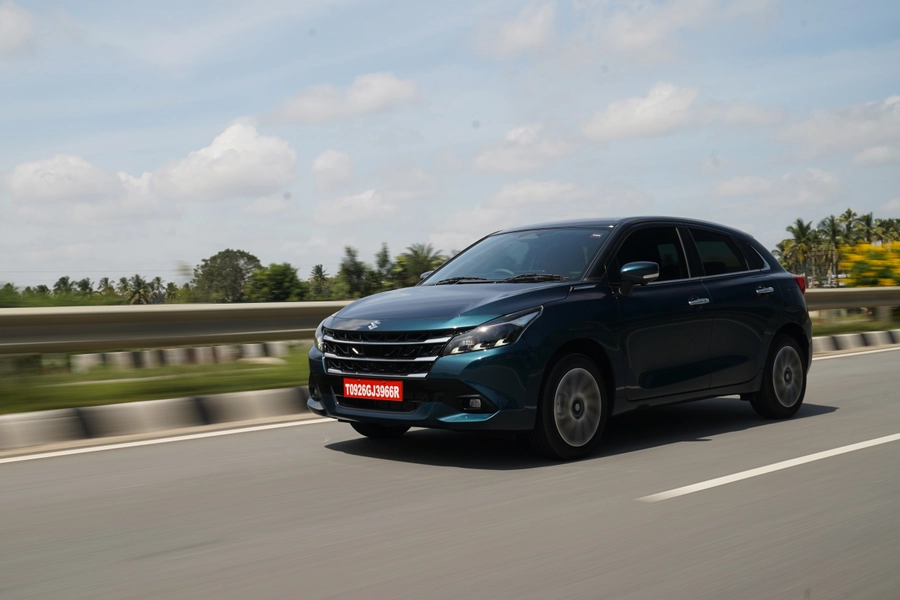
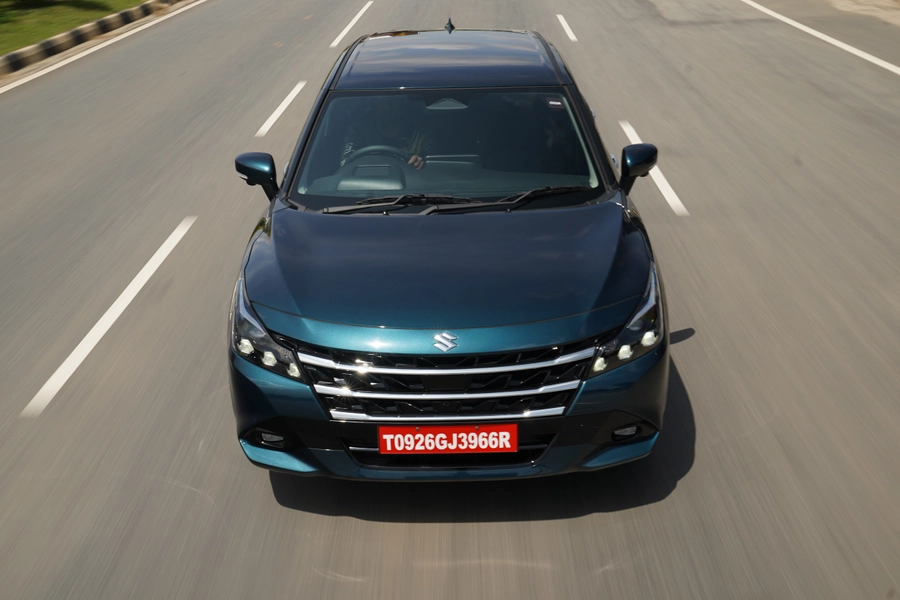
Up front is where the major changes to the Baleno lie. Maruti has redesigned the front fascia with a new grille, front bumper and fog lamp housing. The grille itself is a vertical, V shaped unit, which is an evolution of the previous Baleno’s design. It now gets horizontal chrome elements with a piano black finish, while the Maruti Suzuki logo has been moved out of the grille and placed above it, just below the bonnet.
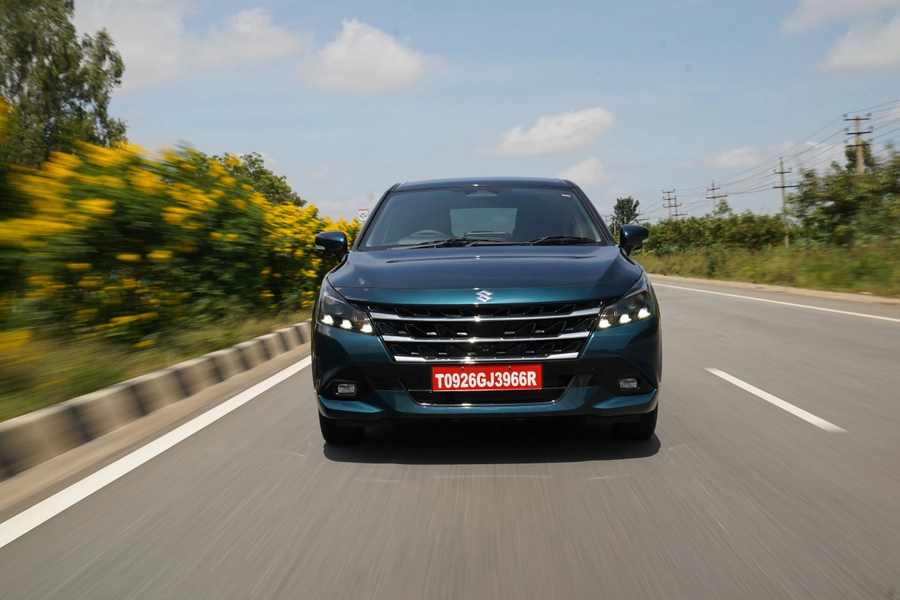
This gives the Maruti Suzuki Baleno a more upright stance and, in some ways, makes it look a little more SUV like. I think Maruti has deliberately gone for that look, given how strongly Indian buyers are moving towards SUVs. Personally, though, I’m not a huge fan of it. The front end looks a little out of place and feels somewhat disconnected from the rest of the car.
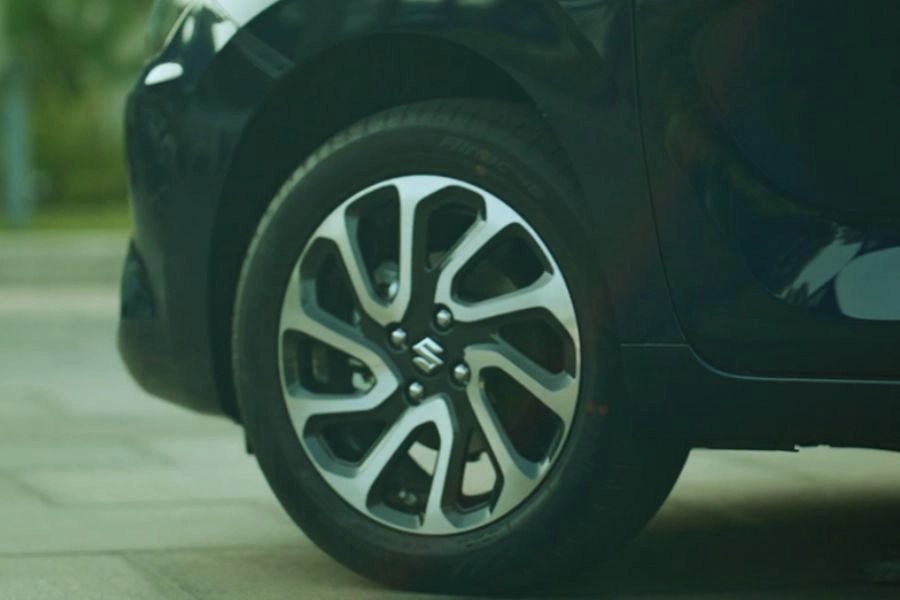
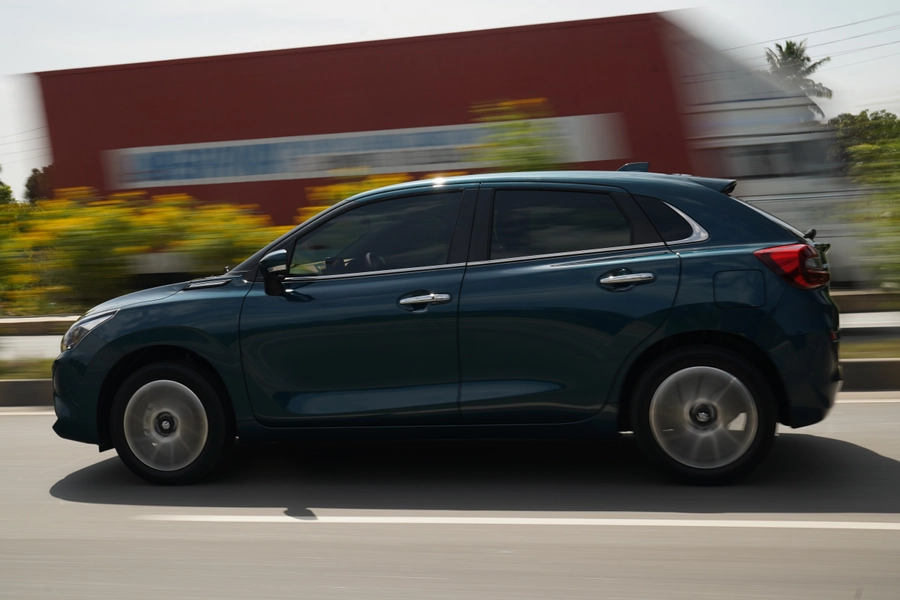
Move to the side and there are no changes. You still get the same 16 inch dual tone diamond cut alloy wheels as the pre facelift model, wrapped in 195/55 R16 tyres. The side profile itself remains unchanged.
At the rear, things are largely the same as well. There are no significant styling changes, with the only noticeable addition being the Baleno badging, which now sits below a body coloured shark fin antenna. Apart from that, the rear remains identical to the pre facelift car.
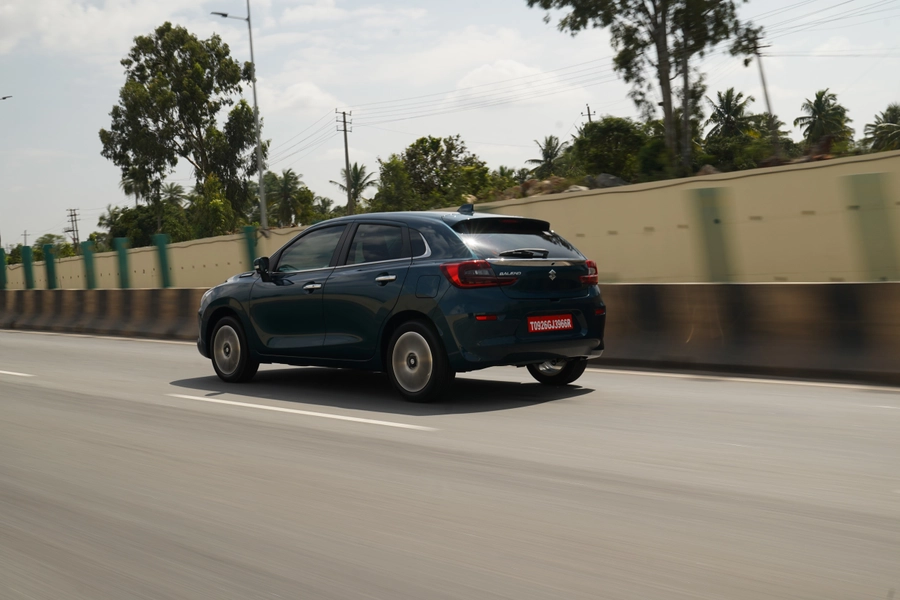
The Maruti Suzuki Baleno continues to remain under four metres in length, measuring 3,990 mm long, 1,745 mm wide and 1,530 mm tall, with a 2,520 mm wheelbase.
In terms of colours, there is one new addition called Enigmatic Teal, which replaces the previously available Lux Beige. The rest of the colour palette remains unchanged, with Nexa Blue, Opulent Red, Arctic White, Splendid Silver, Grandeur Grey and Bluish Black continuing to be offered.
Maruti Suzuki Baleno Facelift – Interior Design and Features
Step inside the new Maruti Suzuki Baleno and you will notice that Maruti has not made any major changes to the overall cabin design. The dashboard layout, colour palette and general interior design remain largely the same as before. The big story here is the equipment list, with Maruti adding several new features, including some segment firsts.
The first one that stands out is ventilated front seats. In a country like India, where it can get hot and sticky for a good part of the year, having ventilation for the front seats is a genuinely useful addition and, in my opinion, a big plus for the Baleno.
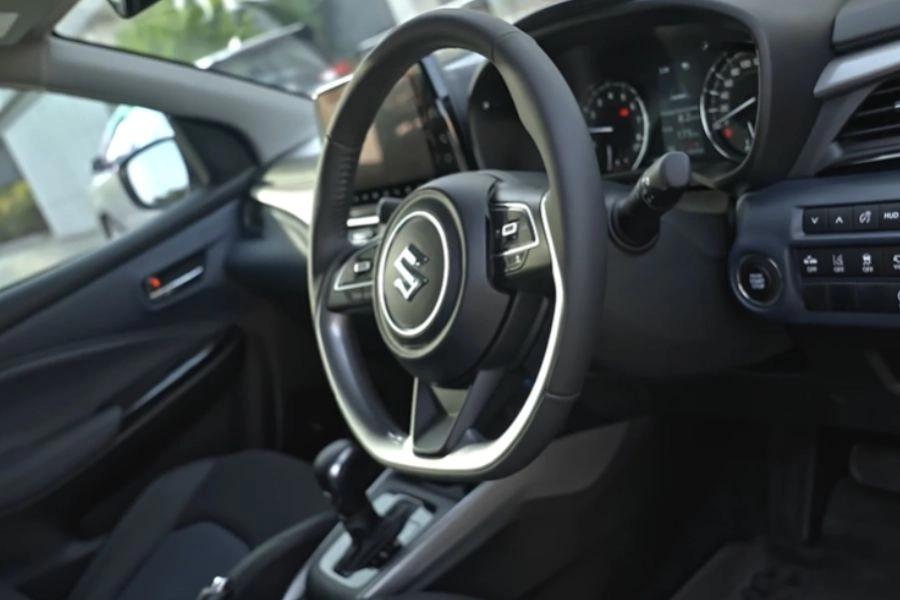
You also get a wireless charging pad in the centre console, and this comes with active cooling. There are also fast charging USB ports and rear AC vents.
The 9-inch touchscreen has been updated to Maruti’s new SmartPlay Pro+ system, with an improved user interface and experience. Wireless Apple CarPlay and Android Auto are also available. The audio system is now a four-speaker Clarion setup.
Other features include steering mounted controls with cruise control, a head up display, a 360 degree camera, push button start and stop, electrically adjustable and foldable ORVMs and a rear defogger.
The biggest addition, however, is the Level 2 ADAS system. This is a segment first for the Maruti Suzuki Baleno’s class, and we will talk more about how it works in the safety section.
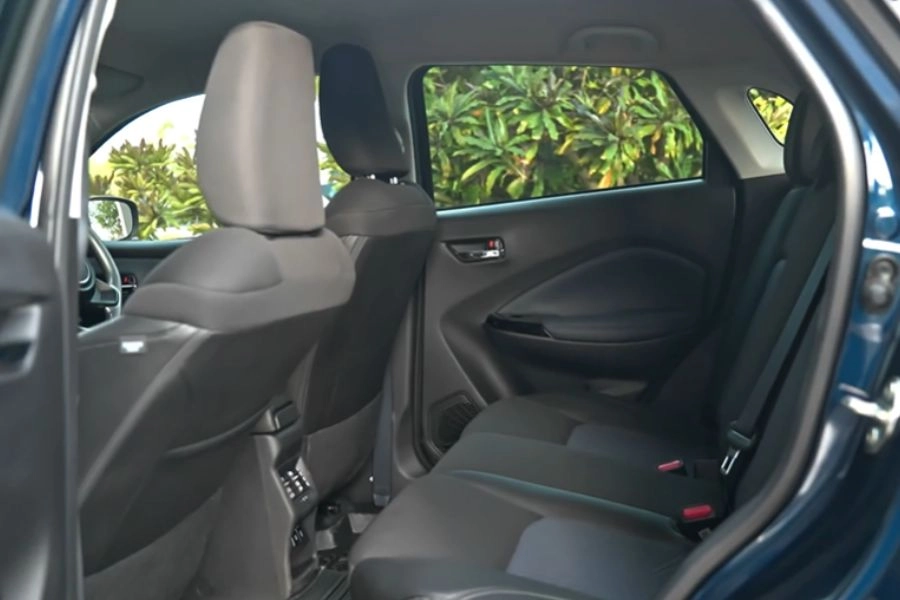
You also get a 60:40 split rear seats and 318 litres of boot space. The top spec variants continue with fabric seats, but the outer bolsters are now finished in leatherette. Personally, I think Maruti could have gone one way or the other here. Either keep the seats completely fabric or give them a full leatherette finish. This “half and half” treatment feels a little unnecessary.
Overall, the cabin may look familiar, but Maruti has packed the Baleno with considerably more equipment, and features like ventilated seats, a cooled wireless charger and Level 2 ADAS make a much stronger case for it.
Maruti Suzuki Baleno Facelift – Driving and Dynamics
The biggest change to the Baleno facelift is under the hood. Maruti Suzuki has replaced the 1.2-litre, four-cylinder K-series petrol engine with the newer 1.2-litre, three-cylinder Z-series unit used in the Swift and Dzire. The Z12E engine produces 83hp and 112Nm, down from the previous K12N engine’s 90hp and 113Nm. Maruti has made the switch because the newer engine is more efficient, produces lower emissions and leaves scope for future hybridisation.
Despite having three cylinders, the naturally aspirated Z-series engine is refined. There is some three-cylinder sound at idle, but it becomes less noticeable as the revs rise. The engine remains quiet at idle and becomes more audible only towards the top of the rev range. Low-speed response is good, with power building progressively and part-throttle response being responsive. However, it does not feel as lively as the K-series engine and is less eager higher up the rev range.
The Baleno facelift continues with a 5-speed manual and a 5-speed AMT. The manual is the better of the two, with a light clutch, smooth shifts, short throws and well-defined gates. The AMT adds convenience in traffic and shifts reasonably smoothly for an automated manual. There is still a noticeable pause between shifts, while the AMT can hesitate during quick overtakes as it takes time to downshift. Moving the gear lever into manual mode helps address this. In this mode, the gearbox also does not automatically upshift.
The facelift is also available with factory-fitted CNG. It uses the same Z-series engine, but output drops to 70hp and 102Nm on CNG. The CNG version is offered only with the 5-speed manual gearbox.
The new engine improves the Baleno’s claimed fuel efficiency. The petrol-manual version returns 23.80kpl, up 1.45kpl, while the AMT is rated at 24.77kpl, an improvement of 1.83kpl. The CNG version also gains 3km/kg, with a claimed efficiency of 33.61km/kg. These are claimed figures recorded under controlled test conditions, so real-world efficiency will be lower. The improvement is notable because the facelift is up to 30kg heavier than the outgoing model.
Talking about the handling and comfort, the comfort remains a strong point for the Baleno. Its soft suspension handles most small road imperfections well, while sharp bumps and large potholes can unsettle the car. At higher speeds, the suspension keeps vertical and side-to-side movements under control, helping the Baleno remain settled.
The body roll is limited through corners. The steering is light at low speeds, which suits city driving, and gains weight as speeds rise. However, there is limited feedback through the steering. The braking setup remains unchanged, with discs at the front and drums at the rear. Stopping performance is adequate for the car. Overall, the facelifted Baleno retains its comfortable and composed character, with everyday usability taking priority over sporty driving.
Maruti Suzuki Baleno Facelift – Verdict
The Maruti Suzuki Baleno facelift is more of a substantial feature and mechanical update than a complete transformation. While the exterior changes may not appeal to everyone, the Baleno continues to offer a comfortable, spacious and practical package. The new Z series engine brings better claimed efficiency, while features like ventilated front seats, a cooled wireless charger, rear AC vents and Level 2 ADAS significantly strengthen its equipment list. The factory fitted CNG option also adds another practical choice for buyers focused on running costs.
The three cylinder engine does give up some performance compared to the outgoing unit, particularly higher up the rev range, but it remains refined enough for everyday use. The manual gearbox is well suited to the engine, while the AMT prioritises convenience. Overall, the facelift retains the Baleno’s strengths of comfort, efficiency and practicality while adding more technology and features, making it a more complete package without moving too far away from what made the hatchback successful.