
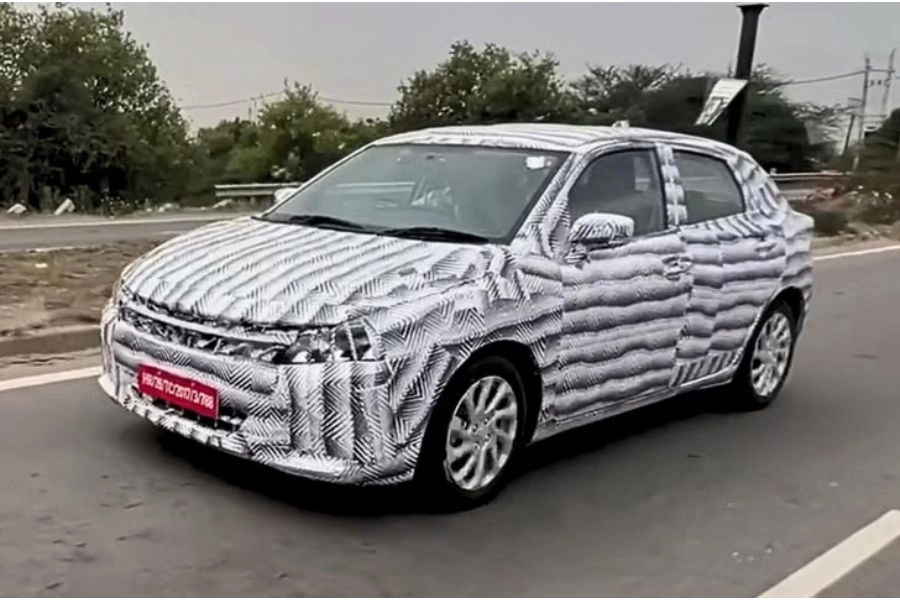
The Maruti Suzuki Baleno is gearing up for its first mid-life update since the second-generation model was launched in 2022. The facelifted version has now been spotted testing on Indian roads, offering a glimpse into what’s next for one of the country’s most popular premium hatchbacks. Despite the camouflage, the test mule hints at a series of subtle updates rather than a complete redesign, which is typical for a mid-cycle refresh.
Maruti Suzuki Baleno Facelift – Expected Exterior Design
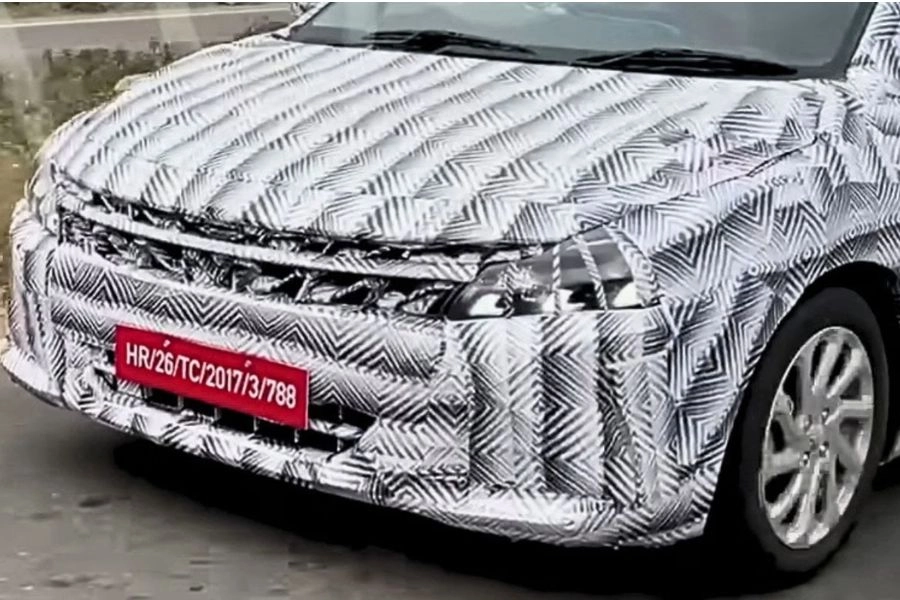
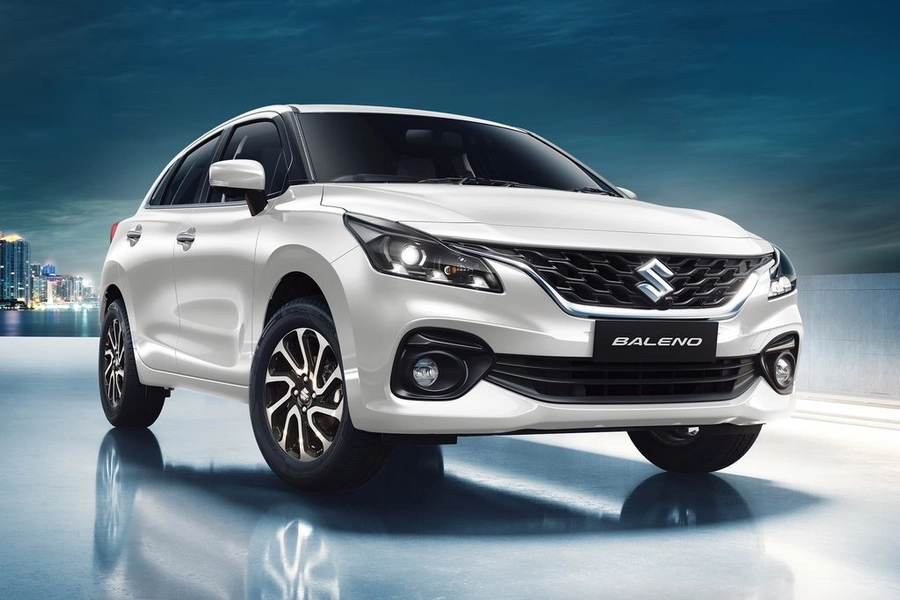
Up front, the Baleno facelift appears to feature a revised fascia. The grille looks new and could carry a sharper, more contemporary design. The front bumper is also expected to be updated, likely with cleaner lines and slightly reworked air intake sections to give the car a fresher look.
The headlamps seem similar in shape to the current model, but there could be slight changes to the internal detailing or inlays. This would help visually distinguish the facelift from the outgoing version without altering the overall design language.
From the side, the silhouette remains unchanged. The test car was seen with 16-inch silver alloy wheels that closely resemble those offered on the Zeta variant of the current model. This suggests that Maruti Suzuki will retain the existing proportions and stance, with no expected changes to dimensions.
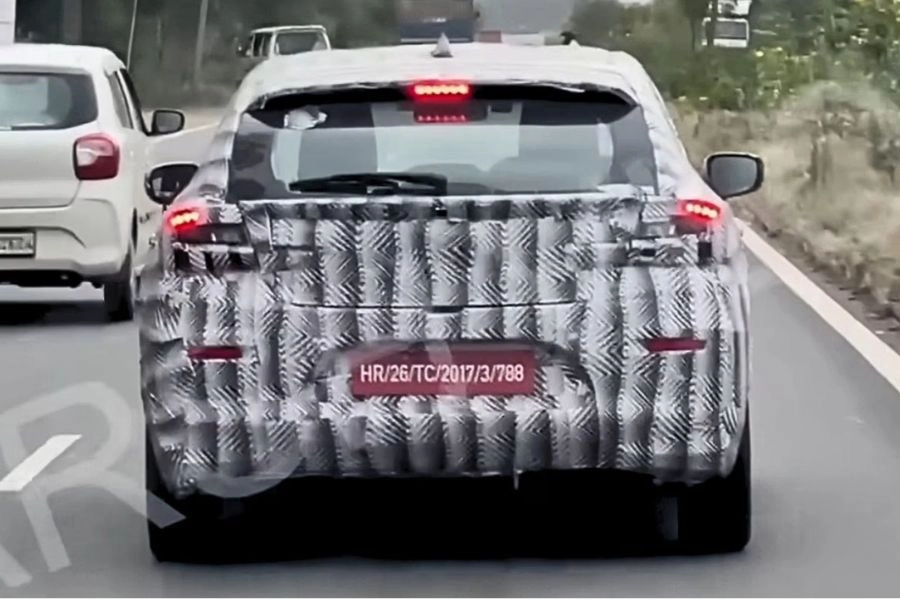
At the rear, updates appear minimal. The tail lamps retain their familiar shape, although the internal elements could see minor revisions. The rear bumper design also looks largely unchanged. The car continues to feature a high-mounted stop lamp and a shark fin antenna, maintaining its overall design continuity.
Maruti Suzuki Baleno Facelift – Expected Interior Design and Features
Only a brief glimpse of the interior was visible, but it confirms the presence of the free-standing touchscreen infotainment system. Currently, the Baleno offers a 9-inch unit on higher variants and a 7-inch screen on lower trims. It remains to be seen whether Maruti Suzuki will upgrade to a larger display in the facelift.
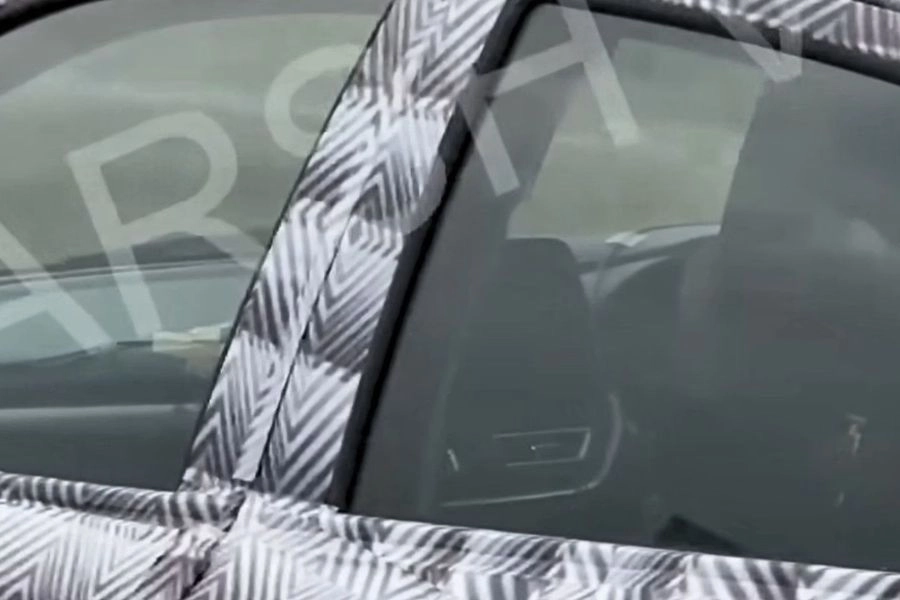
The three-spoke steering wheel design also appears to be carried forward. However, the brand may introduce new seat upholstery, trim finishes, or color options to give the cabin a refreshed feel. In terms of features, the current top-spec model already offers automatic climate control, a heads-up display, and a 360-degree camera. These are expected to continue, possibly with minor additions to keep the car competitive in the segment.
Maruti Suzuki Baleno Facelift – Expected Powertrain Options
The existing Maruti Suzuki Baleno is powered by a 1.2-litre, four-cylinder, naturally aspirated petrol engine producing 90 horsepower and 113 Nm of torque. It is offered with a 5-speed manual and a 5-speed AMT gearbox. A CNG variant is also available, producing 77.5 horsepower and 98.5 Nm of torque, paired with a manual transmission.
For the facelift, these engine options are likely to be retained. However, there is a possibility that Maruti Suzuki could introduce a 1.0-litre turbo petrol engine to better compete with rivals like the Hyundai i20, which offers a turbocharged option.
Another potential update could be the introduction of the newer 1.2-litre three-cylinder Z-series petrol engine, currently seen in models like the Swift and Dzire. Whether this replaces the existing engine or is offered alongside it remains to be seen.
Maruti Suzuki Baleno Facelift – Expected Price and Launch Timeline
The current Maruti Suzuki Baleno is priced between ₹5.99 lakh and ₹9.10 lakh (ex-showroom). With the facelift, a slight price increase is expected, although Maruti Suzuki is likely to keep it competitively positioned. The launch timeline has not been officially confirmed, but the updated Baleno is expected to make its debut later this year. In terms of rivals the, the Maruti Suzuki Baleno will go up against premium mid size hatchbacks like the Hyundai i20, Tata Altroz and its own badge engineered sibling the Toyota Glanza.
Pingback: 2026 Maruti Suzuki Fronx Facelift Spotted Testing: Expected Features and Launch Timeline - Shutterdrives
Pingback: 2026 Maruti Suzuki Brezza Facelift Spied Testing: New Engine Option on the Cards? - Shutterdrives
Pingback: New-Gen Hyundai i20 Teased with Fresh Design and Updated Features: All Details Here - Shutterdrives
Pingback: Maruti Suzuki Baleno From 2015 to the 2026 Facelift, What Has Changed? - Shutterdrives
Pingback: 2026 Maruti Suzuki Baleno Facelift Review: Is This Still India’s Hatchback to Beat? - Shutterdrives