
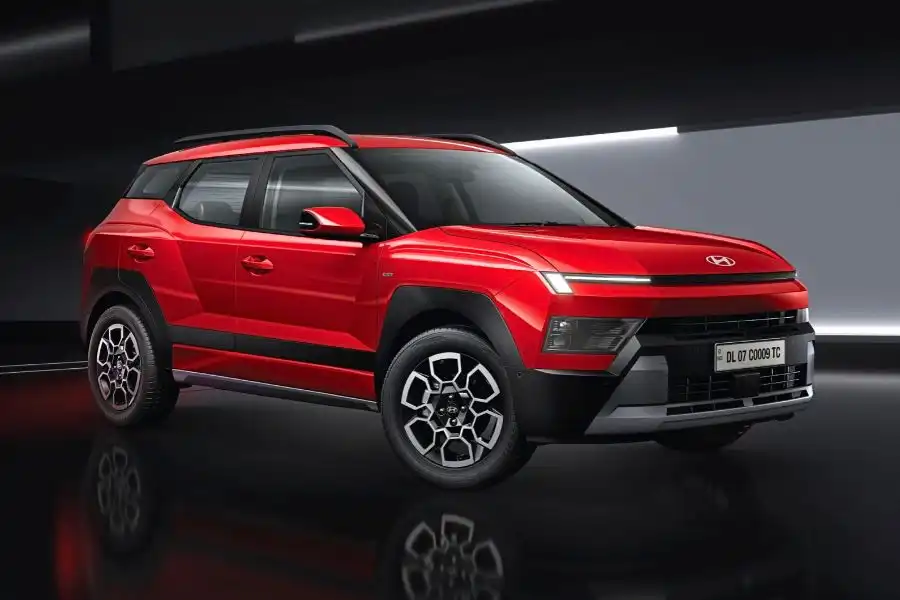
Hyundai Motor India has revealed the safety features of the upcoming Hyundai Bayon ahead of its India launch on October 26, 2026. The new model will be positioned as an Intelligent Utility Vehicle and will be built on the Global K Enhanced Platform. Hyundai says the Hyundai Bayon has been engineered to meet 5 star Indian safety standards, with a reinforced body structure, advanced driver assistance systems and more than 80 safety features.
The Bayon will slot between the Hyundai Venue and Hyundai Creta, this also marks an arrival of a completely new nameplate for Hyundai in India since the launch of the Hyundai Exter in 2023.
Hyundai Bayon – What We Know So Far
The Hyundai Bayon is a new nameplate for the Indian market, following the introduction of the Exter in 2023. As discussed in our earlier coverage, the model is expected to appeal to buyers looking for a compact SUV with modern technology, a distinctive design and everyday practicality. The name Bayon is inspired by Bayonne, a town in the French Basque Country.

The Hyundai Bayon will be powered by a 1.5 litre four cylinder MPi petrol engine producing 115 PS and 143.8 Nm of torque. It will be offered with a 6 speed manual transmission and an Intelligent Variable Transmission (IVT).
Hyundai Bayon – Safety Features
The Hyundai Bayon gets a new body structure developed using 69% Advanced Multi Grade High Strength Steel. The structure combines hot stamped steel, Ultra High Strength Steel, Advanced High Strength Steel and High Strength Steel to improve structural rigidity and occupant protection.

As per HMIL, the vehicle also uses multiple load paths, a ring type structure and dual box construction to manage crash energy. Hot stamped components have been used in important areas, including the front apron, dashboard, rear floor and side reinforcements. Hyundai says these elements are designed to improve structural integrity and reduce the risk of cabin intrusion during a collision.
Hyundai Bayon – ADAS Features
One of the key highlights of the Hyundai Bayon is its Hyundai SmartSense Level 2 Pro ADAS package. The system includes 23 driver assistance features, supported by three radars and 12 parking sensors.
The features include Forward Collision Avoidance Assist, Lane Keeping Assist, Lane Departure Warning, Blind Spot Collision Avoidance Assist, Driver Attention Warning and Safe Exit Warning. The SUV also gets Smart Cruise Control with Stop and Go, Lane Following Assist and Highway Driving Assist.
For parking and reversing, the Hyundai Bayon comes with a Surround View Monitor and Blind Spot View Monitor. Rear Cross Traffic Collision Warning and Rear Cross Traffic Collision Avoidance Assist are also included. These systems are designed to improve driver awareness in different traffic and driving conditions.
Hyundai Bayon – Standard Safety Features
Hyundai says the Bayon will offer more than 35 safety features as standard across all variants. These include six airbags, Electronic Stability Control, Hill Start Assist Control, a Tyre Pressure Monitoring System, rear parking sensors, ISOFIX child seat mounts and seatbelt reminders.

The inclusion of these features across the range means buyers will have access to key safety equipment irrespective of the variant they choose. The availability of certain ADAS functions may vary by variant.
Hyundai Bayon – Exterior Colours
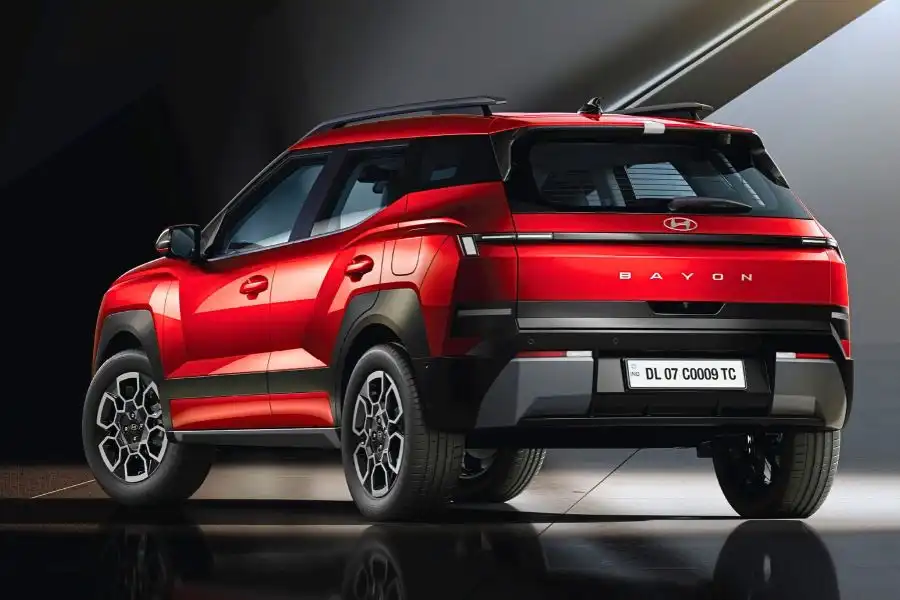
The Hyundai Bayon will be available in 10 exterior colour options across monotone, dual tone and matte finishes. The choices include Titanium Black, Classy Blue, Atlas White, Fiery Red, Golden Bronze and Ecotronic Grey. Dual tone options include Atlas White and Fiery Red with a black roof, while Titanium Black Matte and Classy Blue Matte will be offered as matte finishes.
Hyundai Bayon – Launch Date and Bookings
The Hyundai Bayon will launch in India on October 26, 2026. Customers can book the SUV through Hyundai’s official website or at authorised Hyundai dealerships by paying a booking amount of ₹11,000. Hyundai is expected to communicate delivery timelines at the time of launch. Pricing, variant details and other launch information are expected to be announced on October 26.