
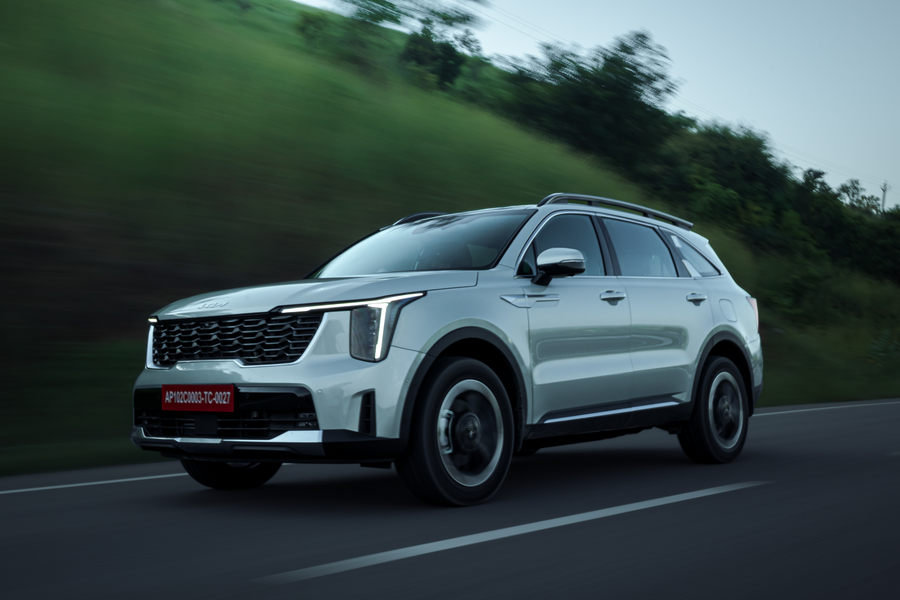
The Indian premium SUV market has traditionally been dominated by a handful of familiar names, with buyers often choosing between rugged, body on frame SUVs and more road focused monocoque alternatives. However, as the segment evolves, equipment, comfort and everyday usability are becoming just as important as size and road presence. This is where the Kia Sorento enters the picture.
Globally now in its fourth generation, the Sorento is being introduced in India for the first time as Kia India’s flagship internal combustion engine SUV. Positioned to take on established names such as the Toyota Fortuner and Skoda Kodiaq, it brings together petrol hybrid and diesel powertrains, all wheel drive availability and a greater emphasis on technology and passenger comfort. On paper, it also has a few interesting advantages over the Fortuner, including a longer wheelbase and a larger boot with all three rows in use. But before getting into what it offers inside, the first thing to examine is how Kia has approached the design of its largest SUV for the Indian market.
Kia Sorento – Exterior Design
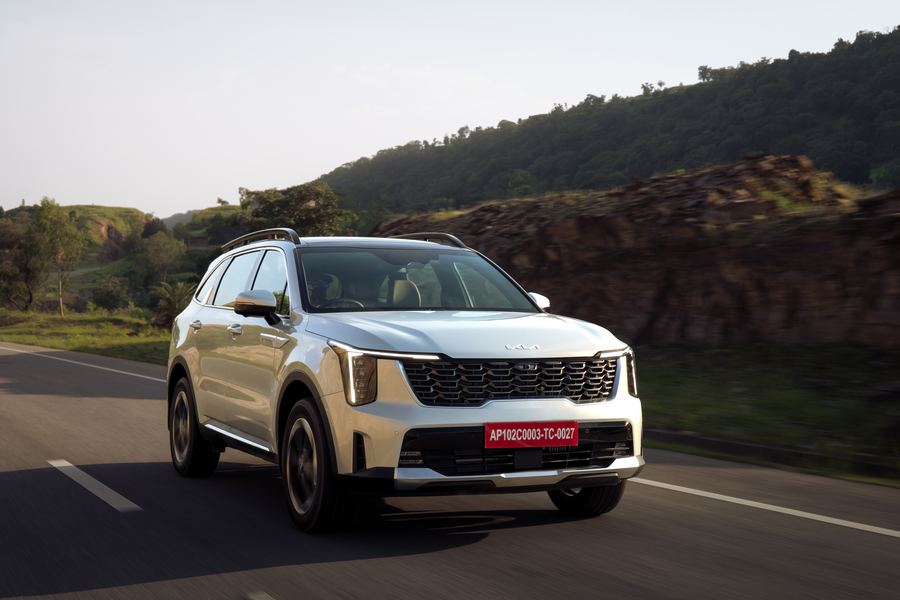
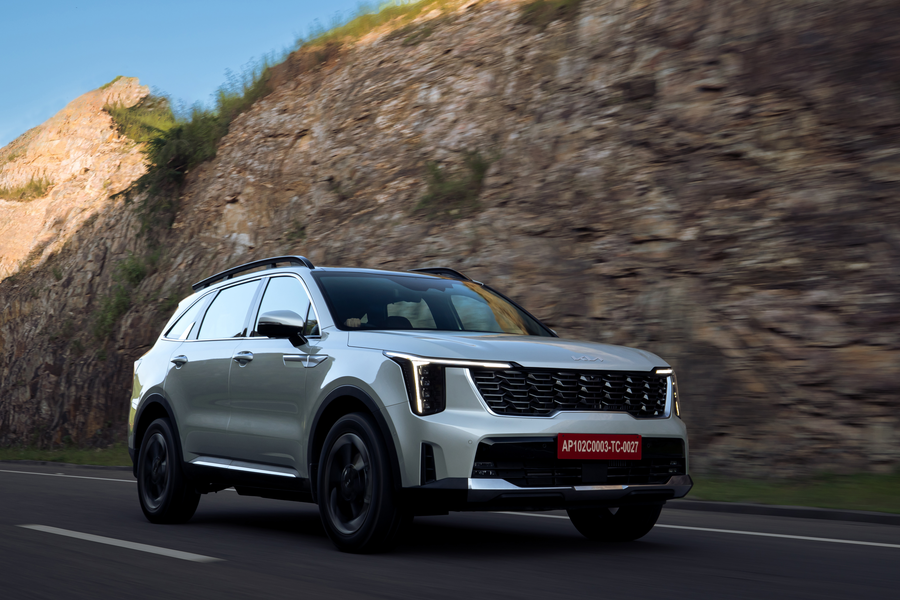
Kia’s Tiger Nose design has been a defining element of its cars for years, and the Sorento gets the latest interpretation of this familiar design feature. The large Tiger Nose grille takes centre stage, flanked by vertically stacked LED headlamps with a quad projector setup. The lighting arrangement looks particularly good, giving the Sorento a distinctive face that is instantly recognisable as a modern Kia. The Y shaped daytime running lights add to the effect, while the broad bonnet and angular front bumper give the SUV a substantial appearance.
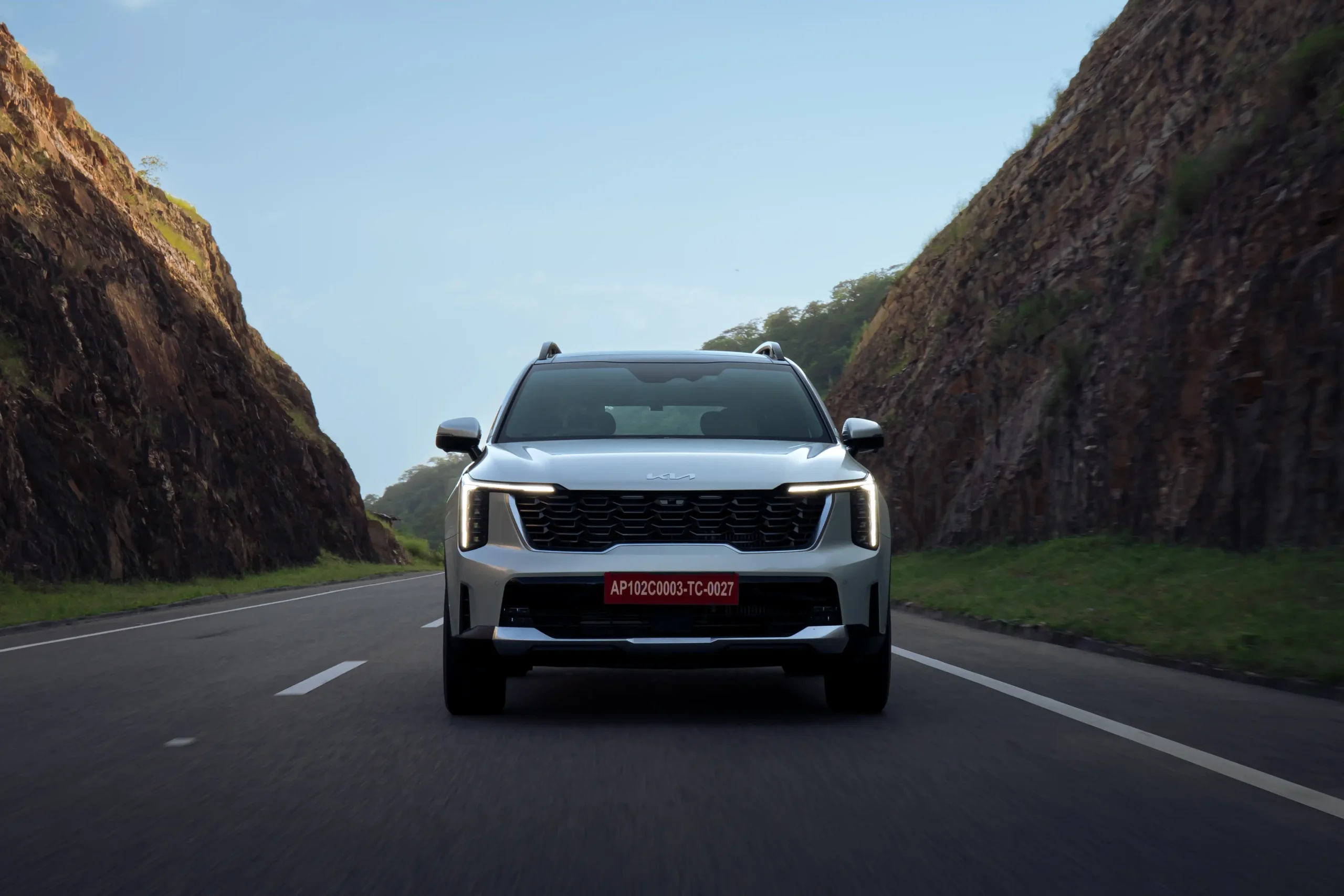
At first glance, some might mistake the Sorento for a larger Seltos. After all, the two occupy different positions in Kia’s SUV lineup, and the Sorento is the next step up for buyers looking for something bigger. However, I think Kia has done a good job of differentiating the two. While the Seltos has a more youthful and energetic design, the Sorento feels more mature, with a stronger family SUV identity. Its larger proportions, upright stance and more restrained styling give it a more premium character.
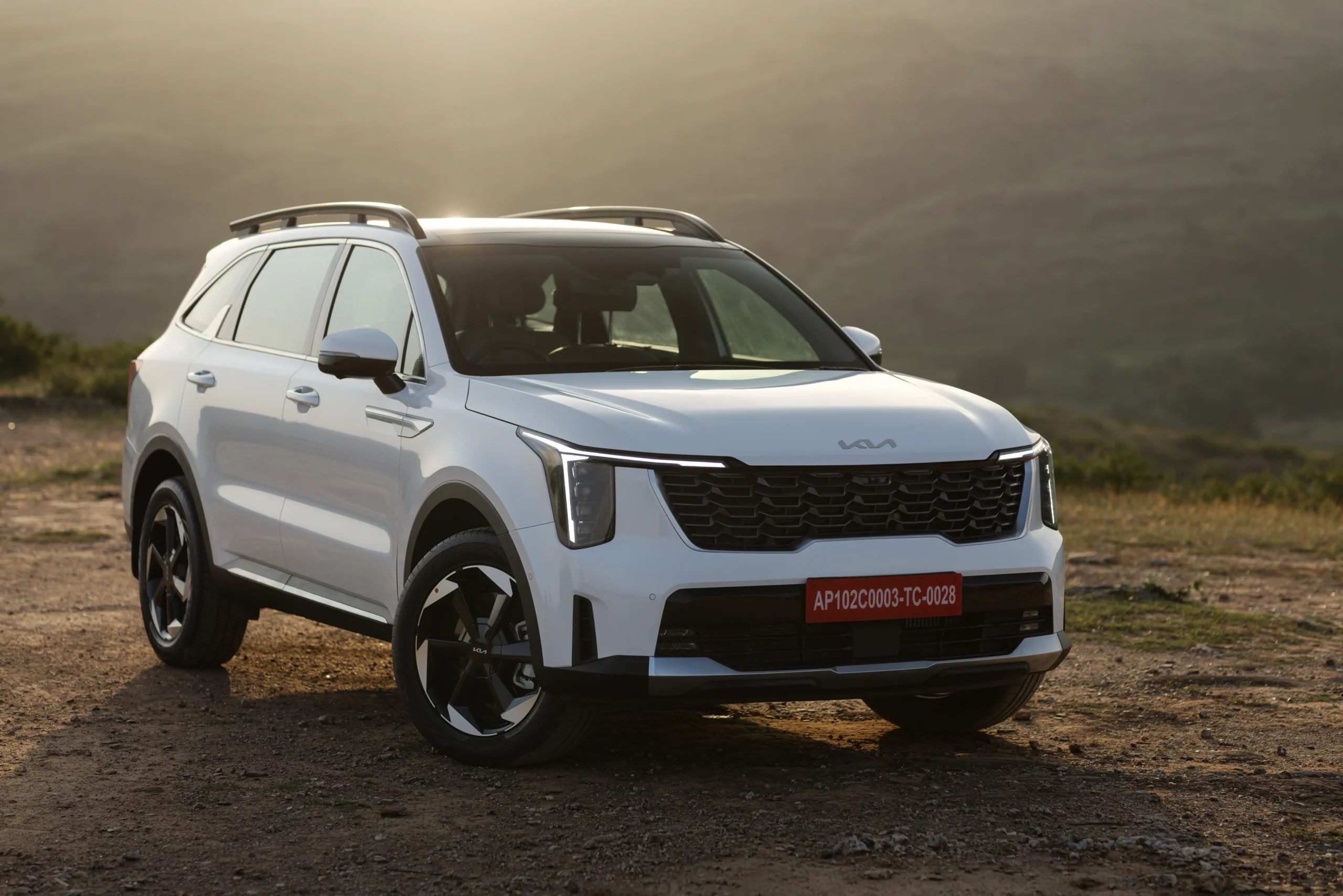
That said, the Sorento does not have the sheer visual aggression of a traditional ladder frame SUV like the Toyota Fortuner. Its monocoque construction is reflected in a design that prioritises refinement and road presence over outright ruggedness. Whether that is a positive or a negative will depend on what buyers expect from a large SUV, but the Sorento has a character of its own rather than simply being a stretched Seltos.
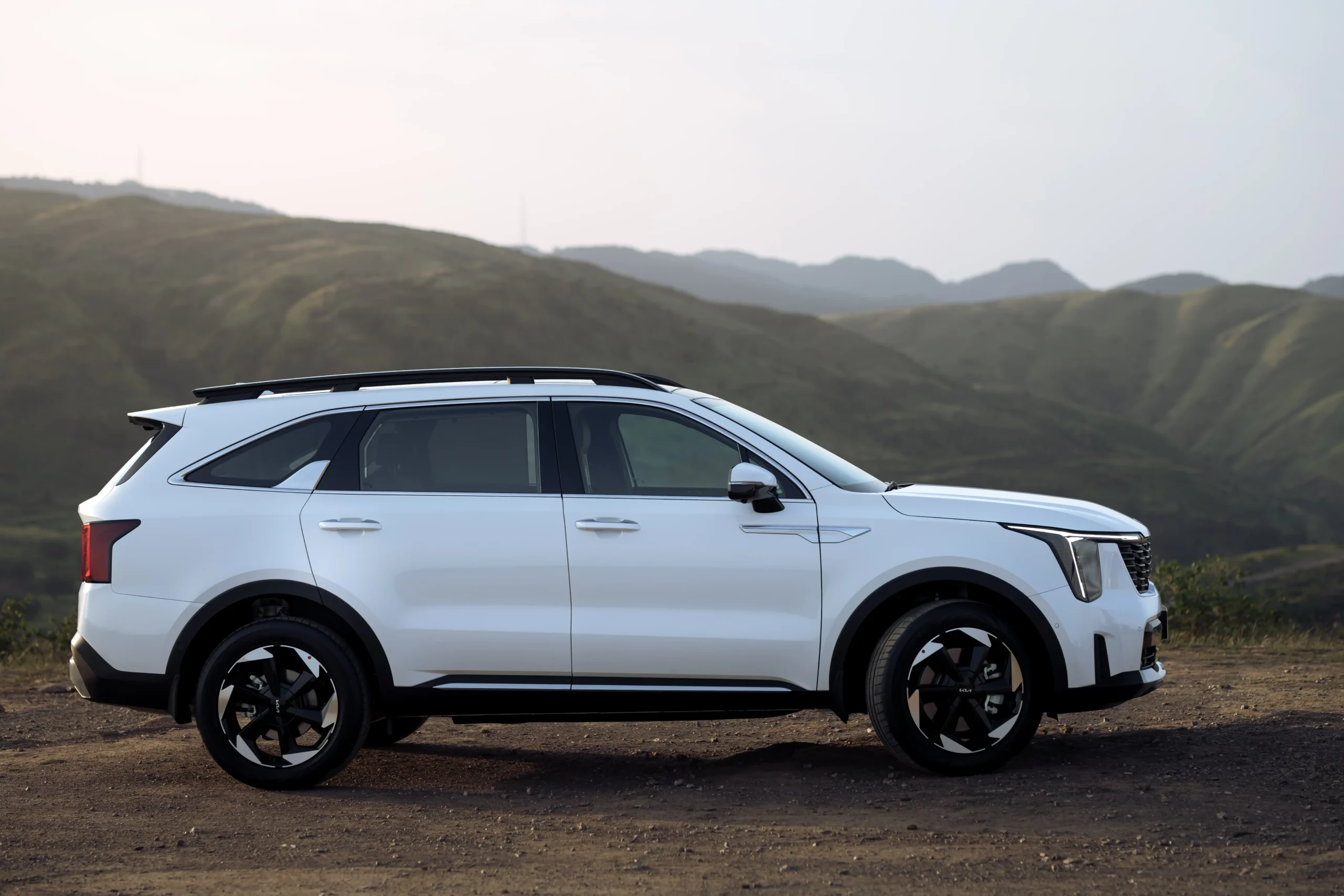
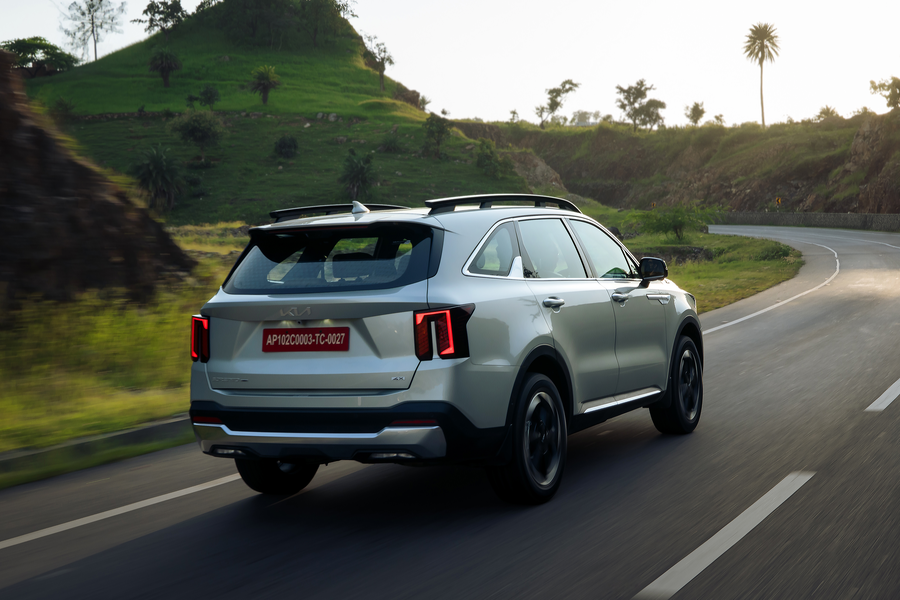
Moving to the side, the Sorento’s proportions do a better job of establishing its identity as a full sized SUV. It measures 4,815 mm in length and 1,900 mm in width, giving it a substantial footprint on the road. The relatively straight roofline, squared off wheel arches and large windows lend it a practical, family SUV silhouette. The 19 inch alloy wheels also help fill out the wheel arches, while the body cladding and roof rails add some of the ruggedness expected from an SUV of this size.
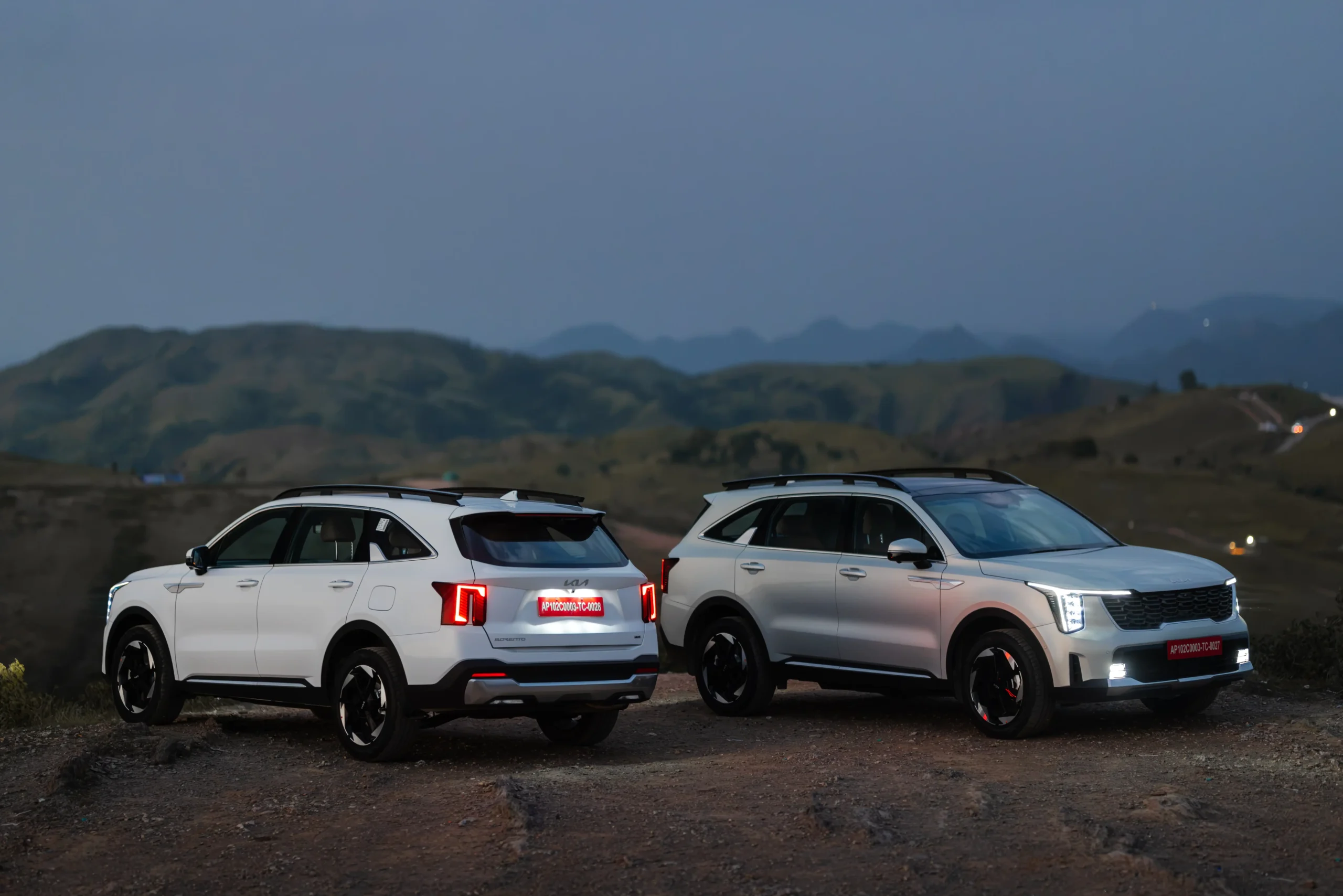
At the rear, the vertically oriented LED tail lamps continue the design theme established at the front. The tailgate has a broad, upright appearance, while the integrated roof spoiler and hidden rear wiper keep the overall design looking neat.
Kia offers the Sorento in a range of exterior colours, including Imperial Blue, Magma Red, Pewter Olive, Glacier White Pearl, Ivory Silver Gloss, Gravity Grey and Aurora Black Pearl. Dark Gun Metal in a matte finish is also offered, although availability varies by variant.
Kia Sorento – Interior Design and Features
Step inside the Kia Sorento, the dashboard is dominated by a panoramic display layout, comprising a 12.3 inch touchscreen infotainment system and a 12.3 inch digital instrument cluster. Higher variants also get a head up display, while the cabin features a dual zone automatic climate control system and a rather useful switchable control panel that lets you toggle between infotainment and temperature settings. There is also a dial type shift by wire selector, paddle shifters and a 64 colour ambient lighting system.
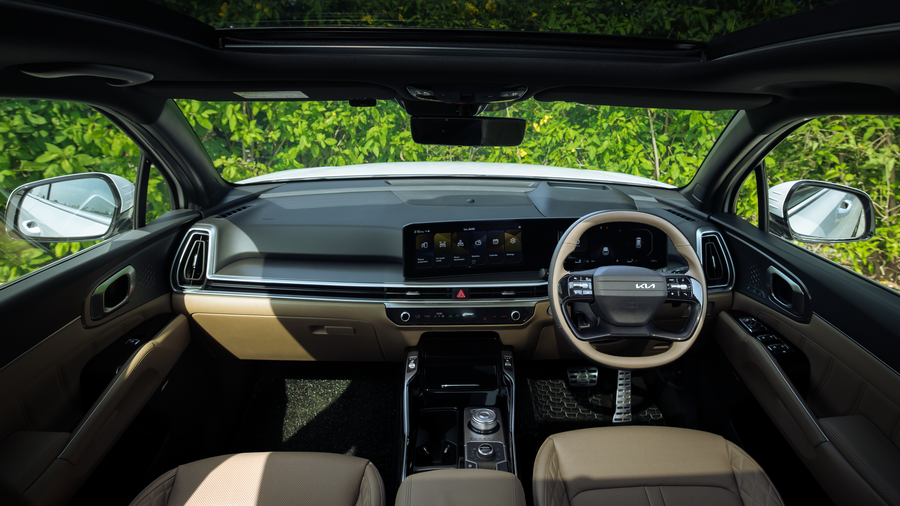
Depending on the variant, the front seats offer power adjustment, lumbar support and ventilation, while the driver gets an Ergo Motion seat with multiple massage functions and memory settings on higher trims. The front row relaxation seats are designed to provide additional comfort during breaks, and the second row can be specified with captain seats featuring sliding, reclining, remote folding and walk in functions. Rear passengers also get ventilated seats on higher variants, which is a segment first. While the third row benefits from dedicated air conditioning vents. The Sorento is available in both six and seven seat configurations, giving buyers the choice between a more spacious second row or additional seating capacity.
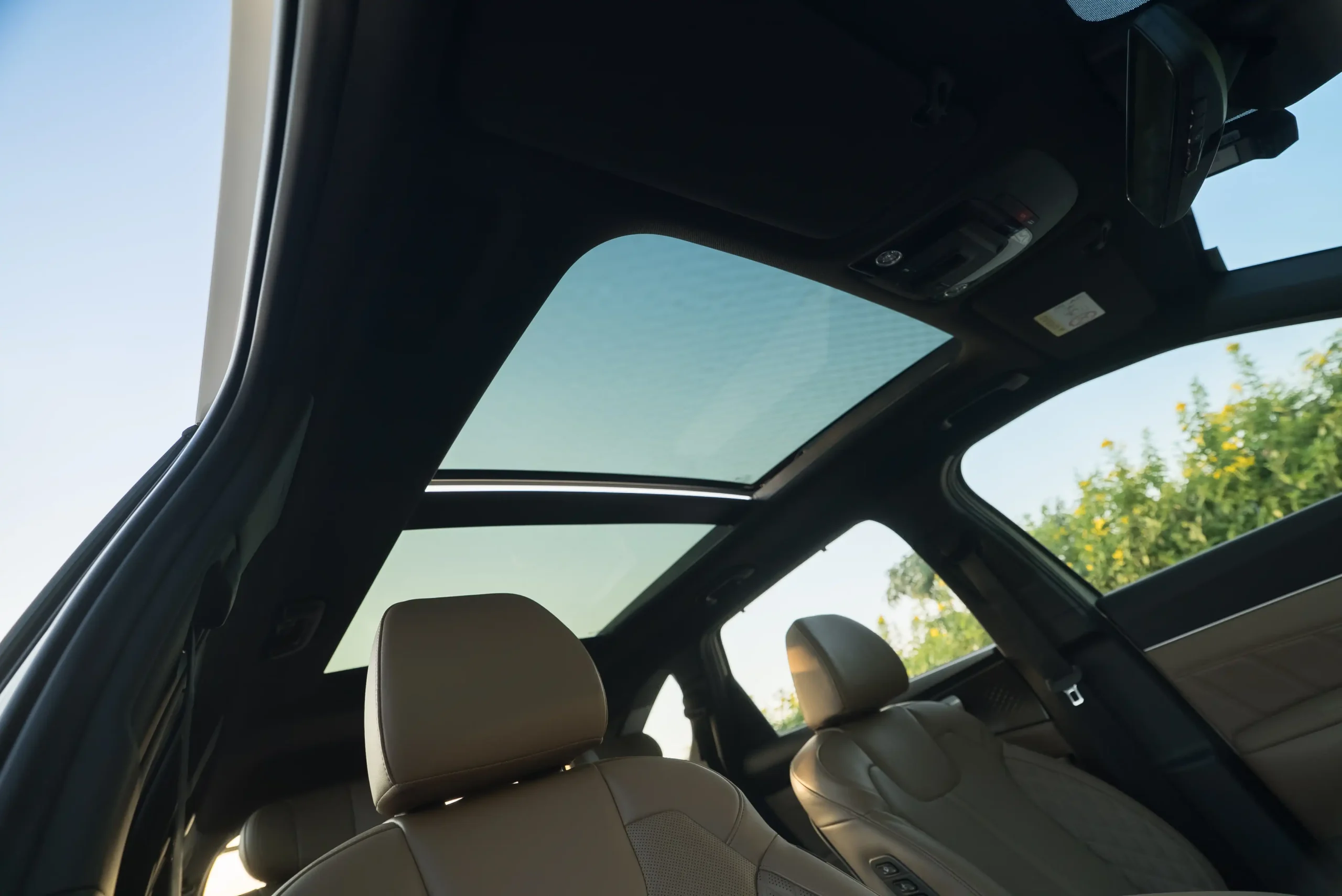
Other convenience features include a dual pane panoramic sunroof, a smart power tailgate, an advanced digital inside rear view mirror, a wireless smartphone charger, USB Type C charging ports across all rows and a 220V power outlet. The cabin also gets illuminated vanity mirrors, LED map and luggage lamps, rear window sunshades and a 12 speaker Bose premium sound system on higher variants. The second row features a centre armrest with cupholders, while the door pads incorporate additional cupholder storage. The front seats also receive adjustable headrests, with adjustable headrests available across all rows.
On the technology front, the Sorento gets Kia Connect 2.0 with more than 85 connected features, built in navigation, over the air software updates and Digital Key 2.0. The Kia AI Assistant uses real time generative AI to respond to voice commands and provide information, while remote seat ventilation control and remote vehicle immobilisation add further connected functionality. A surround view monitor, blind view monitor and remote smart parking assist are also available on higher variants. The SUV gets a front and rear dashcam setup, adding another useful feature for Indian driving conditions.
Safety equipment includes up to 10 airbags, a tyre pressure monitoring system, electronic stability control, hill start assist, downhill brake control and all wheel disc brakes. Higher variants get Level 2+ ADAS with 29 autonomous assistance features, including forward collision avoidance, lane keeping assistance, blind spot collision avoidance, highway driving assistance and navigation based smart cruise control.
Kia Sorento – Performance
The Kia Sorento offers two powertrains for different driving needs. The hybrid is better suited to city commutes, while the diesel is the more suitable option for frequent highway travel. Both deliver adequate performance, but their strengths become more apparent in different driving conditions.
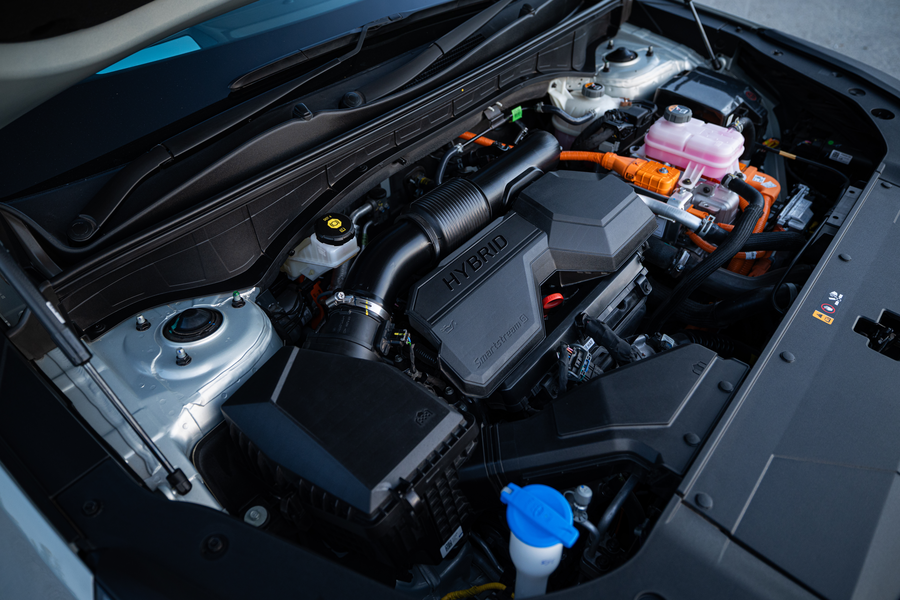
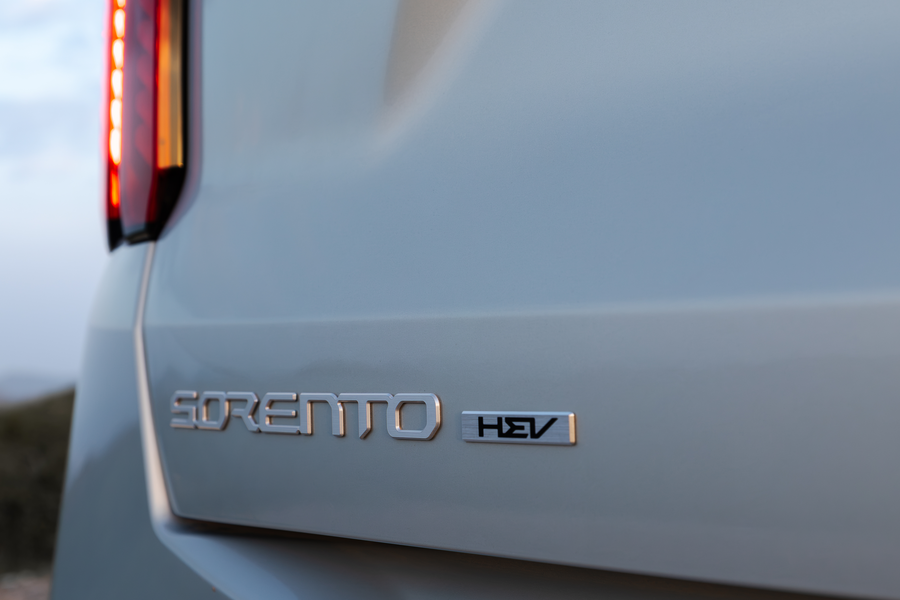
The hybrid pairs a 1.6-litre turbo-petrol engine producing 180hp and 265Nm with an electric motor developing 65hp and 264Nm. Combined output stands at 230hp and 380Nm, with a six-speed torque-converter automatic handling transmission duties. Power delivery is smooth, and the transition between electric and petrol power is well controlled.
In city traffic, the hybrid responds quickly when moving away from a standstill. Its 1.49kWh battery also allows electric-only driving at low speeds, making it suitable for stop-and-go conditions. However, the electric motor has limited ability to move an SUV weighing over two tonnes on its own. During highway overtakes, the petrol engine has to work harder, becoming noisy under acceleration and struggling to maintain the same level of refinement.
The diesel uses a 2.2-litre engine shared with the Kia Carnival. It produces 193hp and 442Nm, delivering power progressively and making the Sorento well suited to long-distance journeys. At highway speeds, the engine cruises comfortably in eighth gear, while its low-speed pulling ability makes everyday driving manageable.
Rapid acceleration can expose a slight delay in the transmission’s response. Using the paddle shifters to select a lower gear helps address this. The eight-speed dual-clutch transmission also shifts smoothly, avoiding the abrupt responses sometimes associated with DCTs. Its wet-clutch design should suit Indian traffic conditions. Engine noise remains controlled during normal driving but increases under heavy acceleration.
The diesel gets Eco, Normal, Sport and Smart driving modes. Sport sharpens throttle response, while Eco reduces it. The hybrid offers Eco, Sport and Smart modes, with Eco prioritising electric operation where possible. All-wheel-drive variants also receive Snow, Sand and Mud terrain modes, which we could not evaluate fully. The hybrid has a claimed fuel efficiency of 19.60kpl with front-wheel drive and 17.70kpl with all-wheel drive. The diesel returns 17.66kpl and 15.79kpl, respectively, on the Indian test cycle.
Kia Sorento – Ride and Handling
Ride comfort is a key strength of the Sorento, with its suspension tuned to handle uneven roads rather than prioritise sporty handling. During our drive around Udaipur, the SUV absorbed badly damaged stretches without requiring frequent reductions in speed.
The tyres’ tall sidewalls help filter out sharp impacts, keeping the cabin comfortable on rough surfaces. There is some body movement over undulating highways, but both powertrain versions remain stable at higher speeds.
Steering response is less convincing. While light enough for daily use, it lacks precision around the centre and does not offer the same response as the Volkswagen Tayron and Skoda Kodiaq. The Sorento’s ground clearance has increased from 176mm on the international model to 208mm for India. While useful on rough roads, the taller stance contributes to body roll when cornering at speed. Despite this, the suspension and handling package suits the Sorento’s intended role as a family SUV, with comfort taking priority over outright driving dynamics.
Kia Sorento – Verdict
The Kia Sorento makes a strong case for itself in India’s premium SUV segment, combining a choice of two powertrains with a comfortable ride and an extensive list of features. Its starting price of Rs 27.99 lakh also puts pressure on many rivals, particularly when comparing equipment and overall value.
The hybrid and diesel cater to different driving needs. The hybrid is better suited to city commutes, while the diesel’s strong torque and relaxed highway performance make it a practical choice for long-distance travel. The suspension’s ability to handle rough roads further strengthens its appeal as a family SUV.
However, buyers will need to choose their variant carefully. While the lower and mid-level trims offer competitive value, the HTX costs between Rs 37.49 lakh and Rs 40.19 lakh, depending on the powertrain and seating configuration. Its standard all-wheel-drive system pushes the price around Rs 5 lakh above the equivalent HTK. A front-wheel-drive HTX would make the top trim more accessible to buyers who want its additional features but have little use for all-wheel drive.
Kia is targeting annual sales of 40,000 units, although achieving that figure could be challenging. Nevertheless, the Sorento brings together the comfort, equipment and powertrain options that matter to premium SUV buyers. Its ability to deliver these qualities at a competitive price could help it establish a stronger presence in the segment.