
Flex fuel technology is an alternative fuel technology that allows an internal combustion engine to run on petrol containing different proportions of ethanol. Vehicles equipped with this technology are known as Flex Fuel Vehicles (FFV’s). Depending on their design and certification, these vehicles can operate on conventional petrol, ethanol blended petrol, and higher ethanol blends.
Unlike conventional petrol vehicles, which are designed to operate within specified fuel requirements, flex fuel vehicles can accommodate a wider range of ethanol concentrations. This gives consumers greater flexibility in fuel selection while allowing countries to increase the use of domestically produced renewable fuels.
As India continues to expand its ethanol blending programme, flex fuel technology in India is becoming increasingly relevant to the future of passenger vehicles and energy security.
How Does Flex Fuel Technology Work?
Ethanol is an alcohol based fuel that can be produced from agricultural materials such as sugarcane, maize and other suitable biomass. When blended with petrol, it can be used in specially designed internal combustion engines.
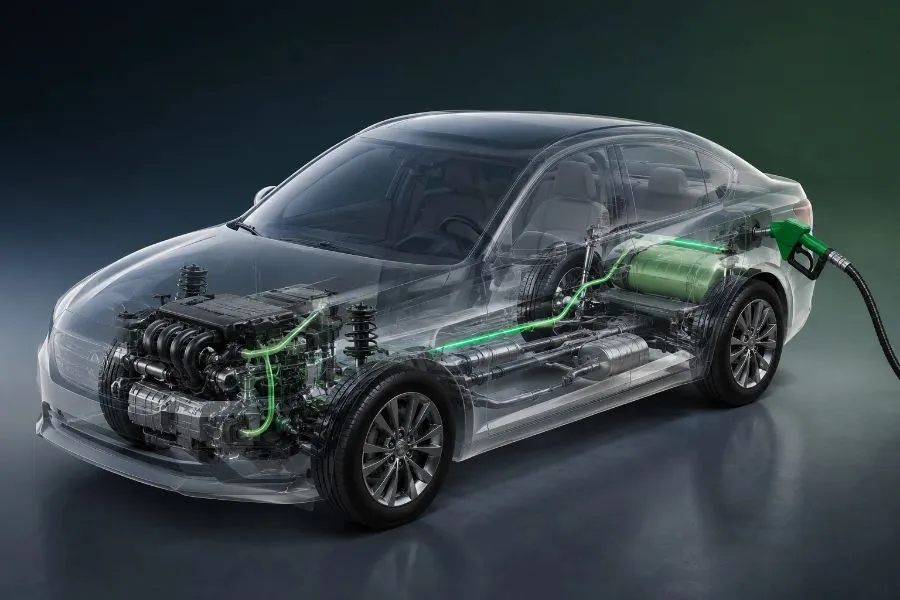
Flex fuel vehicles use compatible fuel system components, engine calibration and electronic control systems to accommodate different petrol and ethanol mixtures. Sensors and engine management systems help determine the fuel composition and adjust parameters such as fuel injection and ignition timing to maintain engine operation.
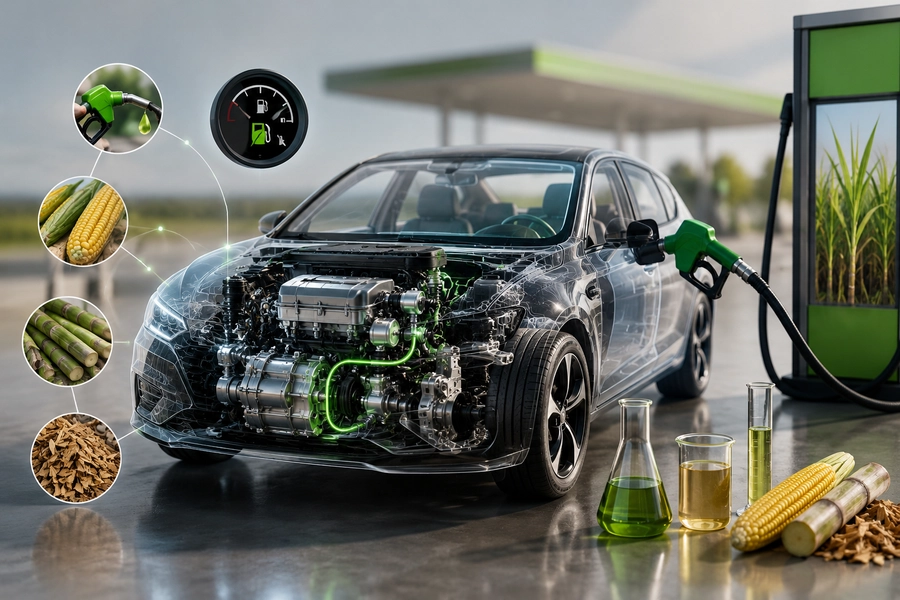
Fuel blends are commonly identified using an “E” number, which indicates the approximate percentage of ethanol in the mixture. E20 contains 20 per cent ethanol and 80 per cent petrol, while E85 contains approximately 85 per cent ethanol and 15 per cent petrol.
However, higher ethanol blends are not suitable for every petrol vehicle. They must only be used in vehicles specifically designed and certified for the respective fuel.
Is Flex Fuel Technology Available in India?
India has already made steady progress in ethanol blending. The nationwide transition to E20 petrol has established a larger role for ethanol in the country’s transport fuel supply.
In June 2026, India introduced its first flex fuel passenger car, marking an important development for the technology in the domestic automobile market. Flex fuel motorcycles have also entered the market, while E85 fuel has been introduced for vehicles designed to use it.
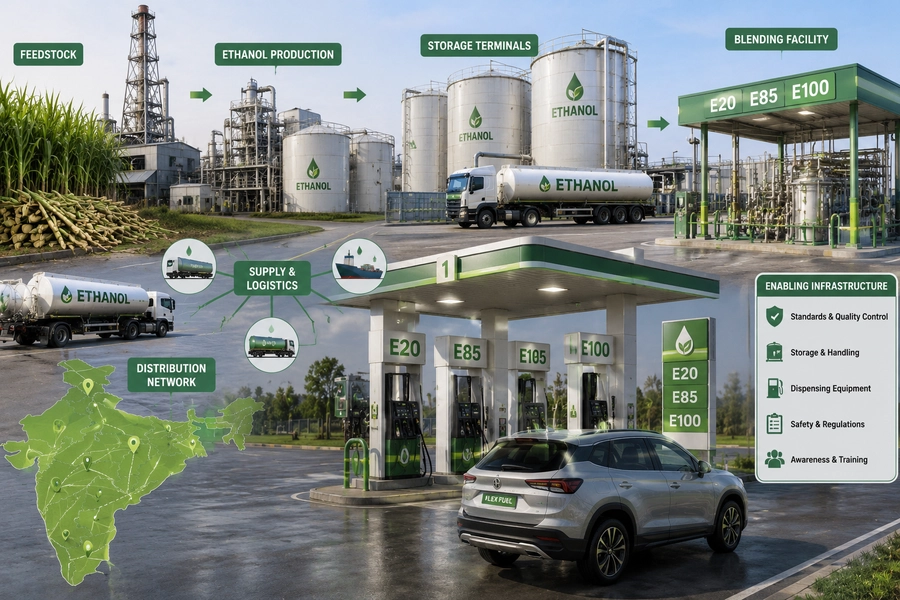
This means flex fuel technology in India is no longer limited to research and development. However, widespread adoption will depend on vehicle availability, fuel distribution, pricing and consumer awareness.
The availability of E85 also needs to be distinguished from the regular supply of E20 petrol. E85 is intended for compatible flex fuel vehicles and cannot be used in an ordinary petrol vehicle unless its manufacturer specifically approves it.
Why Is Flex Fuel Technology Relevant to India?
One of the main reasons for India’s interest in flex fuel technology is its dependence on imported crude oil. Increasing the use of domestically produced ethanol can help reduce the amount of petroleum required for transport, although the overall benefit depends on production methods, fuel efficiency and supply chain requirements.
Ethanol production can also create additional demand for agricultural feedstocks and support rural economic activity. At the same time, the environmental benefits depend on factors such as how the ethanol is produced, the resources used in cultivation and processing, and the emissions generated throughout its lifecycle.
For Indian consumers, the technology could provide another option as the country explores alternatives to conventional petrol. However, the financial benefits will depend on the price difference between fuel blends and the distance a vehicle can travel on a given quantity of fuel.
Ethanol contains less energy per litre than petrol. Consequently, vehicles running on higher ethanol blends can record lower fuel efficiency by volume. A lower price per litre does not automatically mean a lower cost per kilometre.
What Does the Future Hold for Flex Fuel Vehicles?
The future of this technology in India will depend on more than the introduction of compatible vehicles. A reliable network of fuel stations, competitive fuel prices, clear manufacturer guidelines and adequate service support will be important for wider adoption.
Automakers will also need to develop vehicles that balance performance, durability and operating costs for Indian driving conditions. Consumers, meanwhile, will need clear information about compatible fuels, expected mileage and maintenance requirements.
FFV’s are not a replacement for electric vehicles or other emerging mobility technologies. Instead, they represent another approach to reducing dependence on conventional petrol while continuing to use internal combustion engines.
As India develops its alternative fuel ecosystem, flex fuel technology in India could become an important part of the country’s broader transport strategy. Its long term success will ultimately depend on whether it offers consumers a practical, reliable and financially viable alternative.