

Recently, Shutterdrives got an opportunity to speak with Priyank Rakholiya, Co-Founder of Samarth E-Mobility. Read on as he shares insights on the evolving EV motorcycle space, market strategy, pricing approach, and their upcoming motorcycle.
From building a ecosystem focusing on customer trust in the early years, he also talks about how Samarth plans to position itself in a still maturing EV motorcycle market and what customers can expect from the brand going forward.
Tell us a little about Samarth and the journey so far. What inspired you to start the company and what opportunity did you see in the EV space?
So, Samarth E Mobility started almost three years ago in July 2023. At that time most companies were focused on assembly, but we decided not to follow that route and instead build all components ourselves before launching the product. This gave us full control over components, technology, and after sales service.
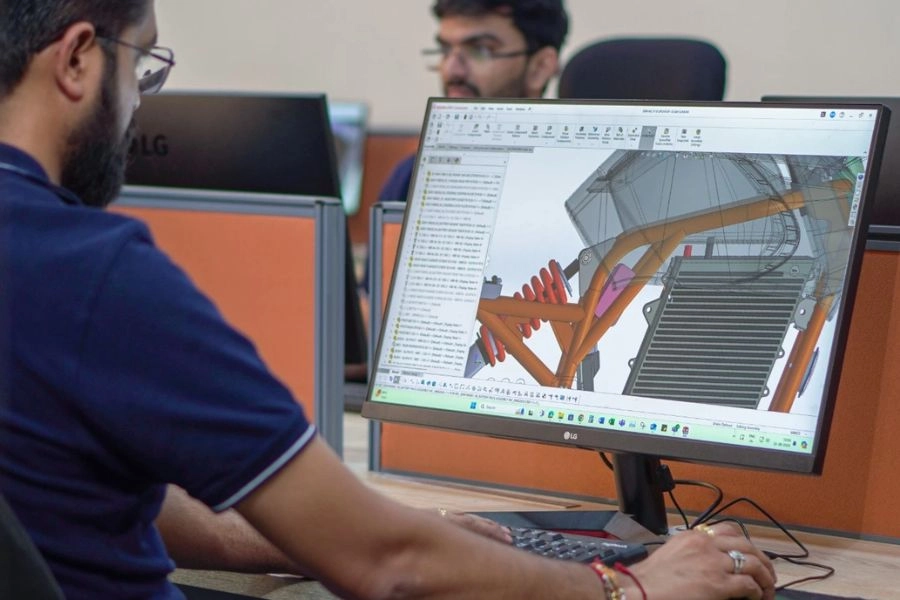
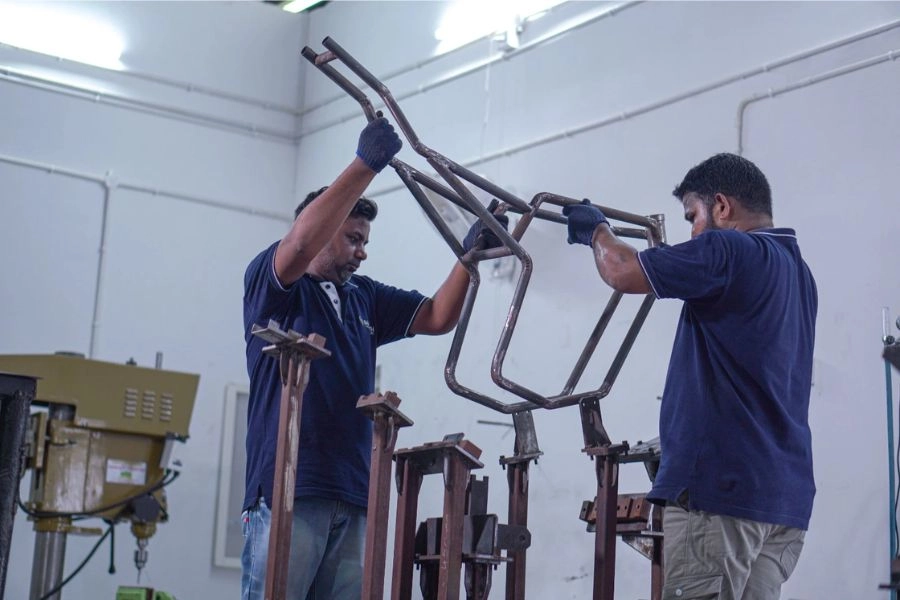
With this approach, we began by setting up our R&D center. Today we have around 105 people working purely in R&D, and over the last three years we have developed the motor, motor controller, battery pack, BMS, charger, DC DC, display, and even our own operating system. Using all these components, we have built a high-speed electric motorcycle, which is currently under testing and will be launched soon.
A lot of EV startups in India are choosing to source components and focus on assembly. Why did you decide to build a full stack EV platform in house and what kind of trade-offs did that involve in terms of cost, time and complexity?
So when we started the company, we had two options. One was to import components, assemble them, and start selling immediately to generate revenue from day one. But based on our business experience over the last 12 years, we believe that to survive, sustain, and capture the market, the foundation has to be strong.
We decided not to follow the assembly route. Otherwise, we would have been just another company among many doing the same thing. Instead, we focused on building our own technology, because the Indian market, road conditions, and riding behaviour are very different from other countries.
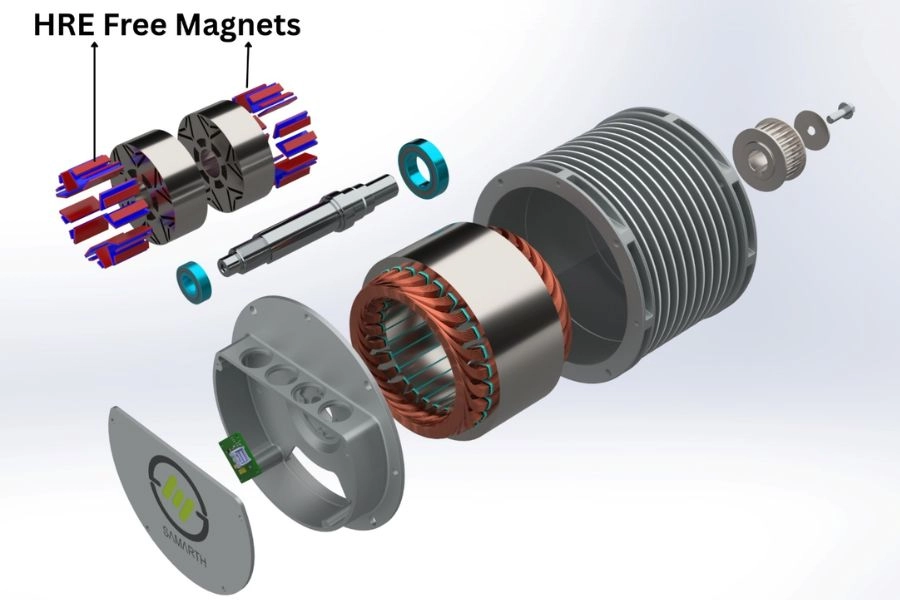
You cannot simply import technology and expect it to perform here. For long term success, the product has to be built for Indian conditions, including roads, climate, and riding patterns. So we studied how people ride, understood their pain points, and developed our entire stack with the Indian customer at the center.
India is a very diverse market with climate, terrain and usage patterns varying massively from region to region. How has your product been developed to handle everything from extreme heat to varied road conditions across the country?
To handle this diverse situation, we developed our own BMS and PCM systems. If you look at India, conditions vary widely. In the North, places like Kashmir experience sub-zero temperatures in winter, while regions like Gujarat and Maharashtra see temperatures above 45 degrees in summer. In the South, the climate is very humid.
So the vehicle must be able to perform across all these environments. We designed a smart BMS that continuously monitors temperature, surroundings, and operating conditions, and accordingly manages power and efficiency for the battery pack and the vehicle.
During testing, we validated the battery pack across a range from plus 50 degrees to minus 10 degrees to ensure it performs reliably. Based on these results, we developed and refined our technology.
Specifically on the battery and BMS side, what were the key challenges in making a system that is reliable for pan India usage and how have you addressed concerns like thermal management and long-term durability?
When developing the BMS and other components, the biggest challenge in an EV is heat management. Better heat control leads to improved performance over time and reduces service and repair issues. So our primary focus while designing the BMS was on effective thermal management. The second key aspect was power, as motorcycles demand strong torque and throttle response, which must be sustained across different temperatures and conditions.
At the same time, the BMS also plays a critical role in maintaining battery health. Our system continuously monitors cell temperature and voltage, balances the cells, and adjusts based on operating conditions. This helps improve battery life and ensures smooth and reliable performance.
You are targeting the premium electric motorcycle segment. Do you think India is truly ready for that space considering most EV adoption so far has been in scooters rather than motorcycles?
If I answer briefly, yes, EV motorcycles will see strong penetration, but it will happen gradually, not overnight. We have already seen this with scooters, where adoption has grown steadily over the past five years and now accounts for nearly 20 percent of the segment.
However, motorcycles are a very different space. Unlike scooters, they are often an emotional choice, with higher expectations around design, power, acceleration, top speed, and range. To succeed in this segment, EV motorcycles must meet all these demands. If we can achieve that, there is clear demand in the market, and we are working towards delivering a product that aligns with these expectations.
What is the plan when it comes to selling the product. Are you going direct to consumer, building a dealership network or exploring a hybrid approach?
We are now moving from the industry stage to production, and our go to market strategy is to build a strong dealer network rather than selling directly to customers. We are currently setting up dealers across different cities, starting with a few to test the market and streamline our supply chain and service operations.
Our approach is clear. Before selling even a single motorcycle in any city, we will establish a service center and ensure a smooth supply chain so we can support customers within 24 hours. Only once this foundation is in place will we begin sales in that market.
Can you share which cities are being considered for the first phase of Samarth dealerships?
We are planning to start our dealership network from the western part of India because we are based in Gujarat also so we can easily adapt and easily smoothen our supply chain and service network and then start adding different states after six months.
What kind of manufacturing scale are you targeting in the initial phase and how do you see that ramping up over the next few years?
For the first one to two years, our focus is not on volumes. Our priority is to build trust with customers, establish a strong brand, and deliver reliable service. Once we have built that foundation, we will then shift our focus towards scaling volumes.
On the demand side what are your realistic sales targets once the product hits the market?
The EV motorcycle segment is currently a niche market with limited volumes. However, we believe that within the next two years, we can establish ourselves as a market leader, becoming a preferred choice when customers consider buying an EV motorcycle.
Can you give us a ballpark idea of where this motorcycle will be priced?
The Indian market is highly price sensitive, and we have kept this in mind from day one while developing our components and vehicle. Our focus is to ensure competitive pricing to gain a meaningful share in the motorcycle segment. We are targeting the 125 cc to 200 cc category and aim to price our EV motorcycle in line with existing vehicles in this segment, so customers can adopt EVs without paying a significant premium.
Like you mentioned you all are targeting the 125 cc and the 250 cc segment so today in the market who do you see as the biggest rivals or both in terms of maybe ICE as well as EVs who are the biggest rivals that Samarth sees today as a brand and as a product?
The motorcycle segment is extremely diverse, spanning from under 100 cc to over 250 cc, with each category already dominated by established players. In contrast, the EV motorcycle segment is still in a very early stage of development and far from mature.
At this stage, the priority is to grow the segment and bring more customers into EV motorcycles. The market is currently small, so we do not see any significant competitive threat. As the segment expands and matures, competition will naturally increase, but for now the focus remains on building the category rather than competing within it.