
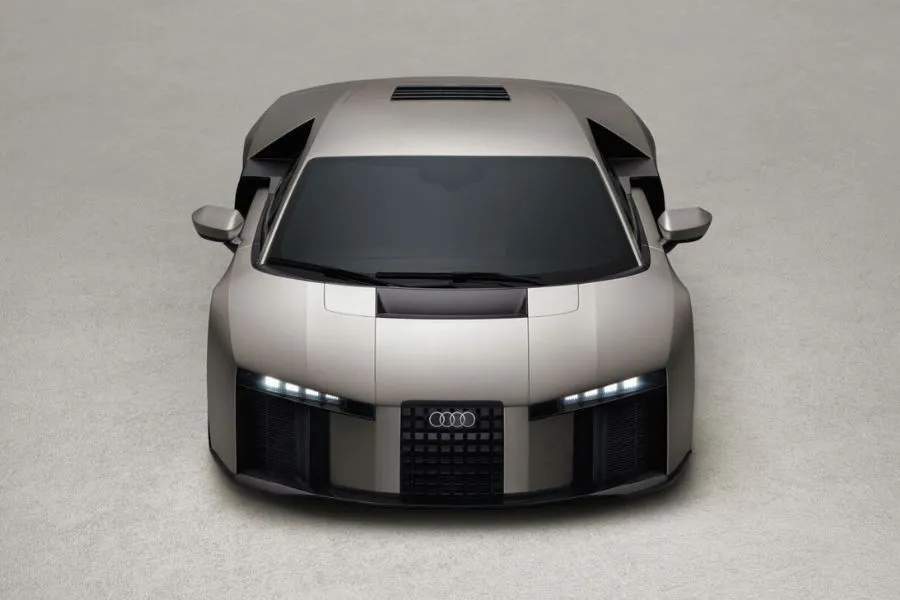
Audi has unveiled the all new Audi Nuvolari, a hybrid hypercar that now sits at the very top of the brand’s portfolio. It uses the same powertrain architecture as the Lamborghini Temerario, but with a higher output of 1,001 PS. This also marks Audi’s first ever plug in hybrid hypercar. With a claimed top speed of over 350 km per hour, the Audi Nuvolari becomes both the most powerful and the fastest production vehicle in the history of the four rings.
Production will be limited to 499 units, with deliveries set to begin in the first half of 2027. The car takes its name from Tazio Nuvolari, one of the most prominent figures in motorsport history who raced for Auto Union, Audi’s predecessor.
Audi Nuvolari – Exterior Design
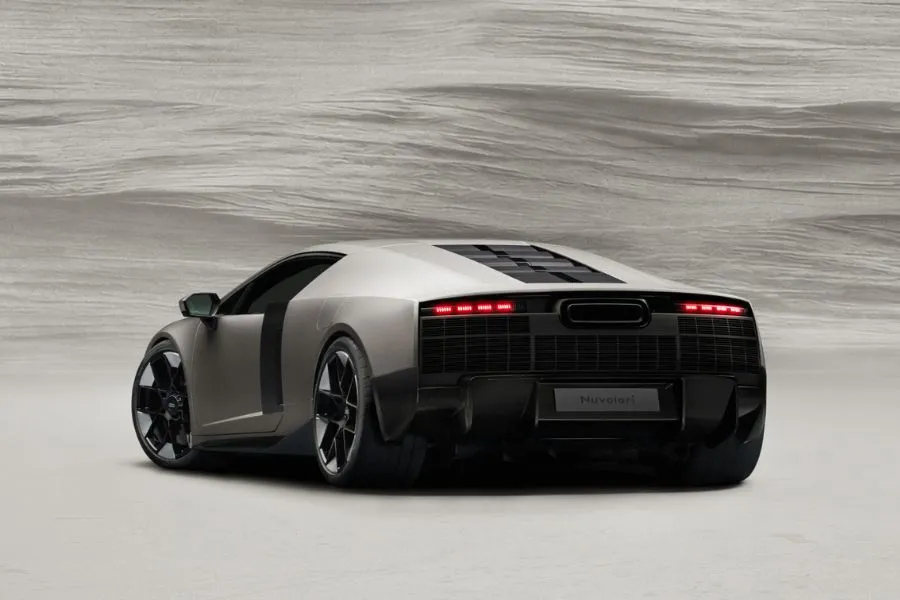
On the outside, the Audi Nuvolari draws clear inspiration from the Audi Concept C that was revealed in 2025. The design features a sculpted body with clean lines, slim headlamps and tail lamps with four pixel like LED clusters, and a rectangular grille. At the same time, there are strong references to the Audi R8, including large air intakes placed under the headlamps and behind the doors, along with air exits positioned below the tail lamps. The car also features a tapering bonnet and muscular rear haunches that enhance its stance.
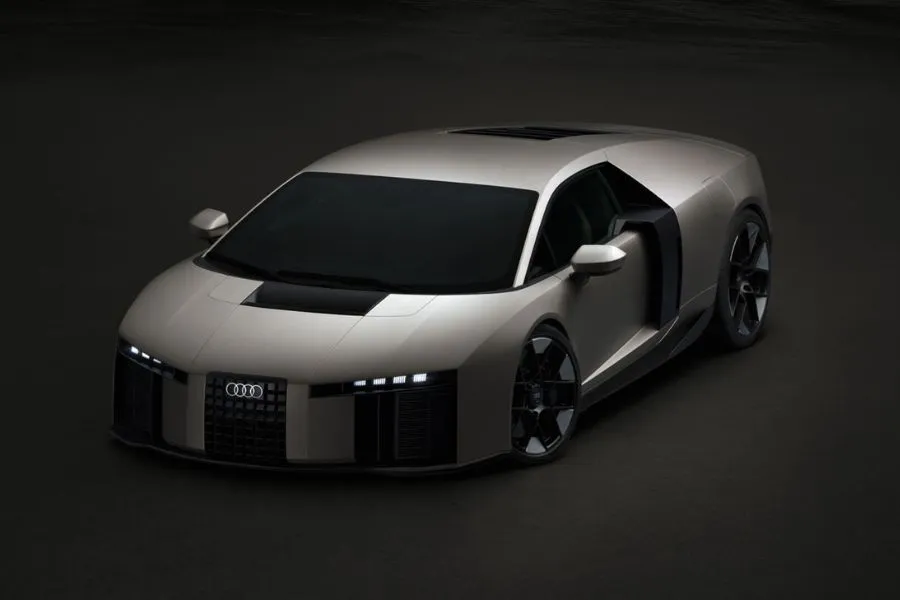
Other notable design elements include a blacked out bonnet duct, forged centre lock alloy wheels, a rectangular engine bay with louvres, a high set wide exhaust, and an aggressive rear diffuser. The exterior is finished in a new signature shade called Titanium, which has also been seen on the Concept C and Audi’s Formula 1 race car. Carbon elements are used extensively across the body. The structure itself is almost entirely made from carbon fibre reinforced polymer, helping reduce weight while maintaining high torsional rigidity.
Audi Nuvolari – Interior Design
Inside, the Audi Nuvolari follows a driver focused layout with a clean and functional design. The cabin is finished primarily in Alcantara and leather. The driver gets a thick three spoke steering wheel that features multiple controls along with large paddle shifters and a fully digital display. The centre console is slightly angled and houses a large infotainment screen, the engine start function, and toggle switches for essential functions such as hazard lights and the fuel filler cap.
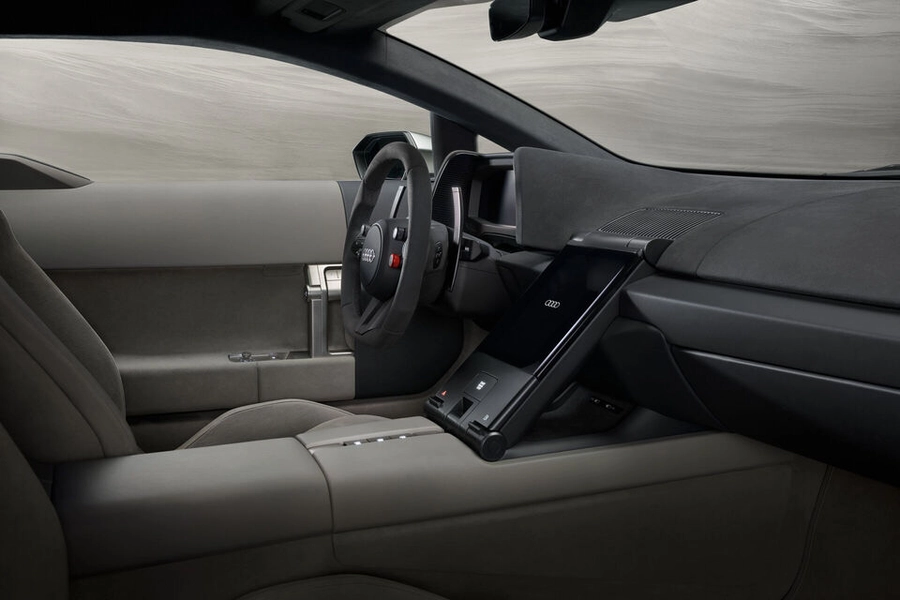
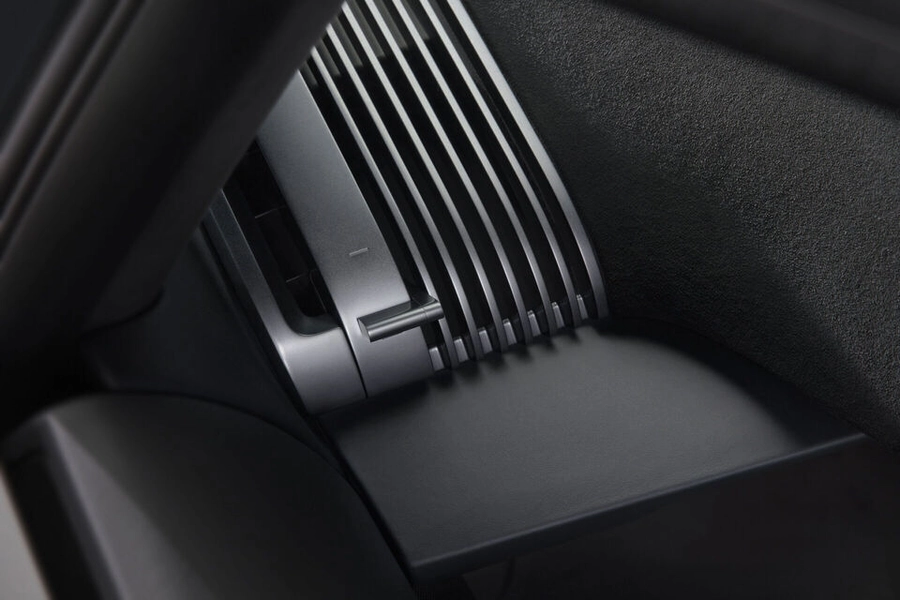
The transmission tunnel runs through the centre of the cabin and is finished in a lighter tone called Shadow Dune, effectively dividing the interior into two distinct zones. The front section uses darker shades to support driver focus, while the rear introduces a lighter contrast. This use of colour also references the Auto Union Type C race car from the 1930s. The interior quality is highlighted by the use of anodized aluminium across controls, air vents, and the display frame.
The seats are lightweight and built using a carbon fibre structure for both the base and the backrest. This helps reduce weight while offering strong lateral support. The seating position is designed to be natural and ergonomic, allowing the driver to feel more connected to both the car and the road.
Audi Nuvolari – Powertrain and F1 Tech
Powering the Audi Nuvolari is a hybrid system that produces a total output of 1,001 PS. It combines a 4.0 litre V8 biturbo engine that produces 800 hp with three axial flux electric motors, each delivering 201 hp. The lithium ion battery has a gross capacity of 7.3 kWh. The combustion engine alone produces 730 Nm of torque and can rev up to 10,000 rpm.
Two electric motors are mounted on the front axle and together deliver up to 2,150 Nm of torque, while also enabling torque distribution as part of the quattro system. A third electric motor is placed between the engine and the transmission. The car accelerates from 0 to 100 km per hour in 2.6 seconds and reaches 200 kmph in 6.8 seconds.
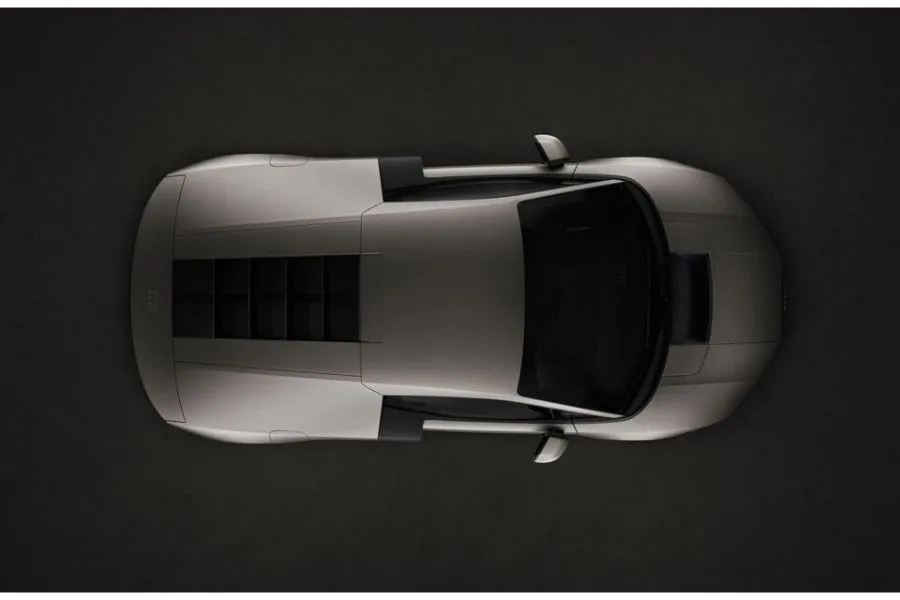
Audi has also introduced an advanced version of its all wheel drive system called quattro predictive ride. This system uses data such as steering angle, acceleration, and grip levels to predict and respond to changes in driving conditions. Active aerodynamics also play a key role, with components adjusting to balance downforce and drag.
The deployable rear wing operates in three modes including Closed, Low Downforce, and High Downforce. It can also be controlled manually and includes a drag reduction system similar to Formula 1. Under braking and in corners, the system can generate over 400 kg of downforce to improve stability and performance.
Audi Nuvolari – Will it Come to India ?
There is still no clarity on whether any of the 499 units will make their way to India. But if a certain set of collectors are reading this, we are looking at you Mr. Poonawalla, Mr Boopesh Reddy, Mr Akash and Anant Ambani. The rest of us would really appreciate having something like the Audi Nuvolari on Indian roads, even if it is just to stand around it and stare.
Pingback: 2027 Audi Q7 Unveiled Globally: Time for the X5 and GLE to Worry? - Shutterdrives