

When MSIL revived the Maruti Suzuki Baleno name in India in 2015, it was not just another hatchback entering an already crowded segment. The Maruti Suzuki Baleno was one of the first models to be sold through the newly established NEXA retail network and was positioned as a more premium alternative to Maruti Suzuki’s conventional hatchbacks.
Over the last decade, the Maruti Suzuki Baleno has gone through a generation change, multiple updates and a performance-focused RS variant. More importantly, the car has gone on to influence several other models across the Maruti Suzuki and Toyota portfolios.
From being the first car in India to offer Apple CarPlay to becoming the first car in its segment to offer Level 2 ADAS, the Maruti Suzuki Baleno has changed considerably since 2015.
Maruti Suzuki Baleno 1st Generation – 2015
The first-generation Maruti Suzuki Baleno was launched in India in October 2015. It was built on Suzuki’s lightweight Heartect platform and was sold exclusively through NEXA dealerships. The Maruti Suzuki Baleno was offered with a 1.2-litre petrol engine and a 1.3-litre DDiS diesel engine. The petrol engine produced 83hp and 113Nm, while the diesel developed 74hp and 190Nm. A CVT automatic was also offered with the petrol engine.
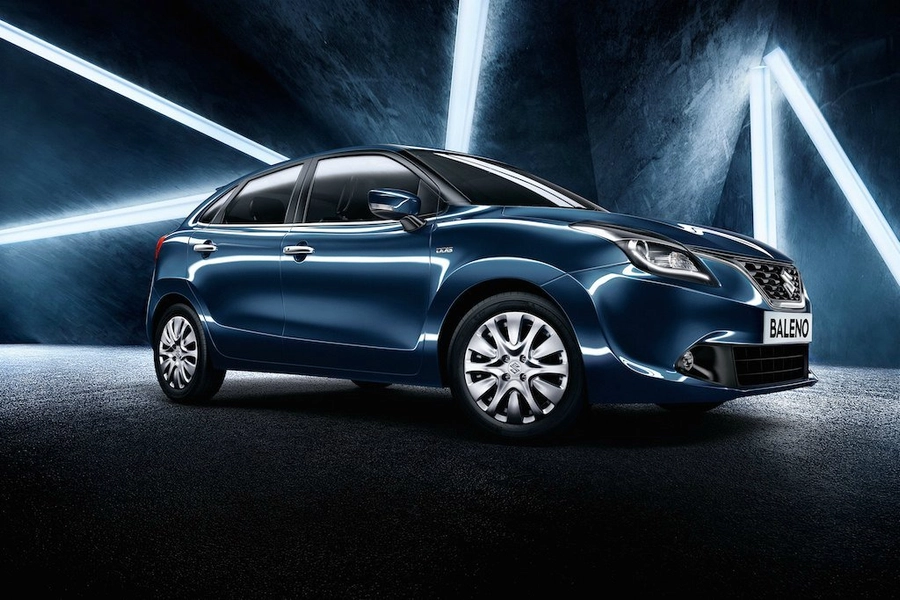
What made the Maruti Suzuki Baleno stand out, however, was its equipment. It offered features such as projector headlamps, automatic climate control, a touchscreen infotainment system and, most notably, Apple CarPlay.
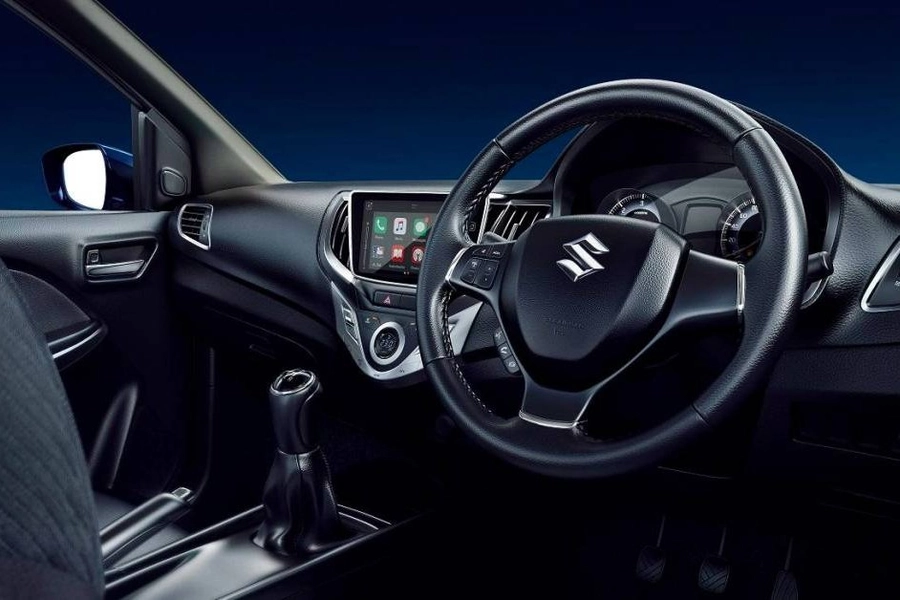
The Maruti Suzuki Baleno was the first car in India to offer Apple CarPlay, at a time when smartphone integration was still relatively uncommon in affordable cars. It also became the first car made in India to be exported to Japan. The combination of space, efficiency, equipment and Maruti Suzuki’s extensive ownership network helped the Baleno establish itself as a strong rival to the Hyundai i20, Volkswagen Polo and Honda Jazz.
Maruti Suzuki Baleno RS – 2017
In 2017, Maruti Suzuki took the Baleno in a completely different direction with the Baleno RS.The Maruti Suzuki Baleno RS was powered by a 1.0-litre, three-cylinder Boosterjet turbo-petrol engine producing 102hp and 150Nm. It also received four-wheel disc brakes and a sportier suspension setup. The important part of the RS story, however, is the engine.
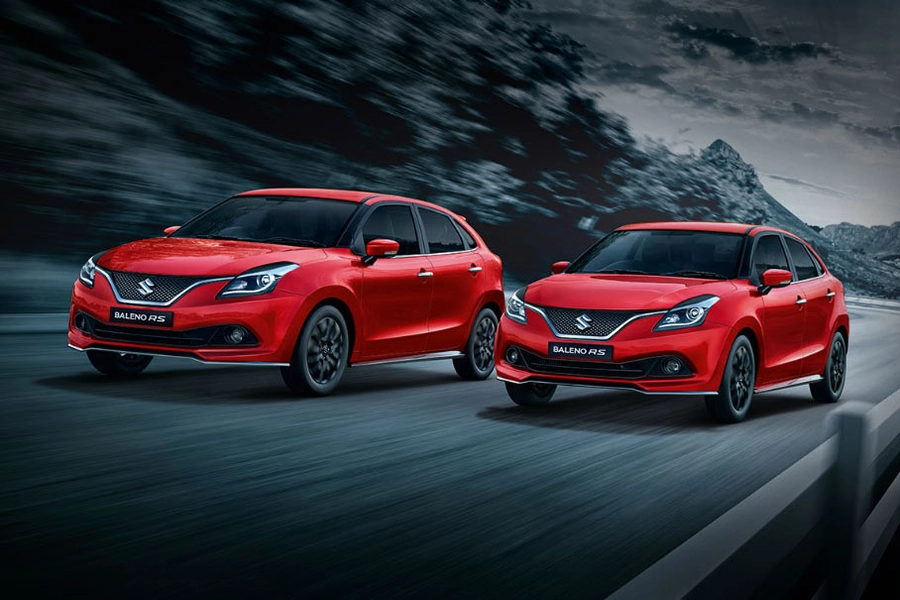
The 1.0-litre Boosterjet used in the Indian-spec Maruti Suzuki Baleno RS was sourced from Japan rather than being manufactured in India. At the time, this was an unusual powertrain for a Maruti Suzuki product, particularly in a premium hatchback. The RS itself never became a volume seller, but it proved that there was room for a small turbo-petrol engine in Maruti Suzuki’s portfolio. The engine would eventually return in a much bigger way. In that sense, the Baleno RS was effectively the starting point for Maruti Suzuki’s current 1.0-litre turbo-petrol story.
Maruti Suzuki Baleno 1st Facelift – 2019
The first-generation Maruti Suzuki Baleno received a facelift in 2019. The changes were primarily focused on the exterior, with a revised grille, updated bumpers, new alloy wheels and other styling changes. The powertrain line-up also evolved. The diesel engine was eventually discontinued as Maruti Suzuki moved away from diesel powertrains ahead of the BS6 transition.
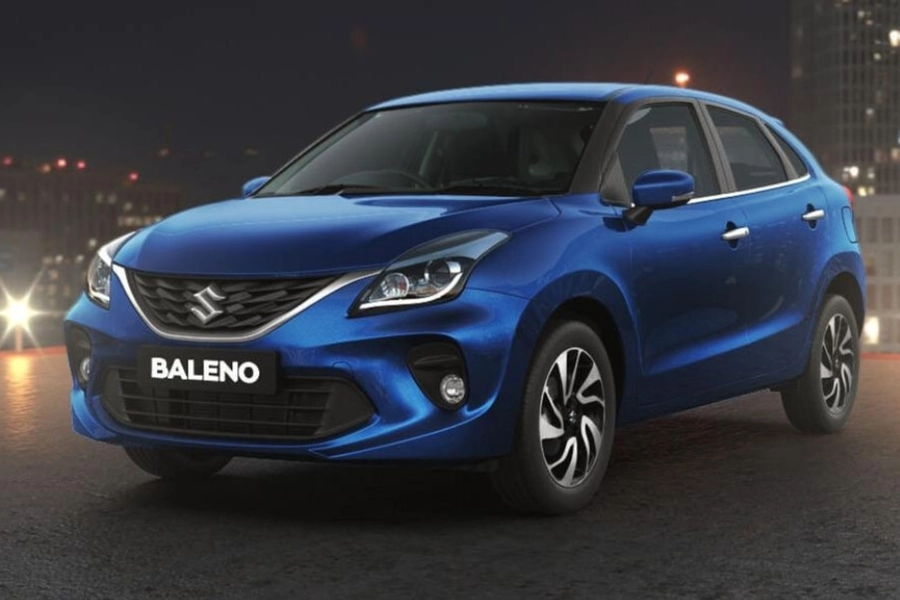
By this point, the Maruti Suzuki Baleno had also become part of the growing Maruti Suzuki-Toyota partnership. Toyota introduced its version of the Baleno as the Glanza, marking the beginning of a relationship that would eventually result in several shared products. The Baleno’s importance was therefore no longer limited to Maruti Suzuki. Its platform and engineering were beginning to form the foundation for products sold under another brand.
Maruti Suzuki Baleno 2nd Generation – 2022
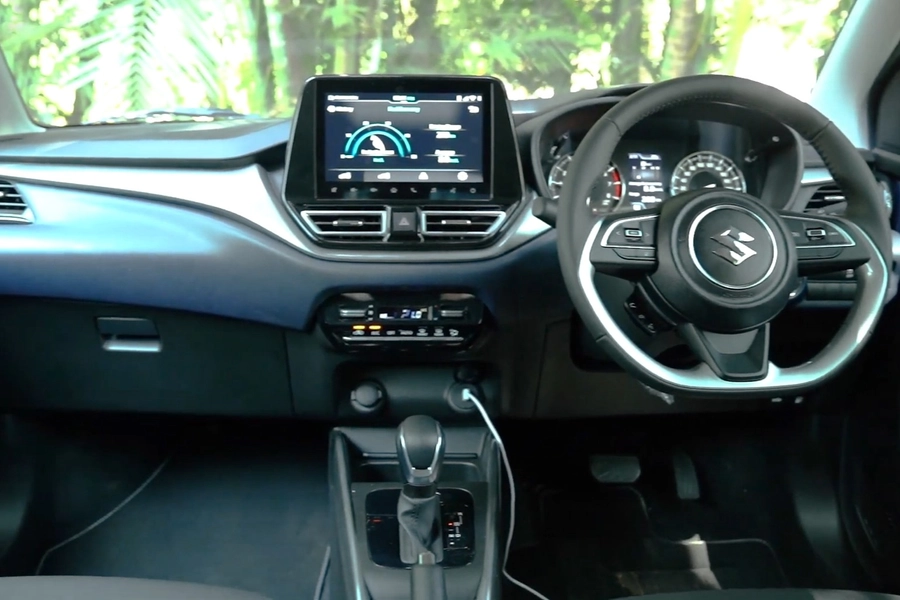
The second-generation Maruti Suzuki Baleno arrived in 2022 and represented a much bigger change than the previous facelift. The exterior became sharper and more modern, while the cabin was completely redesigned. The dashboard received a more premium layout and the car gained a 9-inch SmartPlay touchscreen infotainment system.
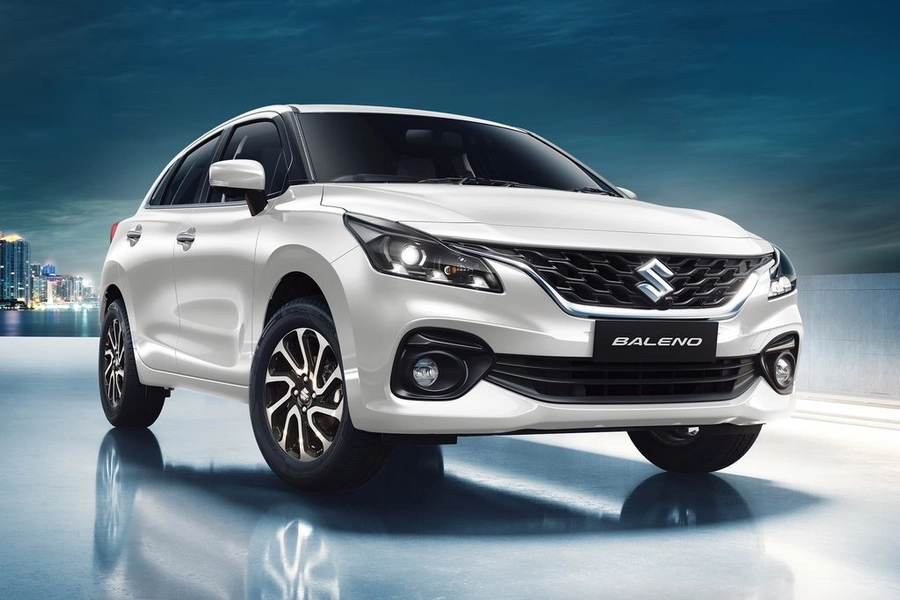
The Maruti Suzuki Baleno also became significantly more feature-rich. A head-up display, 360-degree camera, connected-car technology and Suzuki Connect were among the biggest additions. Safety equipment was also upgraded, with up to six airbags, electronic stability control and other active and passive safety features.
The second-generation Maruti Suzuki Baleno also continued the Toyota connection. The new-generation Toyota Glanza was essentially the Toyota version of the Baleno, with both cars being produced from the same basic architecture.
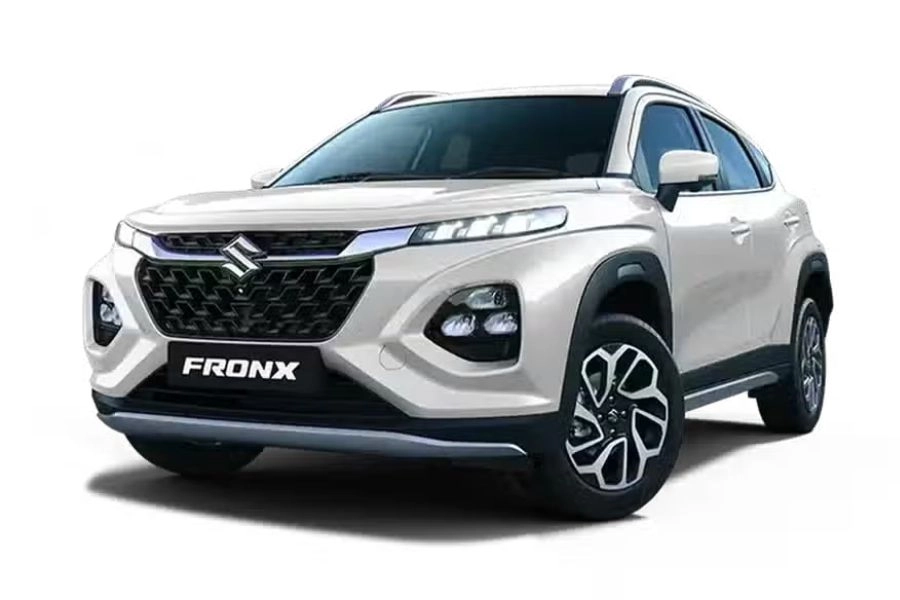
This generation also formed the basis for another important Maruti Suzuki product — the Fronx. The Fronx is based on the Baleno’s platform and combines the hatchback’s basic architecture with a more SUV-inspired body. Its 1.0-litre Boosterjet engine also brought the Baleno RS’s turbocharged powertrain story back into the Maruti Suzuki range. Toyota subsequently sold the Fronx as the Urban Cruiser Taisor.
Maruti Suzuki Baleno 2nd Generation Facelift – 2026
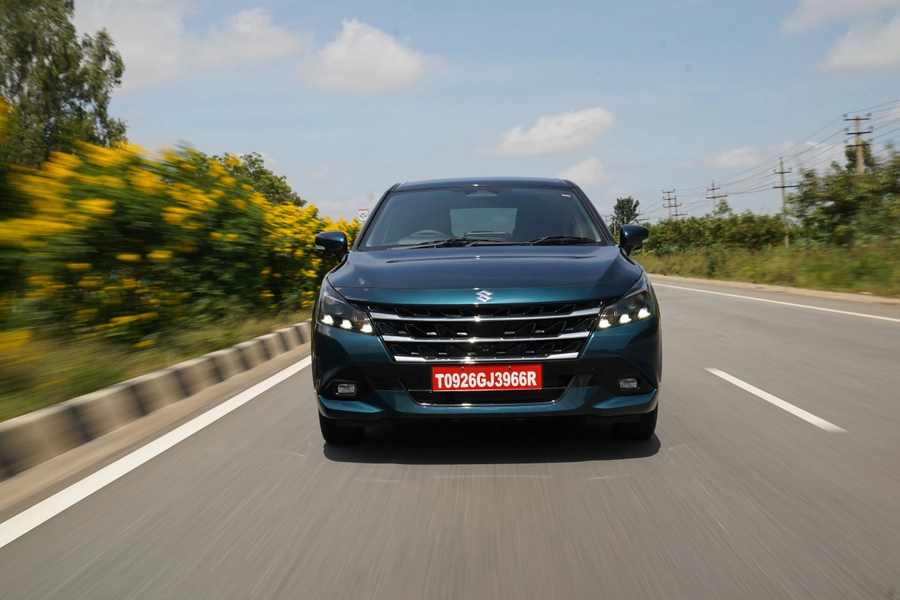
The latest Maruti Suzuki Baleno facelift is where the car’s evolution becomes particularly interesting. The basic shape of the second-generation model remains, but the front end receives a revised grille, bumper and lighting elements. There are also changes to the interior and equipment list.
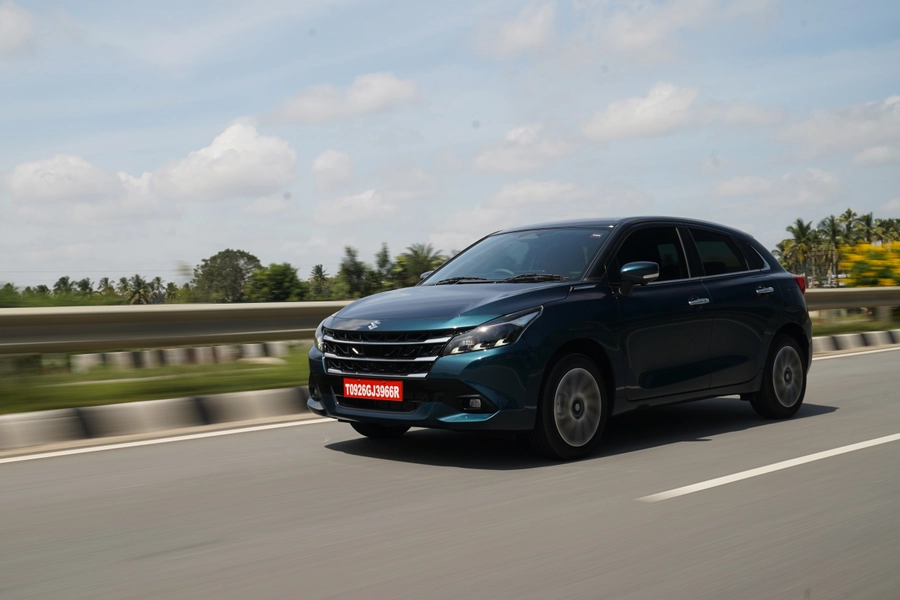
The biggest change, however, is under the bonnet. The 1.2-litre four-cylinder petrol engine has been replaced by Maruti Suzuki’s 1.2-litre three-cylinder Z12E engine. The engine produces 83hp and 112Nm and is offered with a five-speed manual or five-speed AMT.
But the headline feature is ADAS. The Maruti Suzuki Baleno is now the first car in its segment to offer Level 2 ADAS. The system combines radar and camera-based technology to provide features including adaptive cruise control, autonomous emergency braking, lane-keep assist, lane departure prevention, lane departure warning, forward collision warning and high-beam assist.
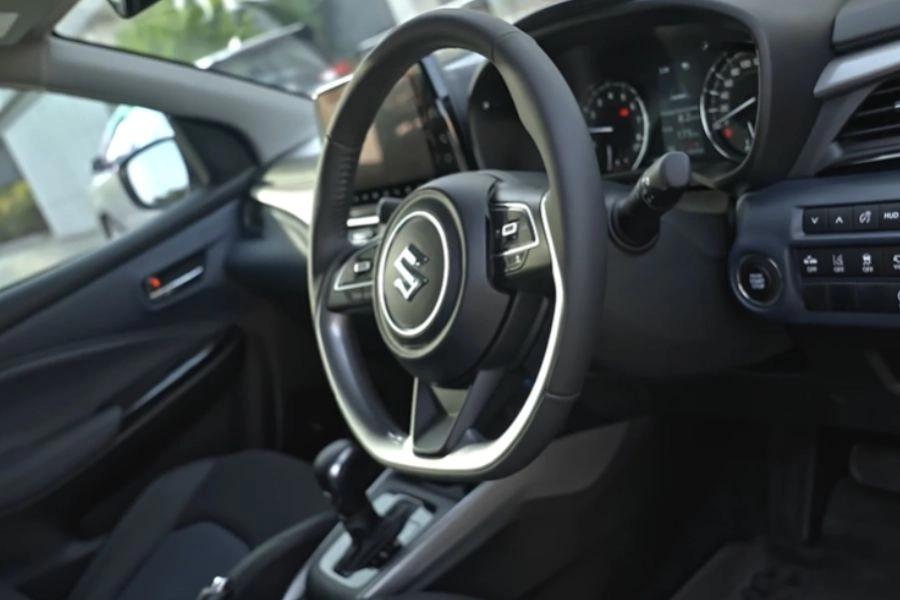
The Maruti Suzuki Baleno also gets ventilated front seats, another segment-first feature. Other additions include a cooled wireless smartphone charger and a premium Clarion sound system, while the 9-inch SmartPlay Pro+ touchscreen continues to offer wireless Apple CarPlay and Android Auto.
This is a significant change from the 2015 car. Back then, Apple CarPlay itself was one of the Maruti Suzuki Baleno’s headline technological features. Eleven years later, the car has radar-based driver assistance technology.
From Maruti Suzuki Baleno RS to Fronx, Taisor and Brezza
The story of the Maruti Suzuki Baleno becomes even more significant when its influence on Maruti Suzuki’s wider product range is considered. The 1.0-litre Boosterjet first appeared in India in the Baleno RS, where the engine was imported. It was later locally assembled and brought back in the Fronx, giving Maruti Suzuki a compact turbo-petrol engine that could be produced in India.
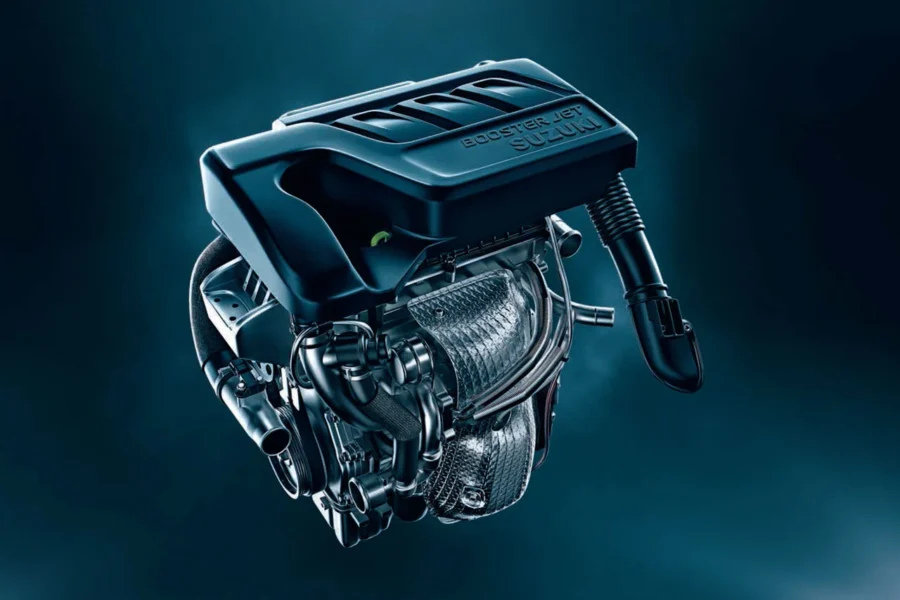
The Toyota Taisor also uses this 1.0-litre Boosterjet engine, making the Baleno RS the starting point for a powertrain that eventually found its way into multiple models. And now, in 2026, the same engine has made its way into the Maruti Suzuki Brezza. In the Brezza, it produces 110hp and 170Nm and is paired with a six-speed manual gearbox. So, while the Baleno RS itself was never a major volume seller, its 1.0-litre turbo-petrol engine had a much longer life ahead of it.
Maruti Suzuki Baleno – Impact on Indian Automobile Market
The influence of the Maruti Suzuki Baleno is perhaps best understood through its sales.
In July 2026, the Maruti Suzuki Baleno sold 18,241 units in India. The Toyota Glanza added another 4,461 units, while the Maruti Suzuki Fronx sold 19,473 units and the Toyota Taisor sold 2,470 units.
Together, these four Baleno-related models accounted for 44,645 units in a single month. With India’s passenger vehicle retail market at 4,16,555 units in July, that works out to approximately 10.72% of the market. In simple terms, roughly one in every ten passenger vehicles sold in India in July 2026 was either a Maruti Suzuki Baleno or a model derived from the Baleno.

That is what makes the Maruti Suzuki Baleno so important.
It is not just a successful premium hatchback. Its platform has spawned the Toyota Glanza, its architecture forms the basis of the Fronx, the Fronx has spawned the Toyota Taisor, and the engine originally associated with the Baleno RS now powers the Brezza as well.
From a relatively simple premium hatchback in 2015 to a technology-packed, ADAS-equipped model in 2026, the Baleno has evolved with the Indian car buyer.
But its biggest evolution goes beyond the car itself, with its platform, engines and engineering influencing an entire family of models. Eleven years and two generation on, the Baleno’s journey is no longer just the story of one hatchback, but of how one car helped shape Maruti Suzuki’s modern product portfolio.